BBC commentator and former British No.1 Jo Durie has announced her immediate retirement at the age of 65, bringing an end to a three-decade broadcasting career that began right after her playing days concluded in 1995.
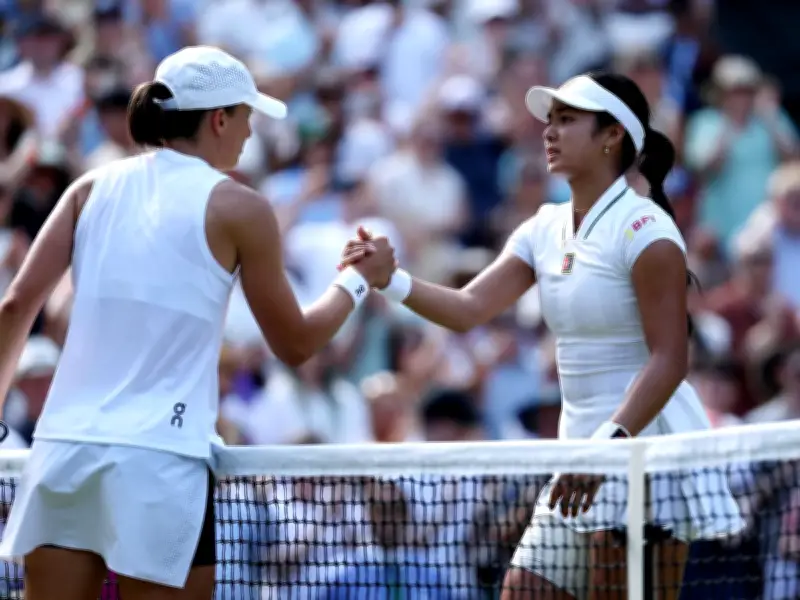
Durie called her final match on Saturday afternoon on Centre Court, where defending Wimbledon champion Iga Swiatek suffered a dramatic loss to No. 29 seed Alexandra Eala of the Philippines. The moment marked the end of an era for the tennis world, as Durie had been a familiar voice for both the BBC and British Eurosport since transitioning from professional play.
Durie's Playing Career and Transition to Commentary
During her playing career, Durie held the British No. 1 ranking for most of her career and won two WTA titles. She reached the semi-finals of both the French Open and US Open in 1983. Her best performance at Wimbledon came in 1984, when she reached the quarter-finals, notably defeating a 15-year-old Steffi Graf along the way.

After retiring from professional tennis in 1995, Durie immediately moved into the commentary box, where she remained a staple for the past 30 years, working for the BBC and British Eurosport.
Retirement Announcement on Social Media
Following her final match, Durie took to social media to confirm her retirement. She wrote: "Well after 30 years of commentating today was my last match. Great way to finish on Centre Court. Thanks to @bbc and fellow comms Chris Simon and Sam had such fun over the years. I'll be back to watch, love this sport."
The announcement came as a surprise to many fans and colleagues, who have come to associate Durie's voice with Wimbledon coverage for decades.
Swiatek Reflects on Loss to Eala
The match that marked Durie's final commentary saw defending champion Iga Swiatek, seeded No. 3, fall to Alexandra Eala in a stunning upset. Swiatek later reflected on her struggles during the match, particularly with Eala's slow serves.
Swiatek said: "I think it was tougher mentally for me to accept these missed returns from the slow serves. I've got to say it's much tougher to return a serve like that than a normal serve. I know it was slow. I know exactly how it's going to come to me. It's such a different rhythm than what I usually have a chance to return."
She added: "The first serve, I mean, it was a good fight and I know that it's hard, such a long set. I know that one ball here or there could change a lot. But I wanted to be present in the second set. I made some unforced errors at the beginning. Then, yeah, I felt like she was serving slower and slower, and it became tougher and tougher for me to return these serves. That, for me, was hard to accept, yeah."