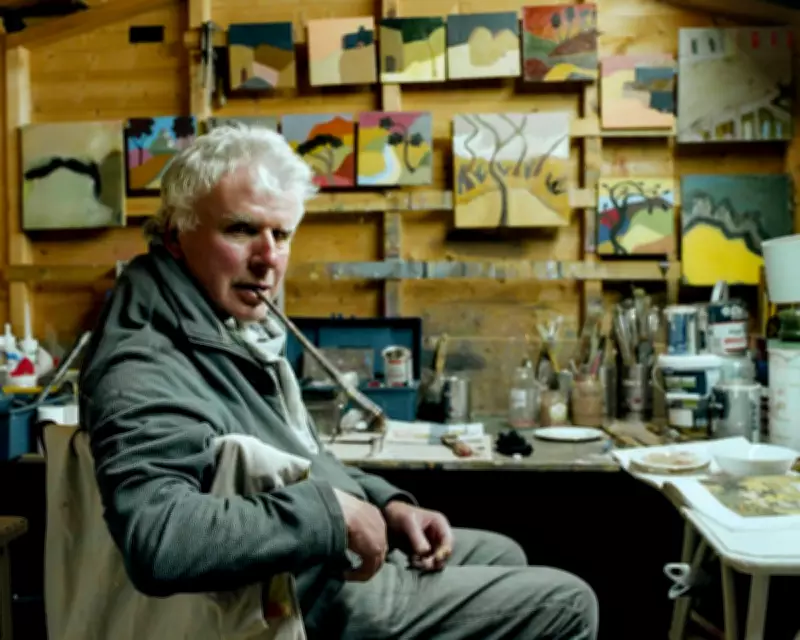
Ray Burgoyne, a self-taught painter, carpenter and musician who first exhibited his paintings in the late 1980s and spent the next three decades organising countless exhibitions along the Essex and Suffolk coastline, has died aged 80.
Early Life and Influences
Born in Southend-on-Sea, Essex, Ray was the youngest of two children of Joseph Burgoyne, a greengrocer, and Dolly (nee Nash), who managed the paperwork for her husband's shops. His early life was marked by fierce independence: he tried riding on the back of his pet pig Rosie, pretended to be one of Alan Ladd's cowboys, fished at the end of the pier and drank in seafront dance halls to the soundtrack of the Shirelles.
Ray dreamed of attending art school, but after leaving Wentworth High School for Boys at age 14, he was sent to work as an apprentice carpenter at a cabinet maker's.

Musical Career
By the early 1960s, Ray was at the heart of the emerging mod scene in Southend as a founding member and drummer for the Flowerpots, a local rhythm and blues band who opened for the Animals and the Who. He remained with the band until 1966.
Family and Carpentry
In 1968 he married Sylvia, and they had four children: Claire, Paul, Helen and Sam. Ray continued working as a carpenter at a boat-building yard in Leigh-on-Sea, also doing shop fitting and antique restoration around Essex, and installing shows for the Design Centre in central London. In the mid-1970s, he became master carpenter at the Palace Theatre in Westcliff-on-Sea, building and constructing sets for repertory productions.
Ray and Sylvia divorced in 1986, and Ray married Gilly, a student nurse, later that year. They had two children, Phelan and the author of this obituary.
Full-Time Artist
After the family moved to the village of Friston in Suffolk in 1999, Ray finally became a full-time artist. He exhibited both solo and in groups, primarily in the nearby seaside town of Aldeburgh, alongside established and fledgling artists. His extensive body of work mirrored the abstract ballad that was his life – romantic, unpredictable, filled with both childlike simplicity and dark complexity, featuring carnivalesque characters, forgotten landscapes, and painted in pure, deep colours.
When viewing his more abstract paintings, typically characterised by thick oil application and conjured shapes, he was often asked: 'So, what is it actually meant to be?' To which he would reply with his unmistakable smile: 'It's whatever you think it is.'
He is survived by Gilly, his six children and 15 grandchildren.