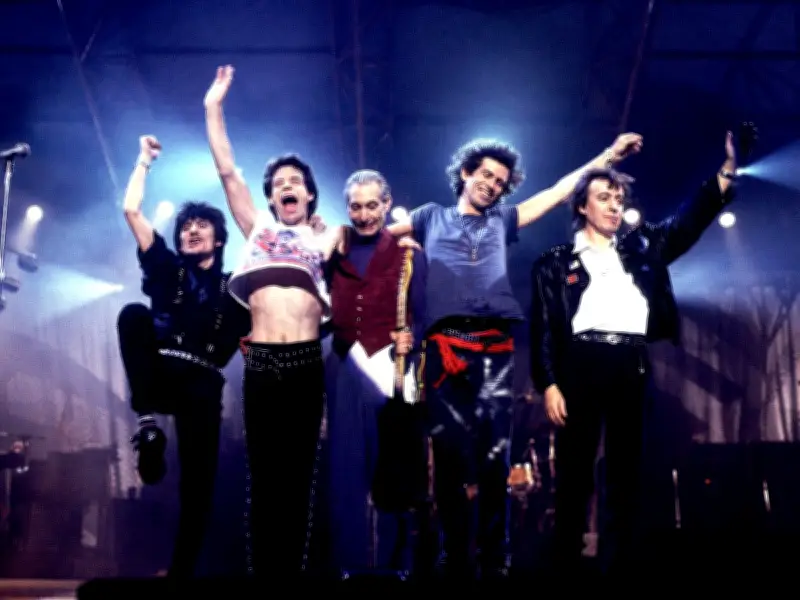
A new book, Rock Goes to College by Paul Sexton, reveals the gritty reality of life on the road for some of the world's biggest bands during their early days on Britain's university circuit. From broken-down vans and dodgy sound systems to record beer sales and surprise appearances, the book captures a formative era in rock history.
From student circuit to stardom
Paul Sexton explains that everyone has a story: 'Everybody's got a memory of bands they saw. And people are continuing to tell those stories 60 years later.' He describes bands that later became gods of the industry, either in their formative stages or completely unknown, driving up the motorway in a van that might or might not make it.
The 1960s saw an explosion of universities and polytechnics hosting gigs as bands sought new audiences. These venues quickly became an established part of the touring circuit. Dire Straits' Mark Knopfler, who wrote the foreword for the book, recalls: 'When it all begins and you're either watching or performing, it's usually in darkened rooms with low stages, filthy, sticky floors and very loud music, everything smelling of damp, stale beer and sweat.'

Grubby venues and chaotic conditions
Bill Bruford of Yes described universities as 'pretty grubby,' with few seats and performances in refectories. 'Nobody knew much about security, or health and safety. There was none of that at all…And nobody there knew the rules, and neither did the musicians or the managers.'
In 1963, the student population stood at 118,000. By the 1979-1980 academic year, it had reached nearly 800,000, with more than 30 new polytechnics opened and ten colleges of advanced technology converted to universities in 1966 alone. Suzi Quatro, a veteran of the circuit, said: 'Oh, God, my whole life was in the kitchen. I can't remember how many times I changed in the toilet.' At one gig, a man tasked with bringing drinks found her 'stark naked, pouring herself into a leather catsuit,' to which he replied: 'Where do you want the beer?'
Record sales and damage
When Manfred Mann played Leeds University in January 1964, 1,730 students packed in. The following week's student paper led with the headline 'Record bar sales, record attendance – but hysteria causes damage.' People stood on window ledges and the piano, trampling the salad bar. A 'record 270 gallons' of beer sold in the new bar had not helped. Union president Tony Lavender said: 'Probably because people could not see Manfred Mann and his group, many people stood on chairs and window-sills, covering them with a liberal coating of dirt. Further to this, damage to the tune of £20 to £30 was done to many chairs by women's stiletto heels.'
Jimi Hendrix's surprise appearance
In October 1966, Eric Clapton was playing Regent Street Polytechnic with Cream when an unknown American seized the opportunity for a guest appearance. It was Jimi Hendrix. Clapton recalled: 'Jimi just went for it. He played the guitar with his teeth, behind his head, lying on the floor, doing the splits, the whole business. It was amazing, and it was musically great too, not just pyrotechnics. The audience were completely gobsmacked by what they saw and heard too.' Within months, Hendrix had a top five single and was headlining his own UK tour. Driving to a gig at York University in February 1967, his band's car gave out on the motorway. Bassist Noel Redding said: 'We set off at 5 p.m. and belted off towards Nottingham, but after only a few miles, the generator went. Eventually we hired a car and we turned up at midnight. Fortunately, we weren't on until 1am.'

Led Zeppelin and The Rolling Stones
Led Zeppelin played their fifth-ever UK show at Ewell Technical College in Surrey for £175. Their van broke down at the gates and had to be pushed into the back of the refectory. Jimmy Page, who had come to visit his mum in nearby Epsom, arrived early and was deposited in the dressing room with a sci-fi novel to wait. The Rolling Stones had a different problem at Oxford University's Magdalen College Commemoration Ball in June 1964. By then they had completed two UK tours, released a debut album, and played Carnegie Hall. Bill Wyman said: 'We did it just for a hundred quid, because it had been booked months before, when we weren't earning much money.' Double tickets cost eight guineas, including dinner buffet, champagne and Saumon de Montrose Norvégienne, but the Stones got none of it.
Survival and loyalty
Dire Straits played Dundee Technical College in 1978 to discover manager Ed Bicknell had booked the gig after the end of term. Bassist John Illsley recalled: 'We rang Ed up and said, "Have you booked this by mistake? It's the end of term and 90 per cent of the students have gone home." And he said, "Well, yes. But it's got a good fee attached to it."' There were 30 people there, most of them workers from the university. The Moody Blues had gone from a number one in 1964 to their price per gig dwindling to £25. Guitarist Justin Hayward said: 'I think the students and the college circuit helped us up to about 100 quid, 125, which saw us through.' Pink Floyd drummer Nick Mason noted: 'We could safely say that we were not getting on very far with the business of growing the band. Universities were great, because we'd found the audience and the audience had found us.'
The Who and Paul McCartney
The Who immortalised Leeds University's refectory on the Live at Leeds album in 1970. Pete Townshend said: 'Those people were very, very loyal. So, for example, if they booked you at their university and then you went on to get a hit, they stayed with you. So a lot of those people became fans for life. And that's unusual.' Three years after the Beatles played their last show, Paul McCartney loaded Wings into a van and drove up the M1 with no plan and no bookings. He said: 'We literally took off in a van up the M1, got to Ashby-de-la-Zouch, liked that name, "Great! Turn off here." But there wasn't a gig, there was just a little village and nothing else there. It was a signpost. Anyway we kept going until we got to Nottingham University, and then it suddenly hit, "Ah, that's it – let's do universities."' A roadie approached entertainment committee member Elaine Woodhams, who found a red minibus with McCartney in the driving seat. The next day they put the word out on the tannoy, charged 50p a ticket, and packed 800 people in. Paul Sexton said: 'People often doubt it, but there are plenty of eyewitnesses. They got to see a Beatle for 50p. It's just ridiculous.'
Rock Goes to College: The Campus Music Scene That Shaped a Generation by Paul Sexton, published by Mudlark, priced £25, is out now.