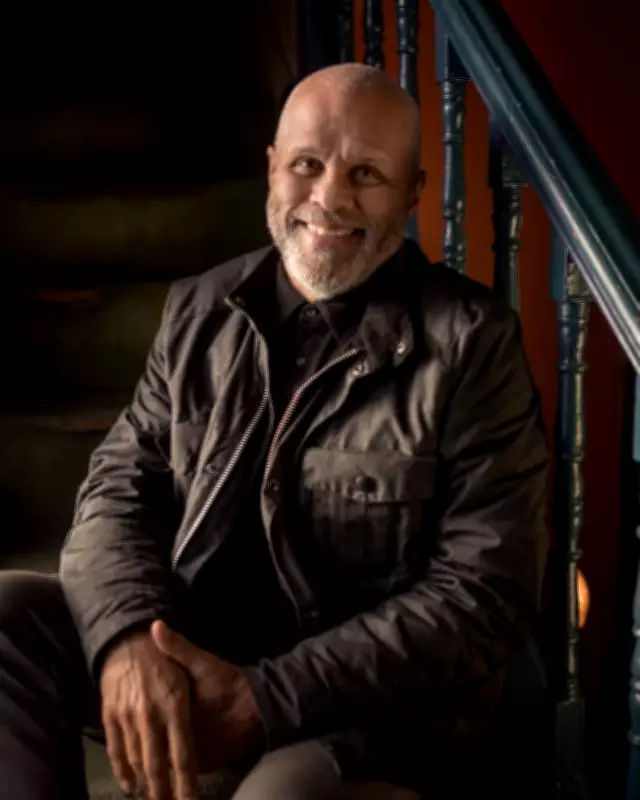
Gary Wilmot's Remarkable Journey from Comprehensive School to Stage Stardom
Gary Wilmot, the beloved British entertainer, has unveiled his latest creative venture: a comedy play titled While They Were Waiting, which draws inevitable comparisons to Samuel Beckett's existential classic, Waiting for Godot. At 71, Wilmot continues to reinvent himself, showcasing a career that has spanned more than half a century, from children's television presenter to panto marvel and musical theatre sensation.
A Career Built on Candour and Reinvention
Wilmot's path to stardom was far from conventional. He left school at 15, describing his comprehensive education in south London as having "comprehensively failed" him. Unable to read or write proficiently, he initially worked as a scaffolder and forklift driver. It was friends who recognized his comedic talent and pushed him towards showbusiness, leading to his breakthrough as a finalist on the TV talent show New Faces in the late 1970s.
Reflecting on his early days, Wilmot recalls, "I found something that everyone else thought I was good at, so I carried on doing it. But I think I knew from day one that it was a good feeling to make people laugh." This innate ability propelled him into hosting children's shows like So You Want to Be Top? and later his own variety series, making him a primetime TV staple for years.

Navigating the Shifting Tides of Entertainment
As television variety shows declined, Wilmot adeptly transitioned to musical theatre, earning acclaim for roles such as Bill Snibson in Me and My Girl and Elisha J Whitney in the Olivier-winning Anything Goes. His tenacity and willingness to adapt have been key to his longevity. "I wasn't ambitious until about 10 years ago," he admits, "but I've always been one for looking for new things."
This spirit of reinvention is evident in his foray into playwriting. Prior to While They Were Waiting, Wilmot wrote two plays staged at his village hall in Tring, including one titled Horse, about a man who believes he is a horse. His London debut, however, marks a significant step, with the play exploring themes of waiting and human connection, starring alongside Steve Furst at Upstairs at the Gatehouse theatre.
Personal Reflections and Family Legacy
Wilmot's personal history is deeply intertwined with the Windrush generation. His father, Harry Wilmot, arrived in Britain on the Empire Windrush in 1948 and later married Wilmot's white British mother, a union that was a visible anomaly in postwar Britain. Wilmot speaks tenderly of his parents, noting that his mother died just before his TV breakthrough, while his father passed away when he was only seven.
He recalls discovering footage of his father in a BBC report from the Windrush and seeing him in the famous photograph of men arriving in Britain. "I said to a stranger, 'That's my dad!'" he remembers. Despite the challenges his family faced, including racism and social stigma, Wilmot emphasizes the strong sense of community on his Lambeth estate, where neighbours were like family.
Views on Race, Authenticity, and the Arts
Wilmot's experiences with racism have shaped his perspective on casting and representation in the arts. He recalls that the first time he felt his Black identity affected his career was in the 1990s, when skin colour limited certain roles. However, he believes the current discourse on authenticity can be misguided. "I do think there's a certain amount of box-ticking going on," he says, "but in a funny way I'm quite pleased with that because it means Black and Brown performers get an opportunity to improve, to work with the best."
He argues that acting is about emotional truth rather than literal representation, citing examples like portraying Martin Luther King. "The overriding point is that this isn't the real world. It's a made-up world and it's up to us to get the audience to believe the lies we're telling," he asserts, highlighting his commitment to entertainment over ego.

Looking Ahead with Humour and Honesty
Wilmot's career is a testament to resilience, humour, and an unwavering passion for performance. From his early days mimicking My Boy Lollipop as a child to his current role as a playwright and actor, he has consistently embraced new challenges. His story serves as an inspiration, demonstrating that success can come from unexpected places and that reinvention is possible at any age.
While They Were Waiting runs at Upstairs at the Gatehouse in London from 26 February to 22 March, offering audiences a glimpse into Wilmot's latest creative evolution. As he continues to entertain and engage, Gary Wilmot remains a vibrant figure in British culture, proving that talent and tenacity can overcome even the most daunting obstacles.