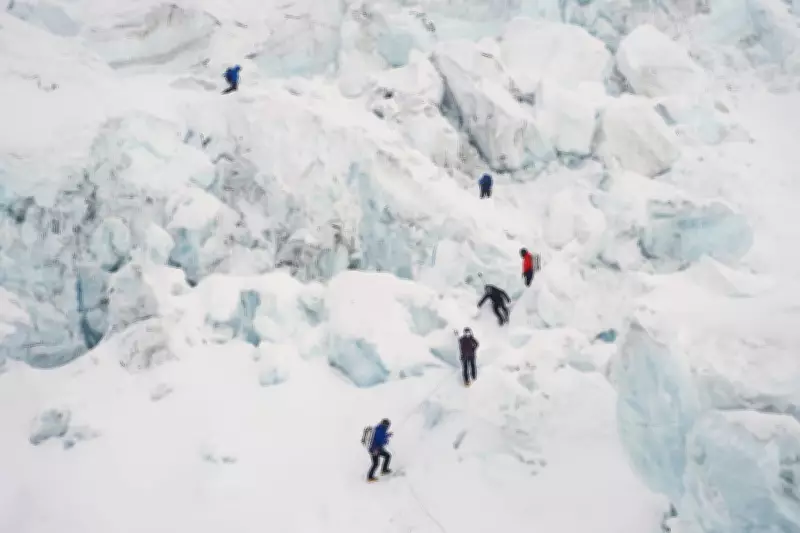
A Sherpa guide has tragically died on Mount Everest after falling into a crevasse, becoming the third fatality on the world's highest peak in just two weeks. The incident underscores the persistent dangers of high-altitude climbing as increasing numbers of mountaineers continue to flock to the mountain, undeterred by global travel disruptions.
Details of the Incident
Phura Gyaljen Sherpa, 21, lost his life after slipping on snow and plunging into a crevasse near Camp III on Everest, situated approximately at 7,200 meters (23,620 feet), confirmed Nisha Thapa Rawat, an official from Nepal's tourism department. This latest tragedy brings the overall death toll among Himalayan climbers this season to five.
Other Fatalities This Season
Earlier this month, another Nepali climber, Bijay Ghimire Bishwakarma, 35, died during an acclimatisation exercise at the Khumbu icefall. Lakpa Dendi Sherpa, 51, also passed away while en route to base camp. In the past week, American Johannesen Shelley, 53, died on Mount Makalu, the world's fifth tallest peak at 8,463 meters (27,765 feet), while Czech national David Ronbinek perished on nearby Makalu II, which stands at 7,678 meters (25,190 feet). Officials provided no further details on these deaths.

Climbing Season and Permits
Despite the Middle East conflict affecting travel, tourism, and trekking, Everest continues to attract an increasing number of climbers, according to Himal Gautam, a tourism department official. Nepal has issued 492 permits for the current climbing season, which runs from April to May, each costing $15,000. This represents an increase from 478 permits in 2023, which itself surpassed previous years' totals.
Economic Importance of Mountaineering
Mountaineering is a vital source of income and employment for Nepal, a cash-strapped South Asian nation heavily reliant on aid, remittances, and tourism. The country offers access to over 400 Himalayan peaks, though only about two dozen are widely sought after, including Everest, which towers at 8,849 meters (29,032 feet).
Route Preparation and Delays
Experienced mountaineers from the Expedition Operators' Association of Nepal are poised to establish ropes on the route to the summit by the weekend, paving the way for ascents should weather conditions be favourable, according to hiking officials. In April, a towering block of ice, among smaller chunks, delayed the opening of the route to Everest's summit by nearly two weeks, stranding hundreds of climbers at base camp.
The recent deaths serve as a stark reminder of the perils that mountaineers face on the world's highest peaks, even as the allure of Everest remains undiminished.