BBC's Europe on the Edge Documentary Explores Crime, Politics, and Eccentricity
In the opening episode of her three-part BBC Two documentary Europe on the Edge, reporter Katya Adler delves into a harrowing tale from Calabria, Italy. When Maria Chindamo, a mother of three, informed her husband Nando of her desire for a divorce, it set off a tragic chain of events. Unable to handle the separation, Nando took his own life in 2015.
Following his death, neighbours and relatives in their remote Calabrian community pressured Maria to abandon her farm. Upon her refusal, she was murdered in a brutal act of vengeance. Her body was fed to pigs, and her bones were crushed under a digger's tracks, a method known as lupara rosa—an ancient punishment used by the local 'Ndrangheta crime syndicates to obliterate victims completely, leaving no grave for mourning families.
Maria's brother, Vincenzo, revealed to Adler that the only evidence left was blood and hair smeared inside her car, which was found with the engine running and radio still playing. This horrific story is investigated with thoroughness and sensitivity, yet it strikes a macabre contrast with other segments of the documentary, which include visits to a Murano glass factory and the historic Palio horse races in Siena.

A Disjointed Collection of Reports Across Europe
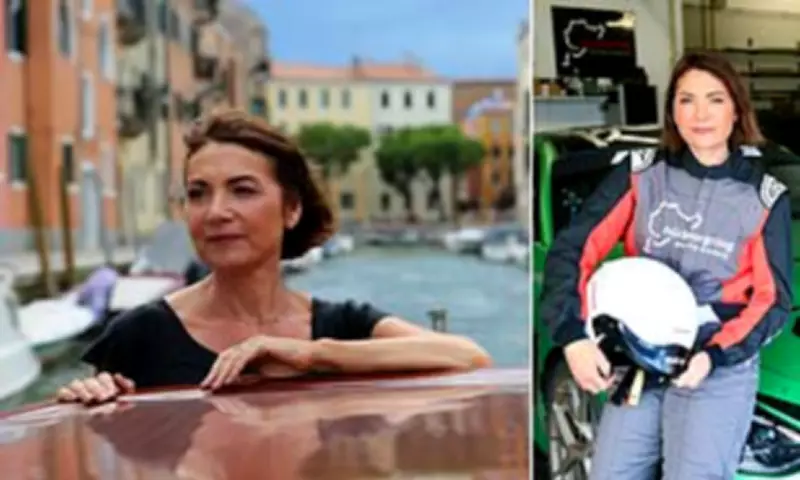
Adler's series travels through Italy, France, Spain, and Germany, weaving a theme of political tensions throughout. However, the documentary often feels disjointed, veering unpredictably from travelogue-style features to economic analyses and crime investigations. In Germany, for instance, Adler illustrates the country's renowned motor industry by taking a 150mph ride in a sports car around the former F1 circuit at the Nurburgring.
She then notes that not all German vehicles are race cars, highlighting the production of family vehicles at the Volkswagen plant in Wolfsburg. Here, she stands inside a vast tower with a multi-storey lift used for stacking cars, emphasizing the scale of the automotive sector.
Economic Challenges and Bizarre Survivalist Bunkers
Adler points out that global competition and U.S. tariffs have undermined Germany's economy, leading to crumbling roads and unreliable mobile phone coverage—issues that mirror those in the UK. Outside Munich, she meets Klaus, a man building a family house with a nuclear bunker in the basement.
Equipped with its own electricity generator, air purifier, stockpiles of food and water, and an iron blast door as thick as a castle wall, the bunker is designed to withstand a Russian attack for up to three months. Klaus plans to add a homely touch with a panorama of sea and forests on one wall, citing Munich as a strategic attack point where escalation is easy.
Adler accepts this explanation at face value but does not probe further into how Klaus expects to survive in a nuclear wasteland post-emergence or what his wife thinks of the project. This segment, like others in the series, blends eccentricity with serious political and economic commentary, creating a patchwork narrative that struggles to maintain cohesion.