Kenneth Williams: The Subversive Genius Who Shaped British Comedy
Kenneth Williams, the actor, comedian, and raconteur who would have celebrated his 100th birthday on Sunday, remains a towering figure in British entertainment. Known for his ability to oscillate between humble and haughty, cheeky and Chekhovian, he consistently stole the show with his unique brand of humour.
A Trailblazer for Queer Expression
When standup comic Tom Allen accepted Attitude magazine's comedy award last year, he paid homage to the subversive wits who paved the way for modern freedoms for queer people in Britain. Alongside icons like Oscar Wilde and Noël Coward, Allen highlighted Kenneth Williams as a personal hero, celebrated by luminaries from Orson Welles to Judy Garland, and Maggie Smith to Morrissey.
"I wanted to mention Kenneth Williams because he was so profound," Allen explains. "And yet, because he was also funny, that profundity hasn't been acknowledged. As a child, I connected with his outsiderness. Rather than trying to fit in, he went in the opposite direction. Not only did he not apologise for being different, but he was queer in every sense, truly at odds with the world in which he found himself."

The Voice and Persona of a Century
Born to working-class London parents on 22 February 1926, Williams became a ubiquitous presence in British culture throughout the latter half of the 20th century. His adenoidal voice, sliding from sandpapery cockney to Sandringham pomp, was inescapable across stage, screen, and radio, from bawdy comedies to chatshows and children's entertainment.
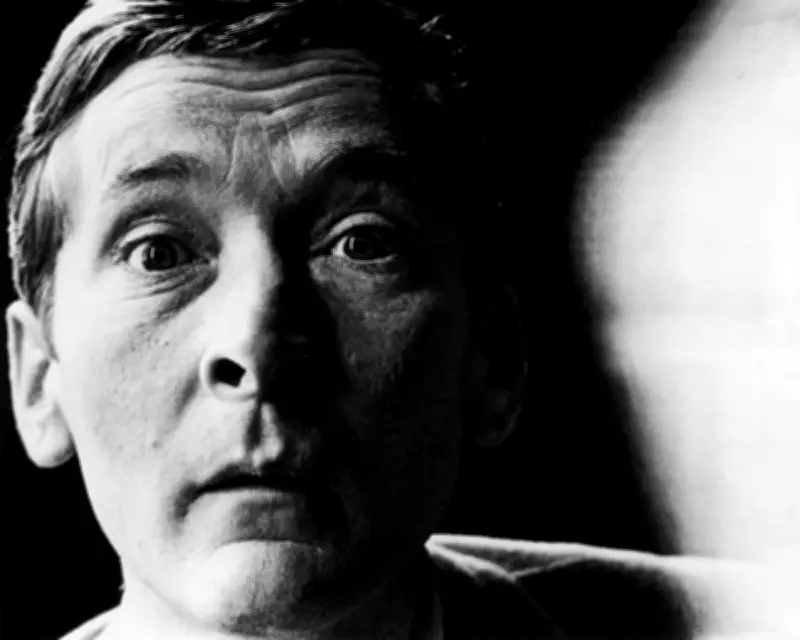
Physically, he was equally distinctive. Describing himself as a "dried-up prune-like poof," Williams resembled a living Gerald Scarfe caricature, with flared nostrils, twitching eyebrows, and pinprick eyes that telegraphed disdain or relish. His comedy, erudite one moment and vulgar the next, led him to remark, "Perhaps it's my duty to be a sort of mosquito. Someone's got to continually remind people that we are animal."
Beyond the Carry On Legacy
While best known for his role in 26 Carry On films, including classics like Carry On Cleo and Carry On Camping, Williams' talents extended far beyond this tomfoolery. In 1950, he understudied Richard Burton in The Seagull, and Orson Welles attempted to lure him to New York for King Lear. Judy Garland was a devoted fan, having worn out vinyl recordings of his 1959 revue, Pieces of Eight.
Peter Cook predicted Williams could be "the funniest comic actor in the world," while critic Kenneth Tynan hailed him as "the petit-maître of contemporary camp." Maggie Smith, a close friend, credited him as "an enormous influence," noting his ability to make speeches "that alive."
Radio Stardom and Subversive Humour
Williams' early work as an apprentice cartographer gave way to national fame on radio shows like Hancock's Half Hour and Round the Horne. On the latter, he and Hugh Paddick played the camp duo Julian and Sandy, using Polari and double entendres to deliver some of the filthiest innuendoes ever broadcast in Britain.
First aired in 1965, two years before the partial decriminalisation of homosexuality, these sketches were both subversive and hilarious. "The whole thing was outrageously rude and queer," says Allen. "In a subtle, mainstream way, he changed attitudes hugely in this country. He was a queer person who people could love through laughter, and that was massive."
The Tortured Private Life
Despite his public persona, Williams' relationship with his sexuality was complex. He often expressed self-loathing, as revealed in his posthumously published diaries. "He would always say he was homosexual by nature, not practice," notes David Benson, who has portrayed him on stage. "He was celibate, and this intense internal pressure and conflict was partly what drove his comedy."

Michael Sheen, who played Williams in a 2006 BBC film, adds, "The sense of not wanting to be penetrated by anything is central to him. He created this baroque personality that could so easily collapse if touched. It was to be admired only from the outside. There's something wonderful about that but also tragic because it required that nobody get too close."
Legacy and Final Years
Williams died in 1988 at age 62 in his London flat, with an open verdict recorded for his overdose of barbiturates. His final diary entry, "Oh – what's the bloody point?" reflects the despair that permeated his life.
"He regretted not being taken seriously," Allen reflects. "The great tragedy is he did something enormously serious through his comedy, which he could never realise or acknowledge. He wasn't seen as an activist, and would probably hate to have been. What we sometimes forget, though, is that radical action comes in many forms."
Ian McShane's Memories
In 1965, Williams starred in Joe Orton's Loot alongside a young Ian McShane. McShane recalls Williams as "funny and charming," though the production was fraught with tension. "The production was overshadowed by Ken wanting to be funny all the time," McShane says. "If he wasn't getting a laugh, he would resort to sticking his bum out or doing 17 different accents."
Despite challenges, Williams' influence endures, cementing his status as a subversive genius who used comedy to challenge societal norms and leave an indelible mark on British culture.