Sundance's Utah Farewell Sparks Emotional Response From Devoted Festivalgoers
As the final Sundance Film Festival in Utah unfolds, a poignant question echoes through the queues, shuttle buses, and lounges of Park City: "Will you still attend when it moves to Boulder?" For many longtime attendees who have formed deep connections with the festival's mountain setting, the answer appears to be a reluctant no.
A Festival Rooted in Utah's Mountains
Butch Ward, a media professional from Fort Lauderdale who has been attending Sundance since the early 1990s, represents a significant contingent of festival regulars who feel the event's identity is inextricably linked to its Utah home. "A Sundance outside Utah just isn't Sundance," Ward declared, considering this year's edition as the final iteration of the festival in its authentic form.
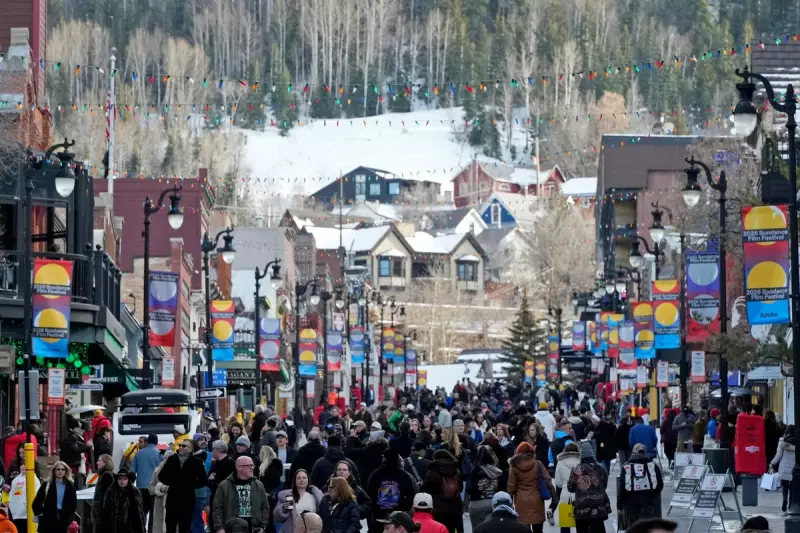
The emotional connection to Park City was visibly evident throughout the festival grounds. A group of women walked down Main Street wearing yellow scarves proclaiming "Our last Sundance 2026," while another attendee balanced a film reel on her head alongside a sign declaring this "the last Sundance." These displays reflected a widespread sentiment among those who had found their creative sanctuary in the Utah mountains.

Redford's Legacy and the Festival's Evolution
Suzie Taylor, an actor who has attended Sundance intermittently since 1997, emphasised that the resistance to relocation extends beyond mere nostalgia. "Robert Redford's vision was rooted here," she noted, adding a poignant observation about the festival founder's passing in September at age 89. "Isn't it poetic that he passed right before the last one?"
Julie Nunis, a Los Angeles-based actor who has attended nearly every festival since 2001, echoed this sentiment, stating she doesn't want to experience Sundance any other way than the tradition Redford established in Park City over four decades ago. Redford, who attended the University of Colorado Boulder, had given his blessing for the relocation before his death.
The Practical Reasons Behind the Move
Sundance organisers initiated the search for a new home after determining the festival had outgrown the ski town it helped put on the international map. The selection process involved numerous American cities competing to host the nation's premier independent film festival, with Boulder ultimately emerging victorious after a yearlong search.
Organisers cited concerns that the festival had developed an air of exclusivity in Park City that diverted attention from the films themselves. The move represents an attempt to refresh Sundance's atmosphere while maintaining its commitment to independent storytelling.
Mixed Reactions to the Colorado Transition
Lauren Garcia, an anthropologist from Seattle who has volunteered at Sundance for six years, described a "sadness lingering over the final Utah festival" and questioned whether Redford's passing signalled an appropriate time to close this chapter. "How is the festival going to express itself in a new place and continue his legacy? It's a huge question mark," she pondered.
Some film professionals expressed willingness to give Boulder a chance while acknowledging concerns about Sundance losing its distinctive identity. Nik Dodani, an actor and filmmaker focused on LGBTQ+ stories, welcomed the opportunity to experience the festival in a state that embraces diversity but worried about creating a "vacuum" for such narratives in Utah.
Preserving Redford's Vision in Utah
Amy Redford, Robert Redford's daughter who serves on the Sundance Institute's board of trustees, offered reassurances about the transition. While acknowledging the "steep learning curve" ahead, she expressed excitement about the Boulder move representing "a new adventure" reminiscent of the festival's early experimental days.

Crucially, she confirmed that the piece of her father's legacy he valued most—the institute's lab programs for emerging screenwriters and directors—will remain in Utah at the resort he founded approximately 34 miles south of Park City. "Filmmakers will continue to create the civil discourse that we really need to be having in the state," she affirmed.
Redford characterised the Boulder relocation as an evolution rather than an abandonment of Sundance's roots, noting that while Colorado represents new beginnings, "the way that we meet artists where they need to be, well, that evolves out of a heartbeat that is here in Utah."
As Sundance prepares for its Colorado chapter, the emotional farewell in Utah highlights the profound connections cultural institutions forge with their geographical homes, and the complex challenges of evolving while honouring foundational legacies.