Human remains discovered on California's Channel Islands have raised fresh questions about how the Americas were first colonised, challenging the long-held theory that the first inhabitants arrived via a land bridge from Siberia. The 13,000-year-old remains, known as Arlington Springs Man, were found on Santa Rosa Island and suggest early migrants may have reached North America by boat, following a Pacific coastal route called the 'kelp highway'.
Discovery on the Channel Islands
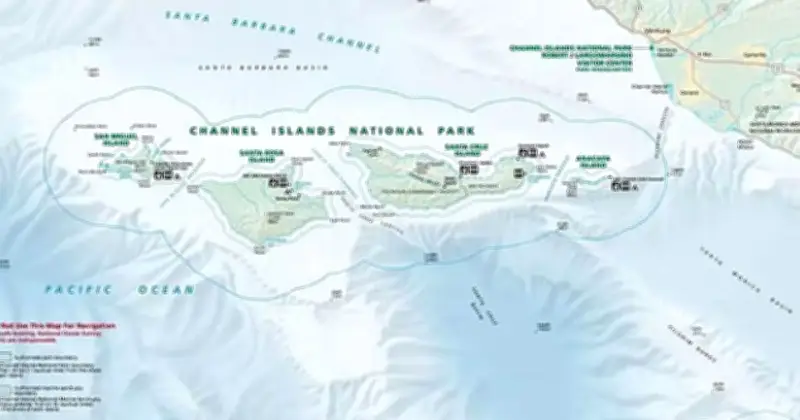
The eight California Channel Islands, located off Southern California, have yielded ancient settlements and archaeological evidence that points to a forgotten maritime migration. The four northern islands—San Miguel, Santa Rosa, Santa Cruz and Anacapa—were once situated much farther south, near present-day San Diego, before tectonic movement shifted them northwards and rotated them by around 110 degrees. Their ancient deposits have remained unusually well preserved, protecting evidence that has disappeared elsewhere due to rising seas and human activity.
Arlington Springs Man was discovered in 1959, buried around 37 feet beneath layers of waterlaid sand, mud and gravel. Radiocarbon dating carried out in 2001 by geologist Dr Thomas Stafford showed the remains were at least 13,000 years old, making them the oldest dated human skeletal remains in North America at the time. This discovery is particularly significant because the remains are around the same age as the Clovis culture, once regarded as the earliest known population in the Americas. Unlike Clovis sites, however, Arlington Springs Man was found on an offshore island, suggesting early inhabitants may already have possessed advanced seafaring abilities.

The 'Kelp Highway' Hypothesis
The presence of humans on an island thousands of years ago created a major archaeological question, as reaching the area would have required boats and maritime skills much earlier than many researchers previously believed. This idea is known as the 'kelp highway' hypothesis. Dr John Johnson, curator of anthropology at the Santa Barbara Museum of Natural History, said: 'All the way from Japan to Baja California, there are kelp forest ecosystems that have very similar suites of animals. This connects with the whole idea of a coastal migration, an ancient coastal migration where people would have been using watercraft and going around glaciers when they encountered them and working their way down until they came to California.'
He added: 'People showed up on this island 13,000 years ago or thereabouts and evolved through time into the group we know as the Chumash.' The Chumash people's ancestral homeland includes California's central and southern coastline as well as the four northern Channel Islands. During the Ice Age, mammoths lived across a larger landmass that connected the northern islands before eventually evolving into smaller forms known as pygmy mammoths. The species disappeared around the same period humans arrived on the islands, leading some researchers to suggest early inhabitants may have encountered or hunted the miniature animals.
Debate Among Archaeologists
However, not all archaeologists agree the Channel Islands provide definitive proof of an early coastal migration. While there is now broad agreement that humans were present in the Americas before the Clovis culture, experts continue to debate when the first settlers arrived and whether they travelled by sea, land or a combination of routes. The Clovis people were known for their distinctive fluted spear points and were traditionally believed to have entered North America through an ice-free corridor in Canada. The Channel Islands discoveries raised the possibility that another population reached the continent by following the Pacific coast instead.
A new documentary released on June 30 by YouTube channel Timeline has renewed interest in the discoveries and the unanswered questions surrounding the islands. Author Frederic Caire Chiles, who holds a PhD in history from the University of California at Santa Barbara, described the islands as 'the trace of a vanished world'.

Historical Context and Impact
For thousands of years, the islands remained home to Chumash ancestors, who developed sophisticated maritime societies and traded shell bead currency with communities on the mainland. The arrival of Portuguese explorer Juan Rodríguez Cabrillo in 1542 marked the first recorded European contact with California and transformed life on the islands. 'This was the furthest projection of Europe into a world that they knew nothing about,' one historian said. Disease, colonisation and social disruption later devastated Indigenous communities and contributed to the abandonment of some island settlements.
One of the most famous stories linked to the islands is that of the 'Lone Woman of San Nicolas Island', who survived alone for around 18 years before being rescued in 1853. Her story later inspired the novel Island of the Blue Dolphins. Today, researchers believe the Channel Islands still contain many undiscovered clues hidden beneath their landscapes and surrounding waters. During the Ice Age, sea levels were hundreds of feet lower, meaning areas now submerged may once have been dry land inhabited by some of America's earliest settlers.