Congo River's Perilous Journey: Timber Trade Threatens Vital Rainforest
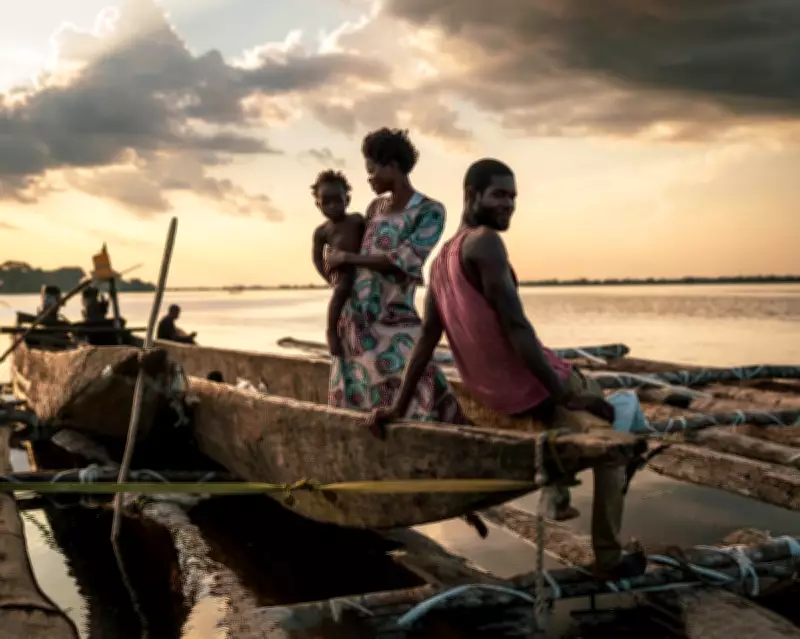
Jean de Dieu Mokuma, accompanied by his wife Marie-Therese and their two young children, stands resolute on a makeshift raft of logs as the sun dips below the horizon of the Congo River. "You cannot afford to fear the storms," he declares, his voice steady against the backdrop of swirling waters. "Once the current takes hold, there is no retreat." The family is piloting a precarious cargo of timber downstream, lashed to a canoe, bound for Kinshasa, the capital of the Democratic Republic of the Congo (DRC).
Stranded by Corruption and Currents
Overnight, the Mokumas find themselves stranded near the chaotic trading town of Mbandaka, where port officials have confiscated parts of their outboard motor, demanding dubious taxes. If they navigate this corruption and the river's relentless currents to deliver their raft intact, they anticipate earning $300 from a lumber mill in Kinshasa. "I would prefer to remain a fisherman," Mokuma admits, "but there is no livelihood in it. In Kinshasa, we can secure what we need to survive."
This family represents millions across the Congo River basin who depend on its waters and resources for their livelihoods. Stretching over 2,900 miles from the Albertine Rift mountains to the Atlantic coast, the river and its tributaries span six nations, sustaining vast networks of rainforests and swamps.

The Congo Basin: A Biodiversity Hotspot Under Siege
The Congo basin is the second-largest rainforest on Earth, sequestering 1.5 billion tonnes of carbon emissions annually. It harbors an astonishing array of biodiversity, including:
- Over 10,000 plant species
- More than 400 mammal species
- 1,000 bird species
- 700 fish species
However, over half of these forests are located in the DRC, where they face mounting pressures from a rapidly growing population and poorly regulated exploitation. Erick Bayo, a ranger at the Bombo-Lumene nature reserve near Kinshasa, patrols one of the last intact forest areas in the region. His expeditions reveal clearings of felled trees and ashen earth scarred by illegal charcoal production, with hundreds of abandoned bags ready for transport.
Charcoal Demand and Deforestation
"There was fighting here, so the community fled," Bayo explains, noting they would not have left their charcoal otherwise. His team, alongside ragged Congolese army troops, works tirelessly under the scorching sun to destroy these illegal stocks. Kinshasa, with a population exceeding 18 million, has an insatiable demand for cooking charcoal—a cheap alternative for the 75% of Congolese living on less than $2.15 a day.
Recent discoveries have underscored the urgency of conservation efforts. A vast peatland beneath the swamp forests, known as the Cuvette Centrale, stores 30 billion tonnes of carbon across the DRC and the Republic of the Congo. Despite a controversial government plan to auction oil and gas drilling rights being cancelled in 2024, much of this peatland remains unprotected.
Community-Led Conservation in Lokolama
In the village of Lokolama, nestled within Équateur province, community leader Jean-Pierre Ahetoa reflects on newfound awareness. "It was new for us to discover the word peatland and learn that our land provides clean oxygen for all," he says. Traditionally reliant on hunting antelopes and gathering honey, the village has adopted informal conservation practices. "We know how to divide the land—some for fields and construction, the rest we leave intact," Ahetoa adds, highlighting grassroots efforts in the absence of legal guidance.
Opaque Supply Chains and Environmental Toll
From the riverbanks near Lokolama, the scale of exploitation becomes evident. Vast barges laden with hundreds of logs motor downstream, resembling floating cities where traders and crews camp for weeks, bartering with riverside communities. At the port of Kinkole, outside Kinshasa, workers scramble to hitch logs to tractors, while traders in colourful dresses oversee the chaotic melee. These supply chains are notoriously opaque, with research indicating most forest concessions in the DRC operate illegally.

Between 2001 and 2024, the DRC lost 21 million hectares of trees. The future of this critical ecosystem, often called the "lungs of Africa," hinges on whether conservation efforts can outpace relentless exploitation. As families like the Mokumas brave storms and corruption, the Congo River's fate remains intertwined with global environmental stability.