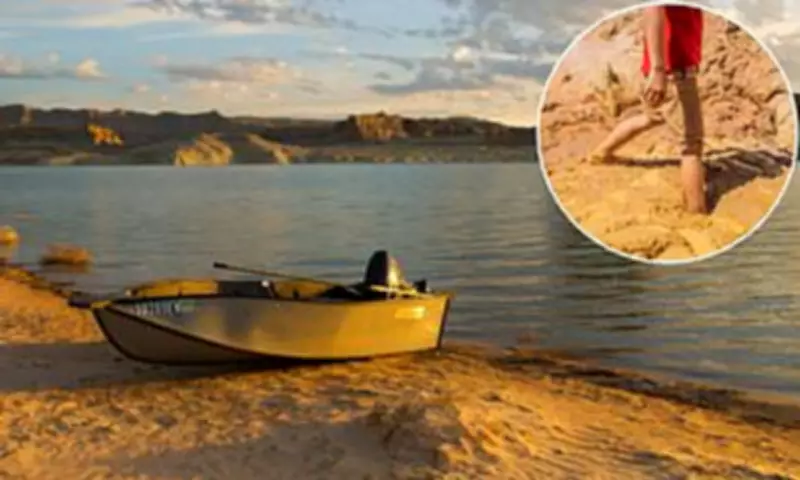
National Park Service Issues Critical Quicksand Alert for Glen Canyon Visitors
The National Park Service has released an urgent public safety warning concerning potentially deadly quicksand formations discovered throughout Glen Canyon National Recreation Area. Park officials are alerting travelers about dangerous quicksand pockets that have been forming near shorelines and within drainage areas across the vast park, which spans both Arizona and Utah.
Deceptive Appearance and Warning Signs
The quicksand presents a particularly deceptive hazard because it can appear completely dry and firm on the surface while suddenly giving way beneath a person's weight. According to the Park Service alert issued last week, visitors should watch carefully for unstable, shifting, or unusually soft ground and exercise extreme caution when entering these areas.
Quicksand is scientifically defined as a water-saturated mixture of sand that appears solid initially but collapses into a liquid-like state when disturbed by the weight of a person or animal. Once liquefied, the mixture can rapidly firm up again, effectively trapping whatever stepped into it.

The NPS has identified several key warning signs that indicate potential quicksand presence:
- Wet, unusually smooth ground surfaces
- Sudden water seepage in unexpected locations
- Soil that vibrates or shifts underfoot
- Dry-looking but spongy ground textures
- Saturated low spots in the terrain
- Fine sediment mixed with water, especially following storms or rapid water-level changes
The Science of Quicksand and Human Buoyancy
Contrary to dramatic Hollywood portrayals, quicksand's density is approximately twice that of the human body, meaning a person will typically only sink about halfway rather than being completely submerged. "At that level of density, sinking in quicksand is impossible. You would descend about up to your waist, but you'd go no further," explains National Geographic's analysis of the phenomenon.
Jim Britt, a conservation spokesperson at the Maine Department of Agriculture, clarified this misconception to The Associated Press: "People hear the word quicksand they think jungle movie. The reality with this supersaturated sand is you're not going to go under. People who are caught in supersaturated sand remain buoyant - people don't sink in quicksand - allowing them to float and wriggle themselves to safety."
However, the situation can become significantly more dangerous when panic sets in. Frantic struggling can cause the quicksand to become more liquid, reducing buoyancy and potentially pulling the victim deeper into the mixture. Maintaining calm is therefore absolutely crucial for survival.
Essential Escape Techniques and Safety Protocols
The National Park Service has provided detailed instructions for escaping quicksand safely:
- Do not panic - frantic movements only make the quicksand more liquid
- Lean back to spread your body weight by shifting into a reclined position
- Gently wiggle your legs in small back-and-forth motions to let water flow into surrounding sand
- Use your arms to inch backward toward solid ground once legs are free
- Never stand up until completely out of the quicksand area
- Use a branch or trekking pole for stability rather than grabbing a person's hand
The NPS specifically warns against allowing friends to attempt pulling someone out, as this requires tremendous force equivalent to lifting a small car and may only partially free the victim. Instead, the focus should be on self-extraction techniques that maximize buoyancy and reduce downward pressure.
"Quicksand is rarely life‑threatening, but escaping can be tiring," acknowledges the National Park Service. "Assistance may be needed if the sediment is deep or if the person is fatigued."
Real-World Experience and Park Context
Jamie Acord, who experienced being trapped in quicksand at Popham Beach State Park in Maine, described the terrifying sensation to the AP in 2024: "I couldn’t feel the bottom. I couldn’t find my footing." This firsthand account underscores the disorienting nature of quicksand encounters.

Glen Canyon National Recreation Area covers an expansive 1.25 million acres stretching from Arizona's Lees Ferry to Utah's Orange Cliffs. The park serves as a popular destination for water sports enthusiasts, backcountry explorers, and visitors seeking iconic landmarks like Horseshoe Bend on the Colorado River. The quicksand warning comes during peak visitation periods when thousands explore the park's diverse terrain.
Park officials emphasize that while quicksand presents a genuine hazard, proper awareness and preparation can prevent serious incidents. Visitors are encouraged to stay informed about current conditions, recognize warning signs, and understand escape techniques before venturing into potentially affected areas.