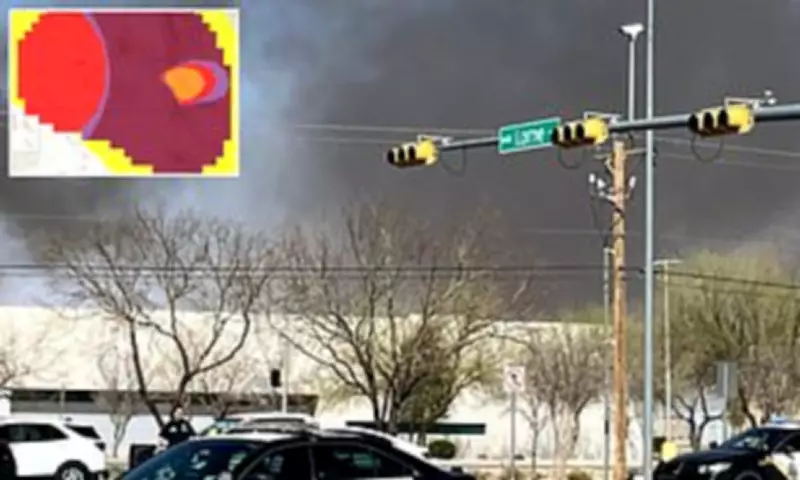
Health officials have issued urgent warnings for hundreds of thousands of Americans to remain indoors with windows sealed due to hazardous air conditions along the US southern border. The US Environmental Protection Agency (EPA) has activated its highest level of alert concerning air quality over Texas and New Mexico, describing pollutants across a 150-mile stretch as posing a severe threat to human health.
Extreme Pollution Centered on El Paso
The toxic cloud is concentrated over El Paso, Texas, directly adjacent to the US-Mexico border. This region was already under a high wind alert on Tuesday, which authorities believe may be exacerbating the situation by dispersing smoke and dust into the area. Real-time monitoring of the Air Quality Index (AQI) along the border recorded a reading of 290, classified as extremely dangerous for all individuals, regardless of health status.
Understanding PM10 Particles
According to air quality-tracking website IQAir, the affected zone is saturated with PM10, a form of air pollution consisting of minuscule solid particles or liquid droplets suspended in the atmosphere. These inhalable particles measure less than 10 micrometers in diameter, finer than a human hair, and originate from sources such as construction dust, pollen, mold, smoke, soot, industrial emissions, and wind-blown soil.

PM10 particles are notably larger than PM2.5, the microscopic particles containing toxic compounds or heavy metals from vehicle exhaust and factory outputs. However, both types pose significant health risks, capable of penetrating deep into the lungs upon inhalation. Exposure can aggravate respiratory conditions like asthma and contribute to heart attacks, strokes, and premature death when inhaled in substantial quantities.
EPA's AirNow System Confirms Hazardous Levels
The EPA's AirNow tracking system reported extremely hazardous air conditions over Texas and New Mexico on Tuesday. Air quality is evaluated on a scale from 0 to 500, where readings between 0 and 50 indicate good air with minimal risk, 51 to 100 are moderate and may affect sensitive individuals, 101 to 150 are unhealthy for sensitive groups with elevated risk, 151 to 200 are unhealthy for everyone and necessitate limited outdoor activity, and levels above 200 are considered very unhealthy to hazardous.
The current AQI of 290 far exceeds these thresholds, prompting the EPA's unprecedented alert. This developing situation underscores the critical need for public adherence to health advisories as authorities continue to assess and respond to the environmental crisis.