Forests' Deep Soil Carbon Storage Less Effective Than Believed, Study Reveals
Forests should not be considered a "silver bullet" solution against climate change, as new research indicates deep soils within forest ecosystems may be significantly less effective at storing carbon over the long term than previously assumed. This finding challenges conventional wisdom about forest carbon sequestration capabilities.
Questioning Forest Carbon Storage Assumptions
Professor Jens-Arne Subke of the University of Stirling, who co-authored a new scientific commentary examining these findings, emphasized that society cannot "over-rely" on forests to mitigate climate change impacts. The commentary builds upon recent research conducted by Professor Subke's team focusing specifically on pine plantations in Scotland, alongside findings from a BOKU University-led study of European beech forests in Central Europe.
Key discoveries from the Scottish research include:

- Soils beneath mature pine forests contained approximately half the carbon levels of nearby soils that remained as grassland
- The carbon lost from forest soils equalled around one-third of the carbon absorbed from the atmosphere by the trees themselves
- Carbon remaining in forest soils demonstrated less stability, meaning it could break down and be released more easily in future
Research Methodology and Implications
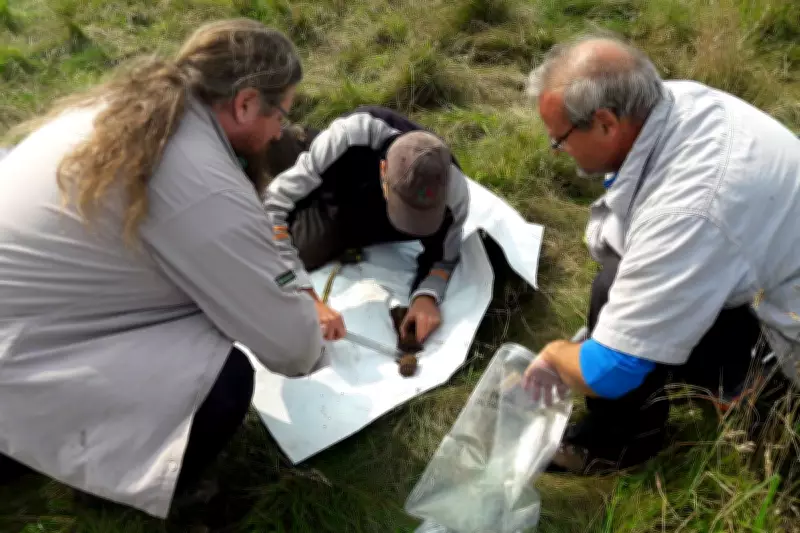
During the comprehensive study, researchers collected soil samples from 16 distinct sites in the Scottish Lowlands where pine trees had been planted on former long-term grasslands, with the oldest plantations dating back 68 years. The investigation revealed crucial insights about carbon dynamics in forest ecosystems that have significant implications for global climate policy.
Professor Subke explained: "Our findings emphasized that we cannot over-rely on forests to mitigate the impacts of climate change because there is still so much that we don't understand. Despite accumulating tree biomass, we may be losing carbon capital – the carbon stored long term in soils and ecosystems – to the atmosphere."
Broader Context and Expert Perspectives
Dr. Thomas Parker of the James Hutton Institute, who co-authored the scientific commentary, provided important context: "Forests are essential for human and planetary well-being for a range of reasons, but we need to acknowledge that they are not a silver bullet for all our problems. There are complexities and trade-offs that need to be understood to maximise the net benefits that we gain from forests."
This research comes at a critical time as tree planting campaigns proliferate worldwide, utilizing photosynthesis to store carbon in soil, roots, and wood. The findings suggest these initiatives may need more sophisticated planning and monitoring to ensure they deliver expected climate benefits.
Publication and Collaboration Details
The scientific commentary, titled "Uptake and release – what is driving change in the net carbon budget in forest soils?" was published in the prestigious journal Global Change Biology. The specific study concerning pine trees appeared in the Journal of Environmental Management.
This important research represents a collaborative effort involving:
- University of Stirling researchers
- Colorado State University scientists
- Forest Research specialists
The work received funding through a collaborative grant from both the National Environmental Research Council (NERC) and the National Science Foundation (NSF), highlighting its international significance and rigorous scientific foundation.