The Enchanting and Overlooked Realm of Fungi
To aficionados, fungi are freaky, mystical, and frequently overlooked. Yet, they are increasingly helping scientists uncover vital ecological insights. On a crisp day, Jessica Allen, a dedicated fungi scientist, crunched through fallen leaves among Manzanita trees in California's Napa County, hunting for the rare Manzanita butter clump—a yellow mushroom last spotted two years ago along North America's Western coastlines.
A Distraction of Dazzling Lichens
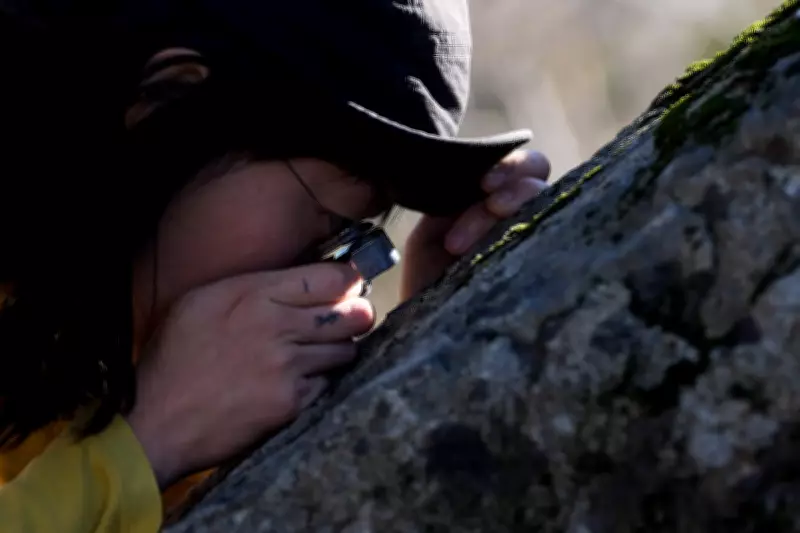
Within minutes, Allen's attention was captured not by mushrooms, but by lichens—a symbiotic form of fungi bursting with dazzling shapes, textures, and colors on a rock. "It's so easy to get distracted, but there's so many lichen!" she exclaimed excitedly. Ecologist Jesse Miller, president of the California Lichen Society, agreed, noting, "That was a good rock," before urging the group to continue their mushroom quest.
Allen and Miller are part of a growing community enchanted by the wondrous world of fungi, working tirelessly to protect these essential organisms. Nearly all life forms depend on the estimated 2.5 million fungi species on Earth, which contribute an astounding $54 trillion to the global economy through food, medicine, and other applications, according to a study published in Springer Nature.

The Critical Role of Fungi in Ecosystems
Fungi form an enormous kingdom distinct from plants and animals, including yeasts for bread and alcohol, molds on fruit, lichens, and mushrooms ranging from edible to deadly. They serve as planet's great connectors and decomposers, vital for forests, animal habitats, and human medicines like penicillin. Some fungi even store carbon or are used in building materials.
Despite their importance, only about 155,000 species have been documented—a mere 6% of the millions believed to exist. Conservation efforts have long neglected fungi, even as they face escalating threats from pollution, habitat loss, and climate change. However, the past decade has seen a shift, driven by citizen scientists and a deeper understanding of fungal diversity.
Amateur Researchers: The Backbone of Conservation
"It’s a pretty exciting time in fungal conservation," said Allen, who serves as a mycologist for NatureServe, a hub for biodiversity data in North America. In her role, she accelerates fungal conservation in the U.S. and Canada, emphasizing that amateur researchers play a key role. Groups like the California Lichen Society often make crucial discoveries and monitor rare species over time.
On a recent chilly day, dozens of lichenologists and enthusiasts fanned out across a reserve, treating the annual foray as part treasure hunt, part data collection, and part nature hike. Every lichen—powdery, leafy, or branchy—invited exploration into a miniature world filled with exclamations of wonder. As chemist Larry Cool noted, "Lichenologists make terrible hiking partners" because they constantly stop to marvel.
Cool's 53-year fascination with lichens began when he learned they could be used as natural dyes. "Lichen are more than the sum of its parts and are mysteriously unpredictable," he said. "I get a lot of pleasure seeing the incredible variety of creation." Similarly, Ken Kellman, a retired mechanic turned amateur lichenologist, has spent a decade geeking out over fungi, helping scientists document biodiversity in his hometown of Santa Cruz, California.
Global Efforts and U.S. Lag in Fungal Protection
Gregory Mueller, co-chair of the International Union for Conservation of Nature's fungal conservation committee, has dedicated his career to this cause. According to the group's Red List, 411 of 1,300 evaluated fungi species worldwide are at risk of extinction. While Europe has focused on fungal conservation for decades, Mueller stated that the U.S. "is still far behind." Only two fungi species—both lichens—are protected by the federal Endangered Species Act, though states like California have enacted legal protections.
Change is slowly occurring, thanks to community science initiatives. "There’s a lot of amateur mycologists ... documenting fungi with photographs on platforms like iNaturalist and Mushroom Observer," Mueller explained. "We’ve been able to use those data to better document fungal diversity and identify species in trouble."

Threats and Learning Curves in Fungal Science
Most fungi remain hidden as mycelium networks, producing mushrooms only under ideal conditions, which complicates study efforts. Nora Dunkirk, a botanist and mycologist at Portland State University, highlighted climate change as a major threat, with shifts in rainfall, hotter temperatures, and wildfires disrupting delicate forest-fungi relationships. Logging, development, invasive insects, pollution, and overharvesting also endanger species.
For instance, the grapefruit-sized quinine conk, listed as endangered in Europe since the 1980s, has suffered from overharvesting for medicinal uses. "This species specifically has been harvested to its detriment," Dunkirk noted. In the U.S., the 1990s conservation of the Northern spotted owl indirectly benefited fungi, as the 1994 Northwest Forest Plan established protections for about 400 rare species, including fungi, across three states.
The Elusive Search and Hopeful Future
Back in California, Allen and her friends continued their quest for the Manzanita butter clump, searching steep slopes and creek beds without success. "How many of my days have ended this way? So many," Allen reflected. "It was still a great day." This ephemeral nature underscores the challenges in fungal conservation, but with growing awareness and citizen involvement, the future holds promise for protecting these mystical and vital organisms.