Hawaii Residents Take Legal Action Against Controversial Hotel Development
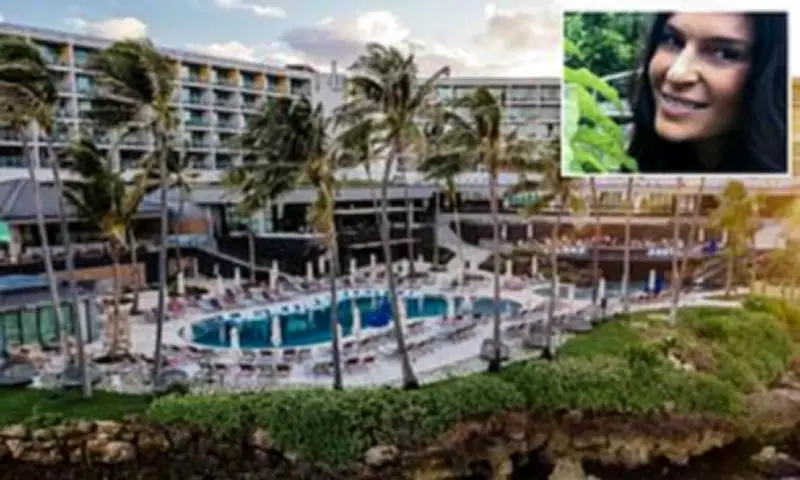
Angry local residents and environmental organizations in Hawaii have initiated legal proceedings against government planning authorities following the approval of a major hotel development they argue could permanently damage their island paradise. The lawsuit targets Honolulu's Department of Planning and Permitting over its decision to greenlight a 375-room luxury hotel project proposed by Host Hotels & Resorts, owner of the existing Ritz-Carlton Oahu in Turtle Bay.
Development Plans and Environmental Concerns
The planned development would occupy approximately 50 acres of land situated between Kawela Bay and Kuilima Point, featuring not only extensive hotel accommodations but also a comprehensive gym, spa facility, multiple retail shops, and several restaurants. However, three prominent climate and conservation groups—the Center for Biological Diversity, the Conservation Council for Hawai'i, and K Pa'a Kuilima—filed their legal challenge on February 3 in Hawaii's First Circuit environmental court.
These organizations are contesting the planning department's determination that the hotel project does not require a new environmental impact assessment, arguing that ecological conditions have changed substantially since the last review was conducted in 2013. The lawsuit specifically highlights that seven species of Hawaiian yellow-faced bees—including at least two species identified on the development site—have since been listed as endangered.

Endangered Species and Habitat Destruction
The legal complaint details significant environmental changes that have occurred over the past decade, noting that Laysan albatross birds have successfully established a growing nesting colony at nearby Kahuku Point after decades of failed attempts. Furthermore, sightings of critically endangered Hawaiian monk seals in the area have shown a steady and marked increase since the previous environmental survey.
Maxx Phillips, the Hawaii and Pacific Islands director for the nonprofit Center for Biological Diversity, expressed profound concern about the development's potential impact. 'It's really sad, and especially for our endangered Native Hawaiian bees, which two of those species have been found on site, where the development is slated,' Phillips told reporters. 'The department's approval of this project threatens destruction of native wildlife and their habitat.'
Cultural Significance and Public Access
The lawsuit describes Turtle Bay as both an 'ecological hotspot' and a location 'imbued with cultural significance' that faces irreversible damage from the proposed development. Phillips further warned that new hotel constructions along beaches, while not technically privatizing public spaces under Hawaii law, often create 'the illusion of private beaches only for the rich visitors' that effectively excludes local residents from accessing their own shoreline.
Jessica dos Santos, whose nonprofit Kupaa Kuilima is a co-plaintiff in the legal action, explained the community's motivation for pursuing litigation. 'I think there's a general sense of the community that enough is enough and we need to protect what we love, and we love this place,' dos Santos told local media. 'Legal action was necessary to make sure this project does not carry on without proper environmental review.'
Political Opposition and Developer Response
Hawaii state senator Brenton Awa has voiced strong opposition to the proposed development, suggesting it would primarily benefit 'a small pool of individuals' rather than the broader community. 'On the North Shore, on the East Side, wherever it may be in Hawaii, this is just one of those things that we as people look at and think, "Here we go again",' Senator Awa remarked, reflecting widespread frustration with similar development projects across the islands.

Host Hotels & Resorts confirmed awareness of the lawsuit while maintaining their compliance with all applicable regulations. 'While we cannot comment on ongoing litigation, Host believes it has acted in compliance with all applicable laws, permits, and established agreements governing the property,' the company stated. They emphasized that the current proposal 'has been significantly reduced through conservation easements, settlement agreements, and adopted community plans from previous approved plans for this area.'
Legal Demands and Future Implications
The environmental organizations have requested a judicial ruling declaring the 2013 environmental impact statement invalid due to changed circumstances. They are demanding a completely new environmental assessment be conducted before any hotel construction proceeds. Additionally, local plaintiffs have sought an immediate injunction to halt all development activities until what they describe as a 'legally adequate' environmental review is properly completed.
Phillips expressed confidence in their legal position, stating 'We feel like our arguments are very strong,' while warning that allowing this construction to proceed could establish a dangerous precedent enabling further hotel developments throughout the region. The lawsuit represents a significant confrontation between development interests and environmental protection advocates in Hawaii, with potential implications for future construction projects across the environmentally sensitive islands.