Hawaii's Waters Turn Toxic Brown After Historic Storms Flood Sewage Into Ocean
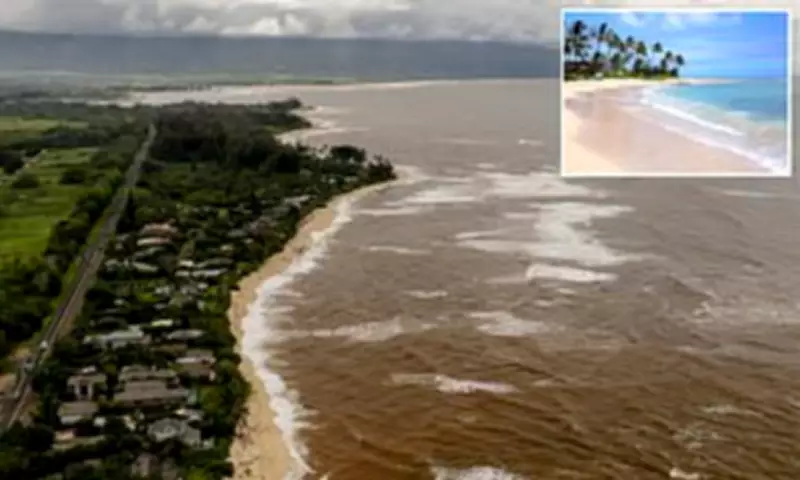
Hawaii's iconic turquoise waters have transformed into a hazardous murky brown following a series of historic storms that unleashed catastrophic flooding across the islands. The Hawaii Department of Health has issued urgent advisories, urging residents and tourists to avoid all ocean contact due to severe contamination from overflowing sewage systems.
Widespread Health Advisories Issued
Health warnings now cover the ocean waters surrounding Kauai, Oahu, Maui, and the western and southern coasts of Hawaii Island. Officials emphasize that the brown, turbid water presents significant health risks, as it contains pollutants and pathogens from septic tanks, cesspools, animal feces, and industrial chemicals washed through storm drains.
'People should stay out of all waters that appear brown or turbid,' the DOH stated explicitly, noting that even standing water from heavy rainfall can be dangerously contaminated. The Honolulu Ocean Safety Department recommends avoiding ocean waters for at least 72 hours after the last rainfall, with continued caution advised beyond that period.

Severe Health and Environmental Risks
Exposure to the polluted water can lead to numerous illnesses, including nausea, stomach pain, diarrhea, skin rashes, eye and ear infections, and respiratory complications. Arleen Velasco, co-coordinator of the Surfrider Foundation's Blue Water Task Force, warned that only those 'with absolutely no fear of getting sick' should consider entering the water, suggesting waiting a full week given the current pollution levels.
Independent testing by Surfrider volunteers has detected alarming levels of enterococci bacteria, indicating fecal contamination. Additionally, the murky conditions create an ideal environment for sharks, attracted by higher concentrations of food and nutrients, further increasing the danger.
Catastrophic Damage and Ongoing Crisis
The storms have caused over $1 billion in damage to both private and public infrastructure, according to Hawaii Governor Josh Green. 'We've had 40 to 50 inches of rain, the largest flood that we've had in 20 years,' Green told CNN, highlighting repairs needed for Maui's airport and a hospital that was 'wiped out.' The flooding has resulted in two serious spinal cord injuries and prompted evacuations in hard-hit areas of Oahu and Maui.
Search efforts continue for a missing 71-year-old woman who fell into an inundated stream on Maui while attempting to gather water. Despite extensive ground, air, and ocean searches using helicopters and jet skis, she remains unlocated.
Public Response and Celebrity Impact
Despite the warnings, some individuals have been observed swimming in Waikiki, as reported by the Star Advertiser. Meanwhile, Hollywood actor Jason Momoa was among thousands forced to flee, losing power on the North Shore and relocating with his family. He expressed concern for those affected, stating, 'We're safe now, but there's a lot of people who weren't, so sending all our love.'
Signs have been posted on famous beaches in Maui and Molokai, alerting the public to the polluted waters. As recovery efforts proceed, officials stress that the brown water poses a persistent threat, underscoring the need for vigilance and adherence to health advisories to prevent further illness and injury.