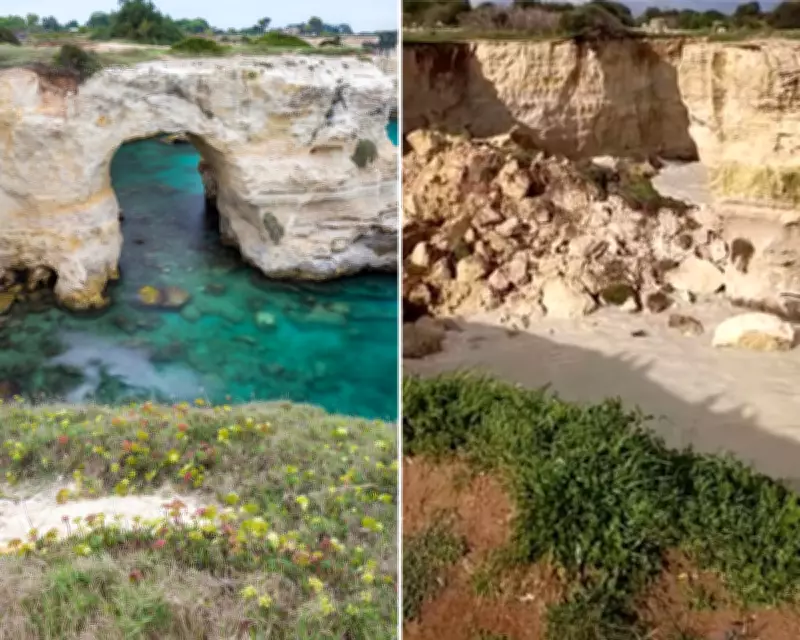
The iconic natural rock arch at Sant'Andrea in Melendugno, Puglia, Italy, known affectionately as the Lovers' Arch, has tragically collapsed into the Adriatic Sea on Valentine's Day. This beloved landmark, which served as a picturesque backdrop for countless wedding proposals, selfies, and postcards, succumbed to the relentless forces of strong storm surges and heavy rainfall that battered southern Italy over recent days.
A Devastating Blow to the Heart of Salento
Mayor Maurizio Cisternino of Melendugno expressed profound sorrow, stating that the collapse represents a devastating blow to the heart of the community. He emphasized that one of the most famous tourist features of the coastline and the entire nation has now disappeared. The arch was a highly recognizable symbol of the Salento region, which ranks among Italy's most heavily visited tourist areas.
Progressive Weakening and Final Collapse
According to local authorities, the rock structure had been progressively weakened by a combination of strong winds, rough seas, and intense rainfall in the lead-up to its final collapse on Saturday. This event marks the most significant damage inflicted by coastal erosion on the Salento landscape in recent memory.

Tourism councillor Francesco Stella somberly remarked that it feels like a funeral, highlighting the emotional impact on residents and visitors alike. Mayor Cisternino further noted that nature has been overturned, with landscapes existing thirty years ago now vanished, underscoring the urgent need for resources to implement organic interventions to protect remaining coastal features.
The Role of Mediterranean Cyclones
The collapse is linked to the increasing frequency and intensity of Mediterranean cyclones, known as medicanes, such as Cyclone Harry which struck in January. These warm-core systems, driven by rising sea temperatures associated with the climate emergency, have been devastating ports, homes, roads, and reshaping coastlines across southern Italy.
Climate Emergency Fuelling Extreme Events
Christian Mulder, a professor of ecology and climate emergency at the University of Catania in Sicily, explained that with the Mediterranean experiencing among its hottest years on record in 2025, warmer seas are supercharging the atmosphere and fuelling extreme weather events. The destructive force of these cyclones, with winds exceeding 60mph (97km/h) and waves reaching up to 15 metres, has left a long trail of devastation.
This includes destroying ports, damaging homes, tearing up roads, and eroding extensive stretches of coastline. For instance, on January 25th, torrential rain from Cyclone Harry triggered a devastating landslide in Niscemi, Sicily, creating a 4km-long chasm that swallowed roads, cars, and sections of the urban fabric.
Implications for Tourism and Conservation
The loss of the Lovers' Arch is not just a geological event but a cultural and economic setback for the region. It underscores the broader challenges posed by climate change and coastal erosion to Italy's natural heritage and tourism industry. Local officials are now faced with the dual task of mourning this iconic landmark and seeking sustainable solutions to protect other vulnerable sites from similar fates.