Rwanda's Rainfall Crisis: From Lifeline to Threat for Vulnerable Communities
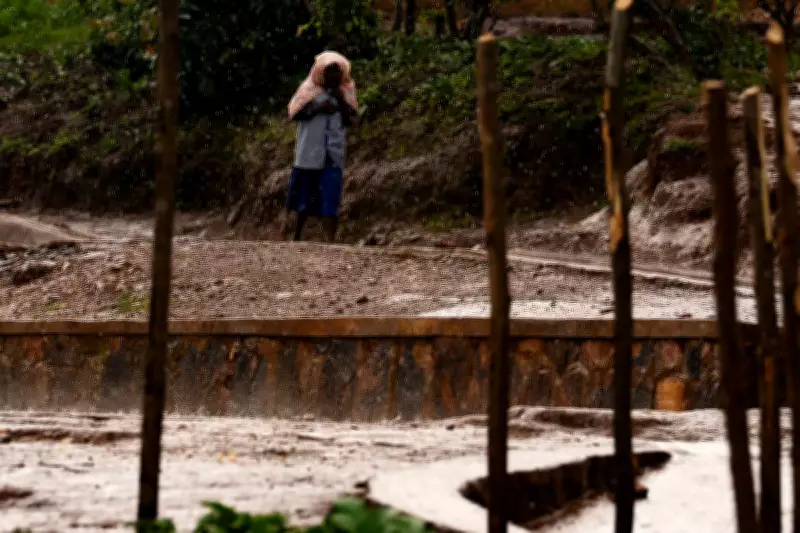
Rainfall, once considered a reliable blessing for Rwanda's agricultural society, has transformed into a dangerous and unpredictable force threatening the very survival of millions. The country known as the Land of a Thousand Hills faces escalating climate emergencies that are reshaping traditional farming patterns and endangering vulnerable populations.
Changing Weather Patterns Disrupt Agricultural Cycles
Rwanda's traditional rainy season from March to May has become increasingly erratic, with heavy downpours occurring outside expected windows. The national meteorological agency recently issued thunderstorm warnings via text message, highlighting the growing unpredictability of weather patterns. This shift has profound implications for a nation where eighty percent of the 14 million population depends on agriculture for their livelihoods.
The verdant rural landscape, with its hillside houses nestled among maize fields, banana trees, and tea plantations, now conceals the growing threats of climate-driven food insecurity and weather emergencies. What was once manageable rainfall has become torrential downpours that overwhelm traditional farming practices and infrastructure.

Disproportionate Impact on Women and Vulnerable Groups
Rwandan women, particularly pregnant women, face disproportionate challenges from these changing conditions. They typically work longer hours for less compensation, experience worse health outcomes, face gender-based violence, and carry the burden of demanding farming tasks within their households. The climate crisis exacerbates these existing inequalities, creating multiple layers of vulnerability.
In the Karongi district, 28-year-old Uwamahoro Uwitonze experienced firsthand how flooding destroyed the home she shared with her mother, daughter Ineza, and niece Vanessa. "It was in very bad condition because the rain was coming in through many holes. It was really hard for the family," she explained to the Press Association. "The heavy rain is really dangerous for us. We are always worried that anytime rain water can come and take over all the things we cultivate."
International Aid and Local Solutions
The Irish international aid charity Trocaire has been working with local partners in Rwanda to address these growing challenges. Through their support, Ms. Uwitonze's family received a rebuilt home, a water tank, and a sewing machine to help bolster household income. Her mother Verediana, a survivor of the Rwandan genocide, expressed profound gratitude for this assistance, reflecting on the constant fear that their home was near collapse.
Trocaire's approach focuses on collaboration with local organizations and the Rwandan government to create holistic solutions. Their goals include promoting climate and environmental justice while empowering women and girls. The charity works closely with women-led NGO Duterimbere, which implements sustainable interventions for affected communities.
Community Resilience and Ongoing Threats
Despite these efforts, threats persist throughout Rwandan communities. Ms. Uwitonze noted that a small area of farmland where she grows crops has been gradually shrinking due to landslides encroaching toward her home. The risk of new flooding from higher ground remains constant, as demonstrated by her neighbor Anne Marie Mukankuranga, whose kitchen and toilet collapsed just two days earlier during storms.
Mukankuranga and her husband Ahimana Estorico, who has a disability, explained they are "worried for their lives" because they lack the means to repair their property or relocate to safer ground. Their livelihood has been further compromised by reduced crop yields after hailstones destroyed their harvest.
Systemic Challenges and Global Responsibilities
Faustin Vuningoma, coordinator of the Rwanda Climate Change and Development Network, emphasized the systemic nature of these challenges. "The rain is no longer a blessing every time because it has changed the way it is falling and has created the catastrophes," he stated. He recalled the devastating events of 2023 when heavy rains caused 130 deaths and displaced thousands of families while destroying crops, livestock, infrastructure, schools, and health centers.

Vuningoma highlighted the profound injustice of the situation, noting that Rwanda contributes less than 0.01% to global greenhouse gas emissions, with all African states accounting for just 4%. "Even if Rwanda and the entire Africa were to be net zero, still they would be hit by climate change – the atmosphere does not have boundaries," he argued, calling on countries like Ireland to ensure Europe fulfills its climate obligations.
Sustainable Approaches and Cooperative Solutions
Near Ms. Uwitonze's home in Karongi district, Duterimbere supports a cooperative farming and plant nursery that has operated successfully for three years. The cooperative includes women and men, some with disabilities, who previously felt marginalized. Donathile Nyirabaturanyi, who has a disability affecting her arms, participates in farming activities and accesses savings and loans through the program. "It is really nice being here because as a woman with a disability I used to hide myself and I did not think I could get as far as where I am today because I had no access to money at all," she shared.
Duterimbere program manager Fred Rwibasira explained that interventions focus on sustainability, providing affected communities with support and knowledge to rebuild their lives. Communities are implementing protective measures like terracing hillsides and collecting rainwater in tanks, while Scottish Government funding has helped relocate affected families.
The Human Cost of Climate Injustice
Claire Kelly, Trocaire's head of communications, described the heartbreaking choices facing many families: "Some families are choosing whether to 'bring their kids to school or put food on the table.'" She characterized this as "one of the greatest injustices of the time" because "those who have contributed so little to the climate crisis are feeling the worst impacts."
As Rwanda continues to grapple with these challenges, the traditional refrain that "rain is a blessing" has taken on new complexity. For millions of vulnerable Rwandans, rainfall now represents both essential sustenance and potential catastrophe, highlighting the urgent need for sustainable solutions and global climate justice.