Trump's Anti-Environment Agenda Sparks Widespread Criticism
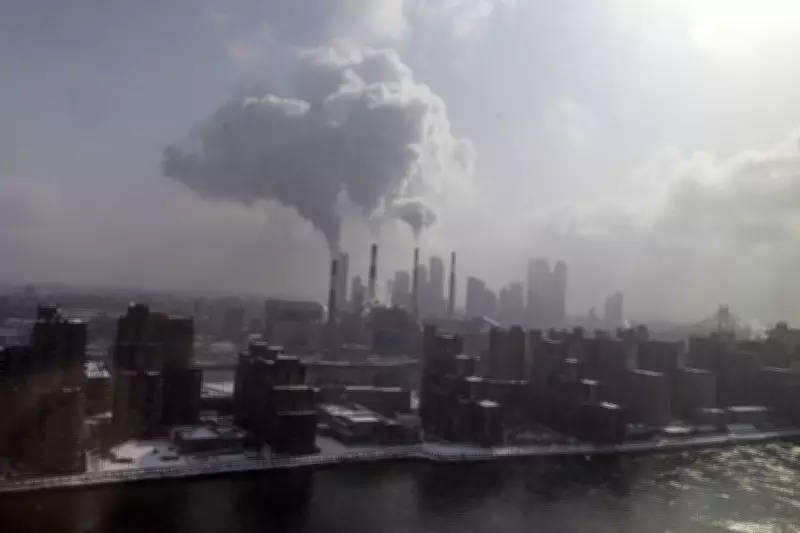
Steam billows from the Ravenswood Generating Station in Queens, New York City's largest power plant, symbolising the ongoing debate over energy policy in the United States. Critics are increasingly condemning former President Donald Trump's aggressive drive to promote fossil fuels, warning that it leads to more pollution and higher energy costs for American households.
Legal Challenges Mount Against Wind Energy Halts
In recent weeks, four federal judges, including one appointed by Trump, have issued temporary injunctions against the Interior Department's attempts to halt work on five offshore wind projects in Virginia, New York, and New England. These projects, which have invested billions of dollars and are nearing completion, represent a significant shift towards renewable energy that is now under threat.
Meanwhile, Trump energy officials issued emergency orders last year to keep open five ageing coal plants in Washington, Michigan, and three other states, despite plans for their closure. Repairs on these plants are expected to be costly and time-consuming, with several states challenging the federal actions in court.

Experts Decry Rising Costs and Environmental Damage
Naomi Oreskes, a Harvard University science historian, emphasised the dual impact of these policies. "Trump's decisions make no sense from either the perspective of environmental protection or the cost of energy," she stated. "By blocking wind projects and reviving uneconomic coal plants, this administration is raising both direct energy costs and indirect costs through polluted air and climate damage."
Further exacerbating the issue, the Trump administration has pushed to increase liquefied natural gas (LNG) exports, which experts and Senate Democrats argue have contributed to higher domestic electricity prices. According to federal data analysed by Public Citizen, US households spent an extra $12 billion on natural gas between January and September last year, coinciding with a 22% jump in LNG exports supported by the administration.
Political and Donor Influence Under Scrutiny
The administration's pro-fossil fuel stance appears closely tied to donor interests. Harold Hamm, a multibillionaire fracking mogul and major Trump donor, co-founded the Domestic Energy Producers Alliance and helped organise an elite energy industry dinner at Mar-a-Lago in April 2024. At this event, Trump pitched CEOs on donating $1 billion for his campaign, ultimately securing about $75 million from fossil fuel interests, including $2 million from Hamm.
Energy Secretary Chris Wright, a former oil and gas CEO, has actively promoted LNG exports, including efforts to cut EU methane rules during a trip to Europe. This aligns with Trump's long-standing rhetoric praising "beautiful clean coal" while denigrating wind energy as a "scam of the century." His policies have included sharp cuts in tax credits for solar energy through the One Big Beautiful Bill Act.
Electricity Prices Outpace Inflation
Energy experts note that Trump's policies have contributed to electricity prices rising faster than overall inflation. Between September 2024 and September 2025, electricity prices increased by 5.1%, compared to a 3% inflation rate for goods and services, according to consumer price index data. This has created significant financial strain for consumers, contradicting Trump's campaign promise to slash utility bills.
Michael Gerrard, head of the Sabin Center for Climate Change Law at Columbia Law School, criticised the approach. "If you want to lower electricity prices, you don't halt wind and solar projects that are already under construction," he said. "Trump's ideologically driven actions are on a collision course with his stated goals."
Legal and Congressional Pushback Intensifies
In December 2025, the Interior Department paused leases for five large offshore wind operations on the East Coast, citing unspecified national security issues. Developers quickly sued, and courts issued rulings in January blocking these actions. One Trump-appointed judge, Carl Nichols, noted that the government's concerns did not outweigh the damage to the projects.

Top Democrats have voiced strong opposition. Senator Sheldon Whitehouse of Rhode Island called the administration's plans a "massive transfer of money from ratepayers to donors," labelling it a corrupt enterprise. In December, Senator Edward Markey and other Democrats introduced the Lowering American Energy Costs Act to curb LNG exports, linking them to rising energy costs.
Future Outlook Remains Contentious
Despite Trump's advocacy for fossil fuels, about 93% of new generation capacity in 2025 came from solar, wind, and batteries, according to Department of Energy figures, because they are the cheapest options. Joe Romm, a senior research fellow at the University of Pennsylvania, warned that Trump's policies will cause electricity rates to keep soaring, enriching fossil-fuel donors at consumers' expense.
As legal battles and political debates continue, the conflict between promoting fossil fuels and addressing climate and cost concerns highlights a deepening divide in US energy policy, with significant implications for both the environment and household budgets.