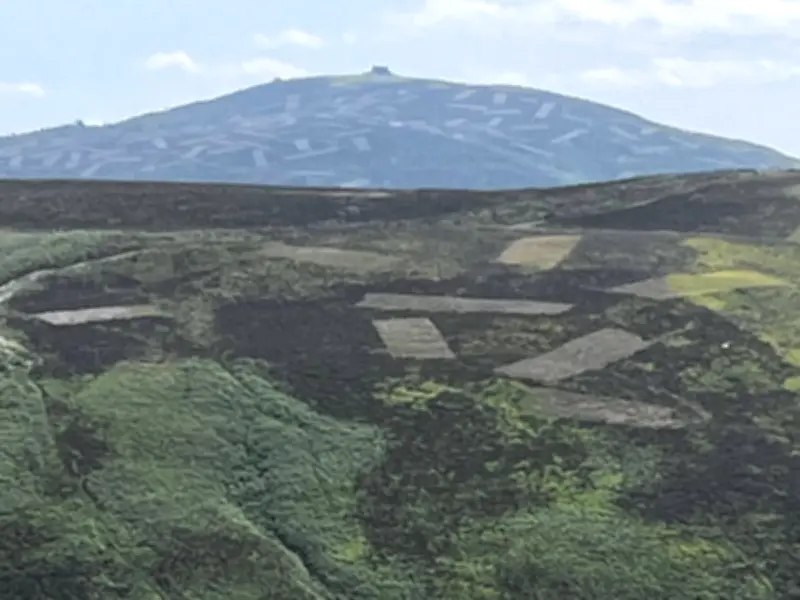
Moel Famau, one of Wales' most beloved peaks at 1,821 feet, features distinctive rectangular patterns on its slopes that resemble crop circles. These markings are not mysterious but are part of deliberate heather management by Denbighshire Countryside Service, which oversees the Clwydian Range Area of Outstanding Natural Beauty.
Heather Management for Biodiversity
A senior ranger explained: "The cuts form part of our heather management to improve biodiversity and support the health of the heathland. Older heather becomes woody and less productive, cutting encourages new growth." The ranger added that older heather poses a higher fire risk, and creating a mosaic of age structures helps reduce that risk while supporting a wider range of species, from ground-nesting birds to reptiles.
Benefits for Wildlife
The Clwydian Range and Dee Valley team noted that this management has been practiced for generations. "A combination of burning and cutting encourages new heather to grow and provides fresh grazing for sheep. It also creates excellent nesting and feeding areas for upland birds." Of particular importance is the black grouse, one of Wales' rarest birds. Since the late 1990s, the population has increased from only 10 males to recent counts of 40 male black grouse.

Popularity and Location
Moel Famau is the highest summit in the Clwydian Range, though it is smaller than the peaks of Eryri. Its accessible trails and proximity to North West England's metropolitan areas make it a popular destination, especially for day visitors from Liverpool, earning it the nickname 'Scouse Mountain'. The rectangular patterns are often noticed by walkers, who may not initially understand their purpose.