Sir David Attenborough's accessible and compelling programmes have given audiences an insight into the diversity of life on earth for decades. But the broadcaster, naturalist and national treasure has also taken us through the changing technologies used to bring that life to television screens. As Sir David turns 100 today, here are some of his most memorable moments.
Mountain gorillas who started removing his shoes
In the 1979 series Life On Earth, Sir David encountered a family of mountain gorillas in a volcanic forest on the border of Rwanda and Zaire. In a clip that has been voted one of the top TV moments of all time, one young gorilla lies across his body, while just at the edge of the picture you can see the baby gorillas who were busy removing his shoes. The 13-part series featured footage from 30 countries. More than 500 million people tuned in - 11.4 per cent of the global population.
Observing sharks while presenting underwater
In 1984, Sir David became one of the first underwater presenters as he observed the grey reef shark in The Living Planet. Developments in full face plates allowed him not only to be able to deliver his commentary but to be recorded clearly.

Trying out the 'vomit comet' in zero gravity
Also in The Living Planet, Sir David presented in zero gravity from the NASA experimental plane, nicknamed the 'vomit comet'. He bounced and floated around as he described how we take gravity for granted, before ending his commentary completely upside down.
Eavesdropping on dolphins communicating
In 1990, Sir David took viewers swimming with dolphins in Trials Of Life. This showed us something of the body language and sounds that dolphins use to communicate, as he strapped on his scuba diving suit to eavesdrop on their conversations.
Marvelling at lyrebird's impersonation skills
In The Life Of Birds in 1998, Sir David clutched his binoculars as he walked carefully towards a lyrebird in south Australia and marvelled in delight over its extraordinary impersonation skills. The bird's camera shutter, car alarm and chainsaw calls were its attempts to outdo rivals and attract a mate.
Knocked over by a capercaillie
Another memorable moment in The Life Of Birds was filmed in the pine forests of Scotland, where the presenter was knocked to the ground by a capercaillie. The capercaillie – the largest of the grouses – charged at Sir David, before chasing him and making him fall over in a display intended to drive away any intruders.
Magnificent magnification of a pin
In State Of The Planet in 2000, he revealed the microscopic world that is well beyond human perception, using a powerful scanning electron microscope which magnified the image of a pin 10,000 times.
Excitement as huge blue whale surfaces
Sir David's sheer excitement at the moment a huge blue whale surfaced during 2002's The Life Of Mammals was heart-warming to witness. He is shown clinging on to his little boat, which is dwarfed by the 100ft (30m) whale, the largest animal known to have existed.
Enthusiastic greeting from a chimp
Also in The Life Of Mammals, Sir David visited a group of orphaned chimps which were being taught the survival skills needed to live in the wild. As his boat neared the landing point, an enthusiastic chimp jumped straight in to greet him. He later enjoyed a nut-cracking session with a group of dexterous mammals.
Meeting a Siberian tiger in captivity
Another spectacular moment in the series came when Sir David trudged slowly through knee-deep snow to come face-to-face with a Siberian tiger in captivity.
Trying out the wolf howl
A further famous moment in The Life of Mammals saw an example of Sir David interacting with the animals he was trying to film. He demonstrated the wolf howl in an attempt to communicate with a pack out in the wild in the Arctic - with an expert noting that his impression was very good.
Saying 'boo' to an unimpressed sloth
Also during Life of Mammals, Sir David snuck up close to a sloth before shouting 'boo'. But the world's slowest mammal seemed unimpressed and failed to react.

Rainforest frog rests on his fingertip
A sequence in Life In Cold Blood in 2008 used slow motion to show the diversity in size, shape and ability of frogs and toads. Sir David lay on the floor of a Madagascan rainforest with a tiny pygmy frog resting on his fingertip to marvel at the 'miracle of miniaturisation'.
Oldest person to visit the North Pole
In Frozen Planet in 2011, Sir David became the oldest person to visit the North Pole, venturing into high altitude and extreme cold at the age of 84.
Looking back at his career aged 90
The broadcaster celebrated his 90th birthday in 2016, and sat down with journalist Kirsty Young for the BBC's Attenborough At 90 documentary to recount the highlights of his life and career.
Marine iguana escapes from racer snakes
Later that year, Planet Earth II was released with Sir David's soothing narration accompanying scenes including rare snow leopard mating footage and lions attacking a giraffe in a desert. The critically acclaimed documentary series also featured an intense, high-speed scene of a newborn marine iguana escaping from a swarm of racer snakes on Fernandina Island. This has been hailed as one of the most tense sequences in wildlife television history.
Fighting walruses and a sex-changing fish
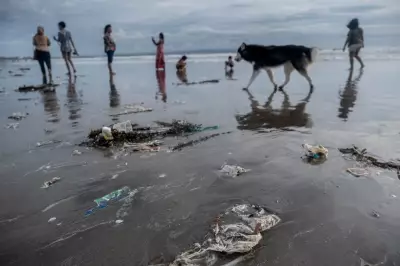
Sir David also returned as a presenter for Blue Planet II in 2017, which became the most-watched UK television show of 2017, with a chart-topping 14 million tuning in to the first episode of the wildlife series. The programme included dramatic footage of walruses fighting to find a home, along with dazzling scenes of surfing dolphins and a sex-changing fish. The series is also thought to have triggered an increase in public, media and political attention to plastic pollution.
Saving leatherback turtles in Trinidad
Sir David also got up close to his subject in Trinidad during Blue Planet II as he waded into the Caribbean surf to help release and guide newly hatched leatherback turtles into the ocean.
Baby penguins fight to avoid icy death
The debut episode of Dynasties – which focused on the chimpanzee – became the most popular programme of the month when it aired in November 2018. The series, narrated by Sir David, also documented the struggles of baby penguins fighting to avoid an icy death, with the BBC camera crew intervening and coming to the rescue of the stricken birds, breaking a long-held stance of wildlife filming not to get involved.
Surprise appearance on the Pyramid stage
In 2019, Sir David made a surprise appearance on Glastonbury's Pyramid stage with a four-minute trailer for the BBC's new natural history series Seven Worlds, One Planet ahead of Kylie Minogue's performance. Sir David also made a speech to the huge crowds gathered, celebrating the work of Glastonbury in banning single-use plastic bottles from the Somerset event that year.
Private screening with William and Kate
In 2020, the veteran broadcaster presented A Life On Our Planet, a revealing and powerful first-hand account in which Sir David reflected on both the defining moments of his life as a naturalist and the devastating changes he has witnessed. Sir David joined the Prince and Princess of Wales and their children at Kensington Palace for a private outdoor screening of the programme in September 2020.
Face-to-face with toucan in Costa Rica
A Life In Colour in 2021 used cutting-edge camera technology highlighting the vivid and vibrant colours of nature. Stunning visuals of creatures showed the peacock spider and paradise kingfisher as it depicted how animals use colour to survive, find mates and defend territory. Sir David also met a toucan in Costa Rica, resulting in a memorable publicity photo.
Honours from Charles and the UN
Sir David Attenborough was awarded one of Britain's highest honours, the Knight Grand Cross of the Order of St Michael and St George, by fellow avid environmentalist the then Prince of Wales - now King Charles III - in 2022. That year, Sir David was also named a Champion of the Earth by the UN's Environment Programme (UNEP), and appointed a member of the Order of the Companions of Honour in the New Year Honours list recognising his major contributions to science.
Removing the huge skull of a pliosaur
In 2023, the naturalist described the painstaking efforts of excavating the skull of a sea monster for Attenborough And The Giant Sea Monster. This documented the process of removing the huge skull of a pliosaur, one of the biggest carnivorous creatures the world has ever seen, from the Jurassic coast in Dorset.
Urban elephants and 'kiss-chasing' rhinos
Sir David took viewers to Asia in 2024 with his seven-part series named after the continent, exploring the lives of red pandas, urban elephants and hunting wolves, as well as high-altitude elephants in India, 'kiss-chasing' rhinos in Nepal, and glowing squids in the ocean. He also examined how animals use sound to communicate, thrive and survive in the natural world in Secret World Of Sound, which used the latest in audio technology including specially adapted cameras and laser vibrometers.
Matching nature films with a live orchestra
Viewers were immersed in the beauty of the underwater world with Ocean In Concert in 2025, which featured a live orchestra and vocal ensemble performing Steven Price's original score in synchronisation with the film, turning its powerful visuals and urgent story into a moving experience. Sir David also broke Dick Van Dyke's record for the oldest winner of a Daytime Emmy that year, taking home the prize for hosting Netflix's Secret Lives Of Orangutans.
The wise words of Sir David: Some of his most memorable quotes
Sir David Attenborough's hushed but excited tones have been heard in living rooms around the world. Here are some of his most memorable quotes:
- 'It seems to me that the natural world is the greatest source of excitement; the greatest source of visual beauty; the greatest source of intellectual interest. It is the greatest source of so much in life that makes life worth living.'
- 'I just wish the world was twice as big and half of it was still unexplored.'
- 'The question is, are we happy to suppose that our grandchildren may never be able to see an elephant except in a picture book?'
- 'It is vital that there is a narrator figure whom people believe. That's why I never do commercials. If I started saying that margarine was the same as motherhood, people would think I was a liar.'
- 'You know, it's a terrible thing to appear on television, because people think you actually know what you're talking about.'
- 'I don't run a car, have never run a car. I could say that this is because I have this extremely tender environmentalist conscience, but the fact is I hate driving.'
- 'If I can make programmes when I'm 95, that would be fine. But I would think I'll have had enough by then.'
- 'You have to steer a course between not appalling people, but at the same time not misleading them.'
- 'I don't think we are going to become extinct. We're very clever and extremely resourceful – and we will find ways of preserving ourselves, of that I'm sure. But whether our lives will be as rich as they are now is another question.'
- 'An understanding of the natural world and what's in it is a source of not only a great curiosity but great fulfilment.'
- 'Our planet may be home to 30 million different kinds of animals and plants. Each individual locked in its own life-long fight for survival. Everywhere you look, on land or in the ocean, there are extraordinary examples of the lengths living things go to to stay alive.'
- 'Ever since we arrived on this planet as a species, we've cut them down, dug them up, burnt them and poisoned them. Today we're doing so on a greater scale than ever.'
- 'There are some four million different kinds of animals and plants in the world. Four million different solutions to the problems of staying alive.'
- 'Reptiles and amphibians are sometimes seen as simple, primitive creatures. That's a long way from the truth. The fact that they are solar-powered means that their bodies require only 10 per cent of the energy that mammals of a similar size require. At a time when we ourselves are becoming increasingly concerned about the way in which we get our energy from the environment and the wasteful way in which we use it, maybe there are things that we can learn from Life In Cold Blood.'
- 'A hundred years ago, there were one-and-a-half billion people on Earth. Now, over six billion crowd our fragile planet. But even so, there are still places barely touched by humanity.'