Washington State Introduces 'Blue Envelope' Program to Support Neurodivergent Drivers
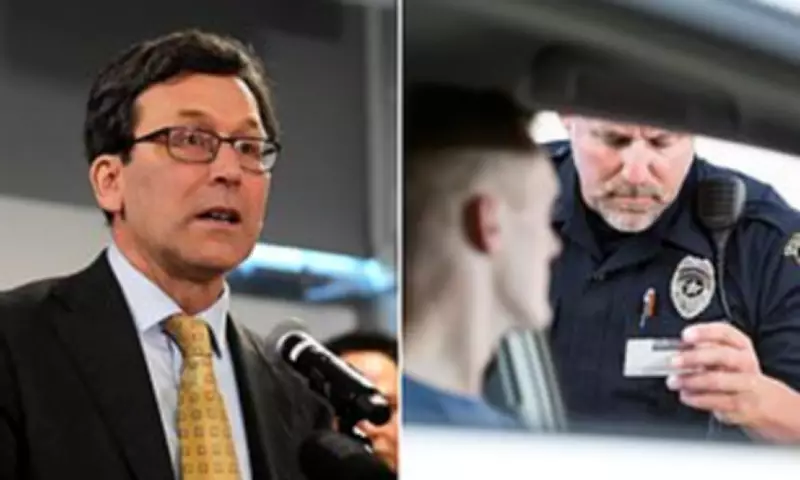
Washington state has enacted a pioneering new law designed to alleviate anxiety for individuals with mental disabilities during routine traffic stops. Governor Bob Ferguson, a Democrat, signed House Bill 2323 into law on March 18, following overwhelming legislative support with only one dissenting vote. The legislation, set to take effect in mid-June, mandates the state's Department of Licensing to establish a voluntary 'blue envelope' program.
How the Blue Envelope Program Works
Under this initiative, eligible neurodivergent individuals can sign up to carry a specially designed blue envelope containing practical tips for both police officers and the envelope carrier on how to interact effectively during traffic stops. The program is open to people with conditions such as autism, attention deficit hyperactive disorder (ADHD), bipolar disorder, dyslexia, obsessive-compulsive disorder, and Tourette syndrome.
Carriers will be able to place essential documents required by police during stops—including driver's licenses, vehicle registration, and proof of insurance—inside the envelope and hand it over to officers. The envelopes will also feature clear instructions on what should be inserted, further assisting those with mental impairments.

Guidelines for Law Enforcement and Program Details
While the specific tips for police included in the envelopes have not yet been finalized, they are expected to emphasize best practices such as asking simple questions, speaking calmly, avoiding loud noises, and refraining from touching neurodivergent drivers. These recommendations draw from similar laws implemented in other jurisdictions, like the city of Boulder, Colorado.
The logic behind the law is rooted in the understanding that individuals with autism and other mental impairments can become overwhelmed by situations that neurotypical people handle without difficulty. Supporters argue that this can lead to delayed responses or behaviors that police might misinterpret, potentially escalating tensions.
Republican state Representative Carolyn Eslick, who sponsored the bill, highlighted its importance, stating, 'It is about protecting people in a moment when a simple misunderstanding can have serious consequences.' She added, 'For someone who processes the world differently, a traffic stop can be overwhelming and frightening.'
Accessibility and Implementation
The blue envelopes will be available free of charge to drivers across Washington, with distribution points at licensing offices statewide. Enrollment is voluntary, and no medical documentation is required to participate. The Department of Licensing estimates issuing up to 18,000 envelopes annually once the program is operational.
Upon signing the bill, Governor Ferguson remarked, 'The blue envelopes will be a simple tool to improve communication, prevent misunderstanding, and reduce stress on all parties involved.' He further noted, 'It also helps ensure as smooth a process as possible during traffic stops, keeping our drivers and law enforcement safe.'
National Context and Broader Impact
Washington becomes the 14th state to adopt such a law, according to the National Conference of State Legislatures, which records 13 other states with similar measures. These include Idaho, Nevada, Arizona, Indiana, Arkansas, Mississippi, Florida, Tennessee, Virginia, New Jersey, Connecticut, Rhode Island, and New Hampshire. Connecticut was the first to implement a comparable law in 2020.
In some states, requirements are simpler, involving decals on vehicles to indicate mental disability. However, Washington's program represents a more comprehensive approach, focusing on direct communication aids. Local police departments in areas without statewide laws have also initiated similar programs, reflecting a growing recognition of the need to support neurodivergent individuals in law enforcement interactions.
Proponents believe this law will help prevent misunderstandings and foster safer, more respectful encounters between police and drivers with mental disabilities, ultimately enhancing public safety and inclusivity.