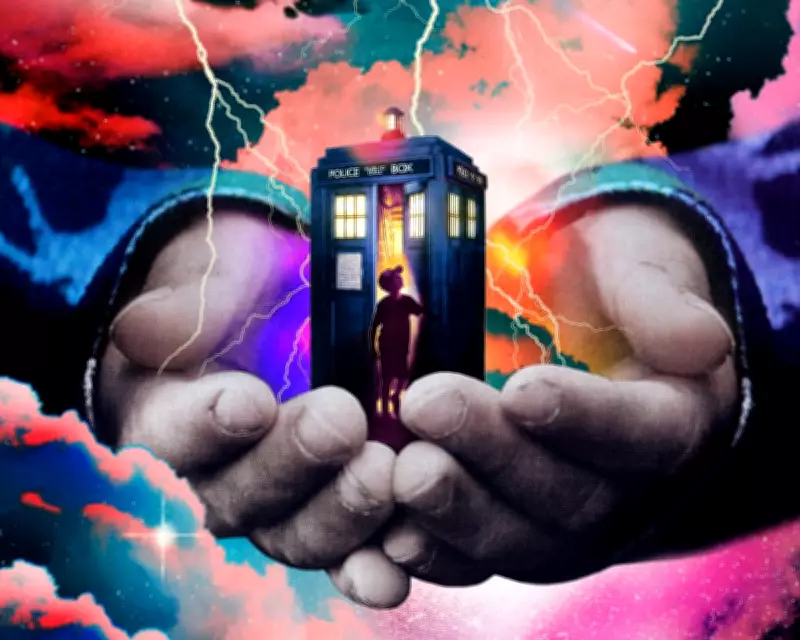
How Doctor Who Became a Mirror for My Autistic Son's 'Fizzy' Mind
My son once turned to me, his eyes wide with sudden recognition, and declared: 'He's like me.' This moment didn't come from a therapy session or a school lesson, but from an episode of Doctor Who, starring David Tennant. For years, I had struggled to comprehend the complexities of my son's mind, which is shaped by both autism and ADHD—a combination often called AuDHD. His world was filled with outbursts, confusion, and stress that he couldn't articulate, until he saw a Time Lord behaving in a way that felt strikingly familiar.
The Challenge of Screen Time and Emotional Understanding
In our household, certain films and shows are off-limits because of how my son interprets them. For instance, Elf is avoided entirely; he views it as a psychological horror story about a man whose truth is constantly doubted. Conversely, he adores The Traitors, rewatching entire series because knowing the traitors' identities gives him a sense of control and comfort. Any other on-screen conflict, however, prompts him to leave the room or fast-forward. When I tried to explain that stories inherently rely on conflict, it made no difference—his reactions were deeply personal and visceral.
My son, whom we've always affectionately called 'fizzy,' embodies contradictions: he's often the noisiest person in a room yet despises excessive noise; he's incredibly sociable and yearns to join in the fun, but finds social interactions stressful. Despite consuming various media, I had never seen anyone like him represented on screen, leaving a gap in his ability to relate to fictional characters and, by extension, understand his own experiences.

A Breakthrough with the Tenth Doctor
Everything changed when I introduced him to Doctor Who. As an eight-year-old with an interest in science, he was curious. We started with the David Tennant era, beginning with 'The Christmas Invasion.' In this episode, the Doctor doesn't fully awaken until a third of the way through, and when he does, Tennant appears in pyjamas with a boyish grin, casually referring to a frightening alien as a 'big fella.' My son immediately grinned back at the screen.
As Tennant's Doctor sprang into action, he barely stopped talking or moving—sword-fighting, joking, forgiving, and even defeating a villain with a satsuma, all while repeating certain phrases to himself. My son laughed in recognition, as he often repeats phrases himself. He turned to me, eyes wide, and said, 'He's like me!' When I assumed he meant funny, he insisted, 'No, he's fizzy. Like me.'
Watching Tennant's portrayal was like seeing an adult version of my son: the infectious joy, the righteous anger, the rapid shifts between emotions, all underscored by a palpable fierceness—a fizz. While I don't believe David Tennant or writer Russell T Davies intentionally crafted the Doctor as AuDHD, that's precisely what we perceived. For the first time, my son saw himself reflected in a character, and it was transformative.
Finding Comfort in Structure and Metaphors
This connection provided my son with comfort through the show's structure. Each episode presented a new problem that the Doctor solved using his 'fizzy' brain, helping my son grasp that stories require conflict followed by resolution—and that real life operates similarly. It also allowed me to draw parallels between the episodes and his daily experiences. For example, I'd say, 'The Doctor really enjoys being with humans even though he finds them a bit stressful, doesn't he? Do you think that's like you and your friends sometimes?'
One pivotal moment occurred after a school-related meltdown, where my son erupted in a screaming, kicking frenzy. In the aftermath, as I comforted him, I had a sudden insight from our Doctor Who viewing. I squeezed his hands and said, 'You're like a Tardis. You're just so much bigger on the inside than you are on the outside, my love.' He nodded and replied, 'I am like a Tardis.' This metaphor revolutionized how I approached his emotional regulation, offering a tangible way to discuss his inner world.

Lasting Impact and Ongoing Support
Now 10 years old, my son has dressed as both Tennant and Matt Smith's Doctors for the past two Halloweens, embracing his identification with the character. We still use the Tardis metaphor regularly, such as when he resists bedtime—I'll say, 'Mate, a Tardis needs to be put on charge.' While it doesn't always work, it sometimes does, and even during intense emotional outbursts, it helps shift the conversation. It signals that we're always striving to understand him, even when comprehension feels out of reach.
This experience underscores the profound power of media representation for neurodivergent individuals. By seeing aspects of himself in a beloved sci-fi hero, my son gained not only self-awareness but also tools to navigate his emotions. For parents and caregivers, it highlights the importance of finding relatable narratives that can bridge gaps in understanding and foster connection in unexpected ways.