From 'Healthy' to Days to Live: A Father's Brain Tumour Battle
Luke Taylor, a 27-year-old civil engineer from Warrington, Cheshire, endured a decade of excruciating headaches and nausea, only to be repeatedly told by his GP that he was "healthy" and suffering from "just migraines." However, in July 2025, his symptoms escalated dramatically, leading to a diagnosis that would change his life forever.
A Decade of Pain and Misdiagnosis
For ten years, Luke experienced severe head pain, accompanied by nausea and vomiting that could last for days. Despite numerous visits to his doctor, he claims he was consistently reassured that his symptoms were benign migraines. "I was being sick, I was in severe pain," Luke recalled. "I said I wanted to have an MRI scan, but at first, medics told me it wasn't required." Frustrated and in worsening agony, he insisted on the scan, which he arranged at Warrington Hospital.
Shocking Diagnosis and Emergency Surgery
The MRI results revealed a haemangioblastoma, an extremely rare brain tumour that can develop throughout the brain and spinal cord. By the time it was discovered, the tumour had grown larger than a golf ball. Doctors delivered a devastating prognosis: without immediate surgery, Luke could have only days to live. "I was 26 when I was diagnosed," Luke said. "I had the rest of my life ahead of me, I have a daughter, and I wasn't sure how I was going to tell my family. I thought I was going to die."

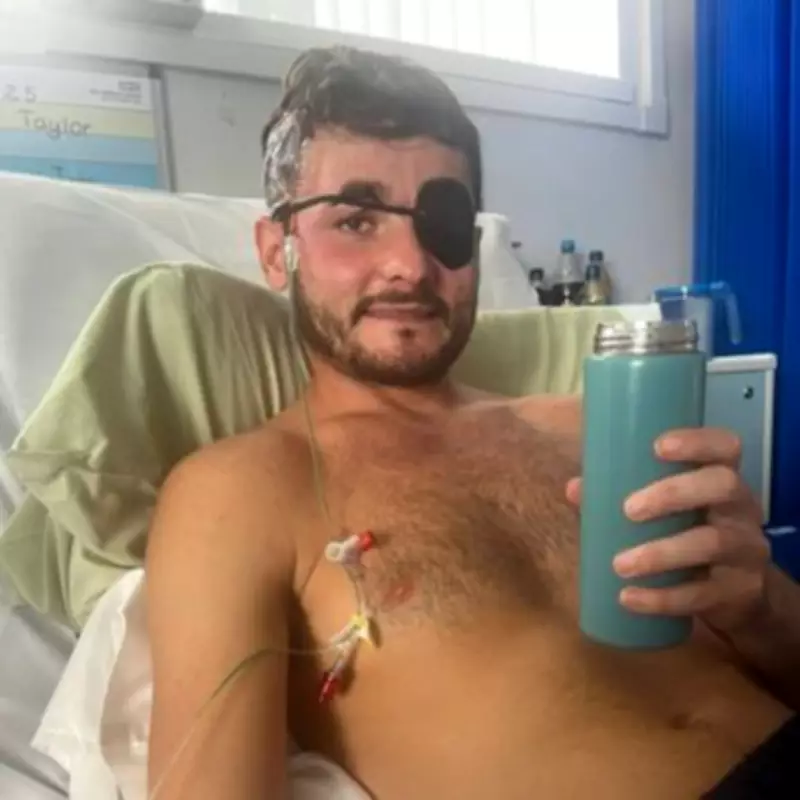
Within a week, Luke underwent a nine-hour brain operation at Walton Hospital in Liverpool to remove the tumour. Tragically, complications arose, resulting in a brain haemorrhage that required additional emergency surgery the following day. His partner, Nia Jones, 26, described the harrowing experience: "I saw Luke after his operation - he was very erratic. He was slurring his words and couldn't open his eyes. Then a day after the surgery, we were told he had a bleed on the brain and had to go back in for emergency surgery."
Recovery and Rehabilitation
After 18 days in hospital, Luke was discharged but faced a gruelling recovery. The dual operations left him needing to relearn basic functions, including walking, speaking, and hand coordination. Nia shared: "What followed were some of the hardest months. Luke had to relearn how to walk, speak again and use his hands. He couldn't dress himself or even cut up his own food. Every day was frustrating, exhausting and emotional - for both of us - but we were determined to do everything possible to help him recover."
In November 2025, Luke received hopeful news: the surgery had been successful, and doctors had managed to remove the entire tumour. "I was overwhelmed when they told me the surgery was successful," he admitted. "I cried my eyes out, I was so happy they got it all." However, his journey is far from over. He will now undergo scans on his eye, brain, spine, and body every six months for the next decade to monitor for any recurrence.
Raising Awareness and Funds
To give back and support others facing similar battles, Luke, Nia, his sister Leah, and her partner Gary plan to hike the three Yorkshire peaks in a single day on July 18, 2026. They aim to raise funds for the Brain Tumour Charity. Nia explained: "We have gone through a lot with the family. We wanted to raise money for the charity that has supported us throughout and show support to others. We want to show people that there is light at the end of the tunnel and people can get through this."
Joanna Moss, director of services at The Brain Tumour Charity, emphasised the importance of early detection: "Faster diagnosis of brain tumours is vital. That's why The Brain Tumour Charity works with healthcare professionals to increase their confidence in recognising signs and symptoms, and in referring for scans if they are at all concerned."
Luke's story underscores the critical need for patient advocacy and timely medical intervention. His perseverance in pushing for an MRI scan ultimately saved his life, serving as a powerful reminder to trust one's instincts when symptoms persist.