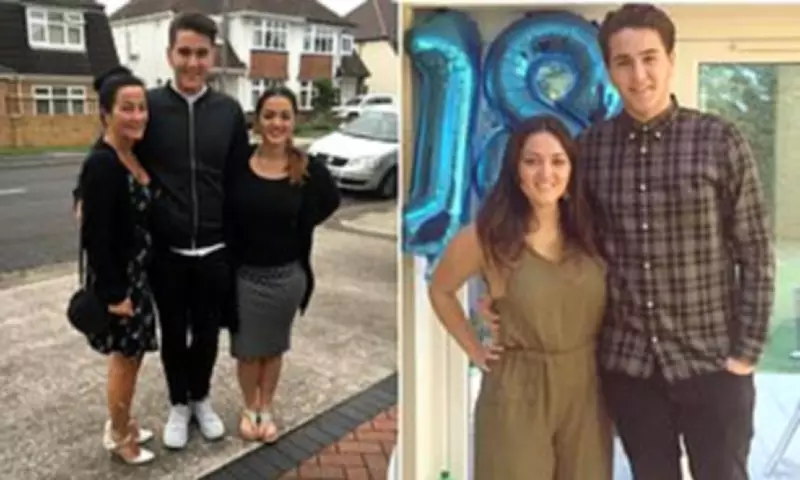
Meningitis B Tragedy: Teen's Festival Death Sparks Vaccine Warning
Just hours before departing for the Boardmasters music festival he had eagerly anticipated for weeks, 18-year-old George Zographou confessed to his older sister Nicole that he was feeling unwell. 'He said he was feeling under the weather,' Nicole recalls. 'He considered delaying his trip by a day, but there was a band he desperately wanted to see, and he was providing transportation for his friends. He didn't want to disappoint them.'
So on that August afternoon in 2017, George left his family home in Bristol and traveled to the popular annual festival in Newquay, Cornwall. This event represents a rite of passage for thousands of students who, like George, have recently completed their A-level examinations. Tragically, unlike all other attendees that year, George – a popular, handsome teenager with a bright future ahead – never returned home.
A Rapid and Fatal Decline
Within twenty-four hours of arriving at the festival, George's condition deteriorated rapidly until he suffered cardiac arrest. He never regained consciousness and died five days later at Royal Cornwall Hospital when life support was withdrawn. George had not consumed alcohol or taken any drugs. He was suffering from meningitis B (MenB), a deadly bacterial infection that can invade the bloodstream and infect the fluid surrounding the brain and spinal cord, causing severe inflammation.

Medics at the festival tragically failed to recognize the warning signs. 'I believe they saw a six-foot-four young man and assumed he had been drinking,' Nicole explains. 'His presentation wasn't typical since he didn't have a fever, but there were symptoms that should have alerted them. If he had received antibiotics promptly, he might have survived.'
Family Trauma Resurfaced by New Outbreak
Nine years later, this remains one of many heartbreaking 'what if' scenarios that haunt Nicole and her grieving parents – mother Elaine, 72, and father Andrew, 58 – who remain utterly devastated by their loss. 'Something like this never truly goes away,' Nicole says. 'You carry the trauma with you forever. I have never stopped thinking about it.'
This week, that trauma has been painfully revived with news of a deadly meningitis outbreak in Kent that has claimed two young lives – one victim, like George, was just 18 years old – and left eleven others critically ill. 'It has brought back some very difficult memories,' Nicole admits. 'I have been profoundly devastated to see what is happening there and how many young people have been affected.'
Particularly distressing is that UK Health Security Agency confirmed on Tuesday that some cases involve MenB, the exact strain that killed George. All affected individuals are understood to be young people.
The Final Hours: Missed Symptoms and Misdiagnosis
Nicole, now 37 and living in Cardiff with her partner, was raised in Bristol alongside George. With ten years between them, she was the protective older sister who remembers her brother as 'absolutely bonkers' with boundless energy. That energetic child grew into a strong teenager planning to study international business and Spanish at Birmingham University.
Nicole believes the meningococcal bacteria was already present in her brother's system when he left for the festival on Thursday, August 10. 'While he said he wasn't feeling completely well, none of us thought he was too unwell to go.' Nicole was also departing that day for a trip to Ibiza with friends, and they shared a farewell hug before he left.
'Later he messaged me after arriving, saying he felt unwell, and I replied telling him not to push himself, to just rest,' she recalls, pausing. 'That was our final communication.'
From accounts gathered from George's friends, the family has pieced together the dreadful sequence of events over the next twenty-four hours as his condition worsened dramatically. 'George had an unusual presentation, which is something I always emphasize,' Nicole explains. 'This reinforces the importance of knowing all signs and symptoms of meningococcal disease, since they don't all appear or appear simultaneously.'

In George's case, while he had no fever, he felt increasingly nauseous, vomiting twice that first night and remaining in his tent. By morning, he couldn't support his own weight, struggled to walk, and developed a mottled, bruised, non-raised rash resembling a tribal symbol across his foot. His concerned friends called festival medics.
Critical Errors in Medical Response
George was escorted to a medical tent – by then barely able to stand – where after several tests he was misdiagnosed with a stress fracture and dehydration, despite having a heart rate triple the normal level. He was then moved to a wellbeing tent to recover while waiting for his parents to collect him, where he rapidly became confused and agitated.
In one of his final communications, he texted a friend: 'I think I'm dying.' Shortly afterward, he went into cardiac arrest. Although staff resuscitated him, he never regained consciousness.
Nicole rushed home from Ibiza, arriving at her brother's hospital bedside ten hours later to find him in a coma surrounded by machines. 'When I arrived, doctors still had no idea what had happened,' she remembers. 'Within twelve hours of my arrival, they detected bacteria in his blood indicating meningococcal disease.'
A CT scan revealed catastrophic brain injury meaning George would never breathe independently. 'It felt like being in a film,' Nicole says. 'You enter a dissociative state. You're present, yet part of you cannot believe this is happening.'
George remained on life support for five days, allowing numerous friends to say goodbye. With parental consent, doctors withdrew life support on August 16, just after 1:30 PM, as his parents and sister held his hand. 'As a family, being present when the machine was turned off was important, but I believe George really died alone in that welfare tent,' Nicole says quietly. 'He had been discharged from medical care, was alone, agitated, and scared when cardiac arrest occurred. That is very difficult to contemplate.'
Vaccine Gap Warning for Young People
In the bewildering aftermath, the family learned George was the third meningitis case linked to his Bristol sixth-form college within a year. 'A young girl had died the previous year. The college sent a letter alerting families. We thought George was protected because he'd been vaccinated – but it wasn't the correct vaccine,' Nicole explains.
Like most born before 2015, George received the MenACWY vaccine protecting against meningococcal groups A, C, W, and Y – but crucially not MenB, the deadliest and most common strain. Since 2015, a MenB vaccine has been introduced for infants, but those born earlier would need to obtain it privately.
Nicole issues an urgent warning: 'I don't want to cause panic, but if you have a young person heading to university or college – crowded environments where bacteria spread easily – I strongly recommend considering the MenB vaccine available privately through pharmacies.'
George would be 27 today, and the family grieves daily for the man he would have become. 'We remain close to his friends, watching them graduate, secure jobs, and sometimes marry. While we celebrate their achievements, it's incredibly painful,' Nicole shares. 'Everything we do now carries sadness that we cannot share it with him. This doesn't become easier; you simply must find a new normal.'