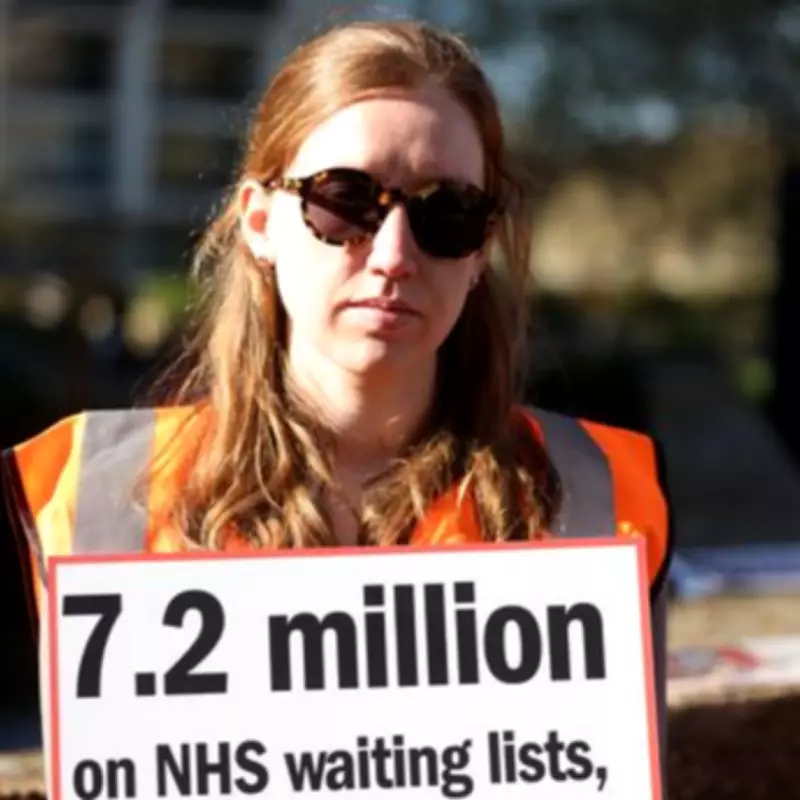
Striking NHS Doctor Confronts Unemployment After Two Years of Service
A resident doctor participating in strike action has revealed she is facing unemployment after completing just two years of work within the National Health Service. Dr Juliet Thornton, aged 26, issued a stark warning that this situation could force numerous medical professionals to abandon their careers entirely, exacerbating the ongoing healthcare crisis.
Foundation Year Doctor Left Without Job Prospects
Dr Thornton, who was striking on the picket line outside St Thomas' Hospital in London, stated she has nothing lined up for the coming year. This follows her completion of a six-year medical degree, which left her with substantial student loan debt, and two foundation years within the NHS. The current strike marks the fifteenth such walkout since 2023, occurring after negotiations between the government and the British Medical Association collapsed.
The doctor explained that after finishing the second foundation year, resident doctors must apply for specialty training positions in fields like surgery, general practice, or psychiatry. This year, approximately 40,000 applications were submitted for just over 10,000 available posts, creating what Dr Thornton described as a massive bottleneck.

Government Withdrawal of Training Posts Criticised
Dr Thornton heavily criticised the government's decision to retract an offer of 1,000 additional training places that were scheduled to commence this month. This was part of a broader promise of 4,500 new roles. She argued that removing these posts, which she viewed as a step in the right direction, was using healthcare as a political football and would result in more doctors being unemployed.
That 1,000 jobs was a step in the right direction to get more doctors employed, she said. Now they've withdrawn it, using it as a political football, there will be more doctors unemployed. It will be worse for patients, waiting lists won't improve.
Limited Alternatives and Industry Repercussions
The doctor outlined that doctors in her position typically seek one-year contracts or locum work—short-term placements covering shifts. However, she noted that such opportunities have diminished significantly as NHS trusts face funding cuts and cannot afford to hire locums to cover staff sickness. This is no longer a viable option for many, leaving them without employment.
Dr Thornton warned of the severe repercussions for the medical profession, stating that this situation forces a lot of people out of the career entirely. She confirmed she is not alone, with many colleagues and friends also staring down the barrel of unemployment and reconsidering their career choices amid what she called a pretty grim situation.
Political Blame Game Escalates
Health Secretary Wes Streeting attributed the removal of the 1,000 training posts to the BMA, claiming that strikes cost the NHS £50 million per day and that the union's rejection of a deal led to the cancellation. He stated directly that he did not cancel those places; the BMA did when they rejected the deal.
In response, Dr Tom Dolphin, chairman of council at the BMA, argued that the impact of withdrawing the training offer would be felt in several years’ time, continuing shortages of GPs and specialists. He emphasised that workforce planning should not be used as a bargaining chip in negotiations with resident doctors, but should be a fundamental part of basic healthcare strategy.
The ongoing dispute highlights deep-seated issues within NHS workforce planning and the intense pressure on junior doctors, whose futures remain uncertain amidst political stalemate and industrial action.