EastEnders Star Rita Simmons Announces Breast Reduction Surgery to Ease Scoliosis Pain
EastEnders actress Rita Simmons, renowned for her role as Roxy Mitchell in the BBC soap, has publicly disclosed her decision to undergo breast reduction surgery. The 49-year-old star shared this personal health update via Instagram on Saturday, explaining that the procedure aims to alleviate the debilitating pain caused by her scoliosis, a spinal condition she has long battled.
Rita's Health Journey and Surgical Plans
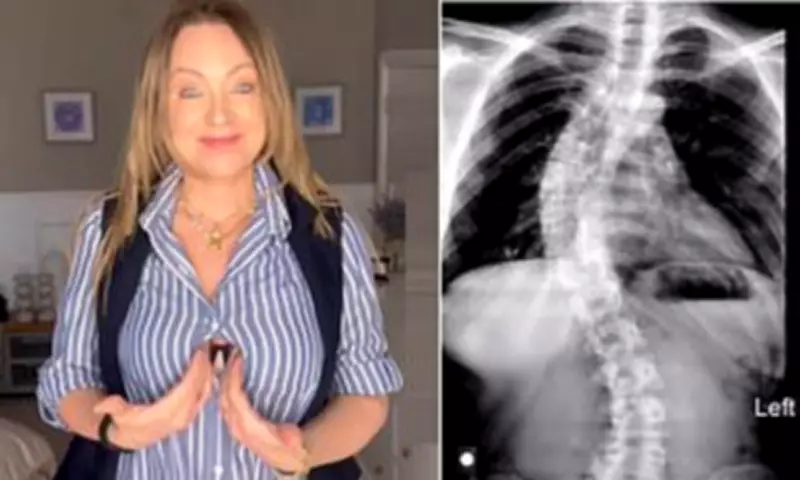
Rita Simmons suffers from scoliosis, an abnormal curvature of the spine that often leads to significant mobility issues and chronic pain. In her Instagram post, she revealed that the surgery is scheduled for just three weeks from now. She expressed relief at finally addressing what she described as her "massively annoying boobs," which exacerbate her back pain due to the strain they place on her spine.
Alongside her announcement, Rita posted a series of images and videos, including an X-ray of her spine and a clip showcasing her chest. In the caption, she elaborated on her motivations, stating, "Apart from the fact it's a rancid habit that needed to go, there was another reason… surgery in 3 weeks. It's finally time to say goodbye to my massively annoying boobs. The pain they cause my back just isn't necessary anymore."

Lifestyle Changes and Raising Awareness
The actress highlighted that this surgery is part of a broader effort to eliminate elements in her life that no longer serve her well-being. She mentioned giving up vaping, alcohol, and sugar, framing the breast reduction as a logical next step. Rita explained, "This chapter seems to be about getting rid of everything that doesn't serve me… the womb, the alcohol, the sugar, the fags/vape…so let's do the boobs too. The boobs definitely do not serve me."
Importantly, Rita emphasized that due to the specific nature of her scoliosis and the condition of her back, she is not eligible for spinal surgery. Instead, her focus is on pain management and slowing the progression of the spinal curves. She noted, "My spine can't be 'fixed', so my focus is on doing everything I can to reduce pain and slow the progression of the curves. They'll never be cured — so we work with what we've got."
Beyond pain relief, Rita shared her anticipation for improved physical comfort, saying, "I can't lie… pain relief aside, I'm also looking forward to not having the rib hump at the back and the two mountains at the front. Let's lose those mountains." She also stressed the importance of discussing adult scoliosis more openly, noting that it is often overlooked and that her experience is just one of many challenges faced by women with the condition.
Fan Support and Public Reaction
Fans and followers quickly rallied in the comments section to offer their well-wishes and share their own experiences with scoliosis. One supporter wrote, "Good luck!! Your curvy spine will be so happy after," while another commented, "I've had scoliosis since small it's bloody painful hope all goes well." Others praised Rita for her bravery in sharing her story, with messages like, "Best of luck Rita, good on you for sharing your story and raising awareness wishing you a speedy recovery. Take care," and "Good on you for sharing the story."
Understanding Scoliosis: Key Facts
Scoliosis is characterized by an abnormal, often S-shaped curvature of the spine. Common signs include a visible spinal curve, uneven shoulders or hips, ill-fitting clothes, and back pain, with pain typically more prevalent in adults. While the cause is frequently unknown, it can be linked to conditions such as cerebral palsy and muscular dystrophy.
In the United Kingdom, scoliosis affects approximately three to four children out of every 1,000. It is also estimated that up to 70 percent of individuals over the age of 65 may have some degree of scoliosis, with the condition being more common in women than in men.
Treatment varies by severity. Many children with mild scoliosis require no intervention, as the curvature may correct itself during growth. In more severe cases, a back brace might be necessary until growth ceases, and surgery may be considered to straighten the spine. For adults, treatment often focuses on pain relief rather than correction, as braces or surgery are usually less effective later in life.

Rita Simmons' candid disclosure sheds light on the ongoing struggles faced by those living with scoliosis and underscores the importance of personalized approaches to managing chronic pain and spinal health.