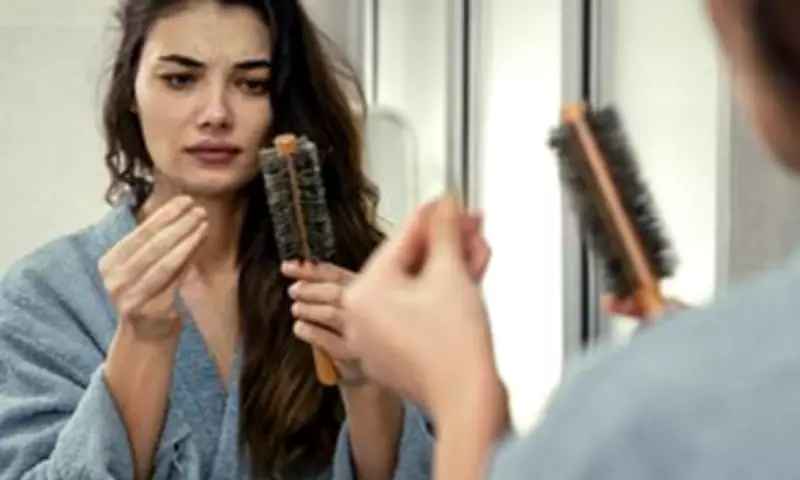
Hair loss has evolved into one of the internet's most significant obsessions. The hashtag #HairLoss currently boasts over 900,000 posts on TikTok, while in the United Kingdom alone, more than eight million women are affected by thinning locks. This indicates a widespread concern about hair health, with countless individuals turning to online platforms in search of solutions.
The Dangers of Viral Hair Loss Trends
However, according to Dr Deniz Dağdelen, a distinguished dermatologist and hair transplant specialist at Now Hair Time, many of these viral hacks are not merely ineffective—they are actively causing damage to already fragile hair. Dr Dağdelen has identified four major trends circulating online and explains their detrimental effects on the scalp.
Rosemary Oil: A Misunderstood Remedy
Rosemary oil stands as perhaps the most viral 'natural fix', with approximately 300,000 TikTok posts, some asserting it performs as effectively as Minoxidil, the gold-standard medical treatment for hair loss. This belief stems from a small study indicating rosemary oil might stimulate hair growth.

The critical issue lies in its application. On TikTok, users frequently apply the oil neat or in high concentrations, which can irritate the scalp, provoke allergic reactions, and paradoxically increase hair shedding. In essence, a few diluted drops may offer some benefit, but slathering it on is not a shortcut to achieving thicker hair.
Pumpkin Seed Oil: An Ineffective Solution
Often promoted as a natural method to block DHT, the hormone associated with hair loss, pumpkin seed oil appears to be an easy solution. Yet, the quantities required to produce any meaningful effect are substantially higher than what individuals typically use at home.
Whether applied topically or consumed as a supplement, the doses utilised in scientific studies are consistent and controlled—far exceeding a few drops from a pipette. Consequently, for the majority of people, pumpkin seed oil is underwhelming at best and a complete waste of money at worst.
At-Home Dermarolling: A Risky Endeavour
This trend ventures into more serious territory. Dermarolling involves using tiny needles to create micro-injuries on the scalp, intended to stimulate hair follicles and promote growth. When performed correctly in a clinical setting, it can be effective.
At home, however, the story changes dramatically. Without proper sterilisation and technique, dermarollers can introduce harmful bacteria, leading to infections or even scarring alopecia, where inflammation permanently destroys hair follicles. This results in the exact opposite of the desired outcome.
Hair Training: A Misguided Concept
The concept of hair training suggests that washing hair less frequently can 'train' the scalp to produce less oil. Since sebum contains DHT, the hormone responsible for hair loss, proponents argue this reduces shedding.
Unfortunately, this theory is entirely unfounded, as oil production is hormonally driven and unaffected by washing frequency. Worse, allowing oil to accumulate on the scalp increases exposure to DHT and raises the risk of fungal overgrowth, both of which can exacerbate hair thinning. Thus, while extending periods between washes might save time, it certainly does not benefit your hairline.
Three Genuinely Beneficial Practices
Amidst the misleading trends, Dr Dağdelen highlights three approaches that are actually worth considering for hair health.
Silk Pillowcases: Protecting Existing Hair
Silk pillowcases are genuinely helpful in reducing breakage, specifically the snapping and fraying of the hair shaft caused by overnight friction. If your hair feels dry, damaged, or prone to split ends, switching to silk is a worthwhile investment.
However, they will not prevent hair loss at the root. Their purpose is to protect the hair you already have, not to stop it from falling out. Consider this a minor upgrade rather than a comprehensive solution.
Medical-Grade Red Light Therapy: Scientifically Backed
This is one of the few trends with substantial scientific support. Proper low-level laser therapy (LLLT) devices can effectively stimulate hair follicles and support regrowth.

The caveat is that most cheaper gadgets advertised on TikTok lack sufficient power to reach the follicles. To achieve results, it is essential to use a clinically approved, medical-grade device; otherwise, you are merely waving a red light at your scalp with little hope of benefit.
PRP Therapy: A Clinical Gold Standard
PRP (platelet-rich plasma) therapy is often regarded as the gold standard in clinical settings, and for good reason. It involves injecting your own plasma into the scalp to stimulate thinning follicles and encourage growth.
Nevertheless, it is not a miracle cure. PRP works best for early-stage thinning and is ineffective in areas where hair follicles have ceased functioning entirely, such as smooth bald patches. In such cases, no amount of PRP can restore lost hair.
In conclusion, while the internet offers a plethora of hair loss solutions, it is crucial to approach viral trends with caution. Consulting a qualified dermatologist remains the safest and most effective strategy for addressing hair thinning concerns.