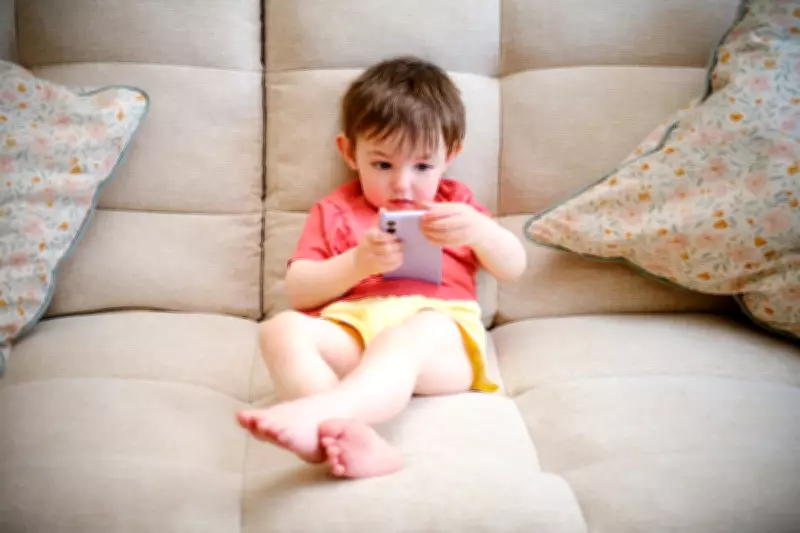
New Study Shows Widespread Screen Time Among Nine-Month-Old Infants
Nearly three-quarters of nine-month-old babies are exposed to screens on a daily basis, according to a significant new study released by the Education Policy Institute (EPI). The research, which analysed data from over 8,000 families, found that 72 per cent of infants at this age engage in some form of screen time each day, with an overall average of 41 minutes per day.
Household Structure and Screen Exposure Disparities
The likelihood of daily screen exposure rises notably for only children, reaching 80 per cent. The study also uncovered clear disparities based on household structure. Infants in single-parent homes were found to average 47 minutes of screen time daily, compared to 39 minutes for those living in two-parent households.
A small but significant minority of two per cent exceed three hours of screen time daily. These infants were considerably less likely to regularly participate in key developmental activities such as outdoor trips, being read to, or singing sessions with parents.

Impact on Developmental Activities and Family Income
The research delved into the correlation between screen time and other crucial early childhood activities. The likelihood of parents looking at books with their infants daily remained consistent for babies with no screen time, up to an hour, or up to two hours. This engagement only decreased when daily screen time surpassed the two-hour threshold.
Similarly, 80 per cent of babies with no daily screen time went on outdoor trips every day. This figure dropped to 76 per cent for those watching up to two hours, and further declined to 60 per cent for babies with over three hours of daily screen time. While the analysis identified a correlation between family income and the amount of screen time, no clear pattern emerged regarding family income and whether babies watch screens at all.
Expert Calls for Shift in Conversation and Government Guidance
Dr Tammy Campbell, director for early years, inequalities and wellbeing at EPI, suggested the findings indicate that screen time and a healthy, active childhood are not necessarily mutually exclusive. "Therefore a large part of the conversation needs to shift from ‘how much’ to ‘what’, and ‘why’," she explained. "It’s about how and when a screen is being used for shared, interactive play, or for passive viewing."
Dr Campbell added that forthcoming guidance should help families use digital tools to enhance development, bonding, and enjoyment of babyhood, rather than simply "demonising any use." The government is expected to publish its official guidance on screen time for children under five in April.
Context from Previous Research and Broader Implications
Previous research cited by the government indicates that around 98 per cent of children are watching screens daily by the age of two. Parents and teachers have noted difficulties in concentration when these children begin formal schooling. Further studies have linked high screen time, around five hours a day, to significantly fewer words spoken by children compared to those with around 44 minutes of daily screen exposure.
The new EPI study underscores the urgent need for nuanced, evidence-based public health advice that recognises the pervasive role of digital devices in modern parenting while safeguarding infant development and wellbeing.