Cubans Self-Medicate as Crisis Takes Toll on Mental Health
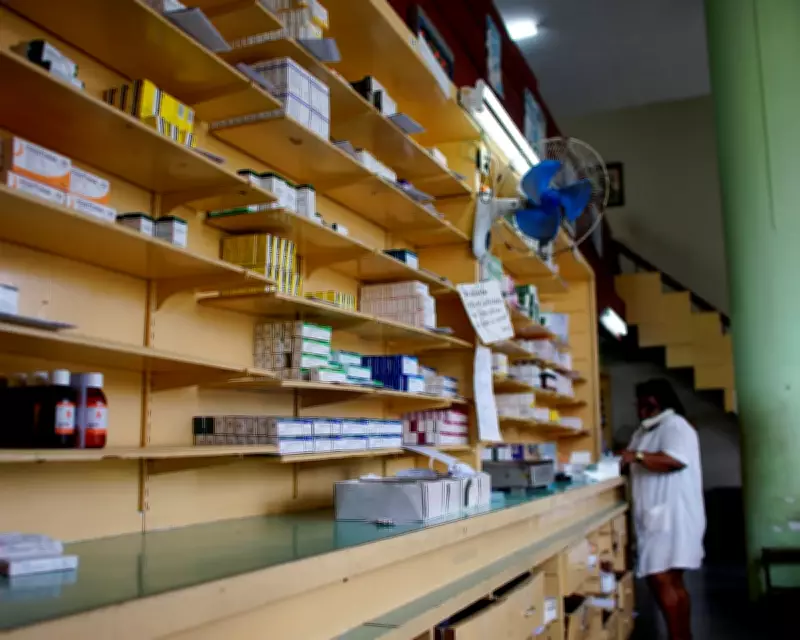
In Havana, Cuba, an employee talks on the phone inside a pharmacy, a scene that underscores the growing reliance on medication amid a severe mental health crisis. Many Cubans are turning to prescription drugs, herbal remedies, and even hard drugs as the outlook feels bleaker than the collapse of the Soviet Union, driven by economic decline and US-imposed sanctions.
Personal Struggles in a Time of Turmoil
Cris Sánchez moved to London in 1994 but returned to Cuba in 2018 to care for his ailing parents. Since then, the strain of life in Havana has led him to use prescription drugs to manage stress. He is not alone; across the island, healthcare professionals report that most families include at least one member buying antidepressants, mood stabilisers, or stimulants on the black market.
Sánchez, a former linguist and teacher at University College London, worked to help his mother break her prescription drug habit, only to find himself using antidepressants. He emphasises how easy it is to slip into regular use, noting the challenges of life in Cuba compared to his previous life in London.

Economic Pressures and Psychological Impact
A psychology professor in Santiago, who requested anonymity, explained that daily stressors like power cuts, food shortages, and transport issues are fueling a surge in mental health issues. The US oil blockade has worsened blackouts and closed state offices, leaving many Cubans focused solely on survival.
President Miguel Díaz-Canel has spoken of resilience, but many Cubans struggle to cope. With GDP contracting by 17% since 2019 and state pharmacies empty, people increasingly seek relief on the black market, where drugs are delivered via electric bikes but at high costs.
Historical Context and Current Trends
Reliance on psychotropic drugs dates back to the 1990s after the Soviet Union's collapse, a period known as the "Special Period." During that time, doctors prescribed freely, and state pharmacies provided medications. Another anonymous carer suggested the government encouraged this to keep people calm.
While use declined briefly with tourism and Venezuelan support, hopes faded due to stalled economic reforms, US pressure under Donald Trump, and the COVID-19 pandemic. Protests in 2021 and a mass exodus of up to 20% of the population in five years have added to the psychological burden on those remaining.
Diverse Coping Mechanisms Across Cuba
In rural areas like El Cobre, high drug costs lead people to use herbal infusions from mint, chamomile, and other plants. However, in cities, especially among youth, there is a rise in illicit drug use, including synthetic cannabinoids like "el químico," which the Cuban government blames on the US.
Commonly used prescription drugs include benzodiazepines such as chlordiazepoxide and clonazepam, as well as alprazolam (Xanax), amitriptyline, and sertraline. Wealth disparities are stark, with elderly pensioners receiving less than $10 a month while private business owners drive luxury cars.
Uncertain Future and Emotional Toll
Gabriel Menéndez, a teacher in Santa Clara, finds this crisis harder than the Special Period, noting there is "no idea to hold on to" now. Many elderly are lonely, with children and grandchildren having emigrated, often communicating only through screens.
The psychology professor in Santiago highlights that uncertainty about the crisis's duration exacerbates mental health issues, making it difficult for people to cope without medication. As Cubans navigate this challenging period, self-medication remains a common, though risky, response to pervasive stress and anxiety.