The NHS is proposing to slash recruitment to avoid ‘financial ruin’ and instead use artificial intelligence to assist doctors in treating patients, according to a leaked workforce plan being finalised by health officials.
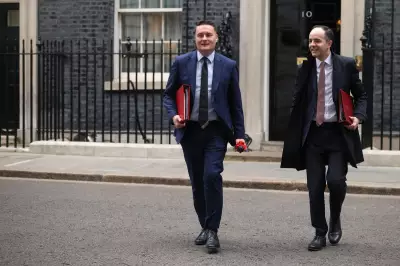
The plan, seen by the Financial Times, states that the NHS in England will have to rely on technology to manage with hundreds of thousands fewer staff than previously planned under the Conservative government. The controversial amendments were drafted while Labour leadership hopeful Wes Streeting was health secretary.
Streeting resigned last week, criticising Sir Keir Starmer for lacking vision and creating a vacuum. His successor, James Murray, formerly deputy to Chancellor Rachel Reeves at the Treasury, must now decide whether to proceed with the proposals, which are due to be published within weeks.

The draft warns that the existing recruitment plan would lead to ‘a vast increase in the NHS pay bill as a proportion of GDP’ and states: ‘This is a path to financial ruin and would bankrupt both the health service and the country.’ It argues that using technology and treating more patients in local clinics or at home rather than in hospital means the NHS ‘does not need anything like the growth rate [in staff numbers]’ outlined in its 2023 workforce plan.
In 2023, NHS bosses set a ten-year staffing plan aiming to put the workforce on a ‘sustainable footing’ after years of chronic shortages. That plan would have increased staffing from 1.4 million to 2.3 million by the mid-2030s, with annual growth of 2.6 to 2.9 per cent.
However, the current government’s draft promises a ‘fundamentally different approach’, arguing that a 50 per cent increase in doctors over the past decade ‘has not led to better access, experience or outcomes for citizens’ and has instead seen productivity fall. The new measures would cut annual staffing increases to between 1.1 and 2 per cent, suggesting up to 380,000 fewer people will work in the NHS in the mid-2030s than previously forecast.
To manage this, the draft envisages far wider use of AI, including ‘instances where technology can completely substitute for a role’. AI capable of making autonomous decisions should be used in treatment, ‘for example, by using patient data to frame a consultation, highlight risk level [and] identify key patient information’. Staff who deliver sustained productivity improvements through technology should receive ‘a share of the benefit’ via bonuses or extra time off.
Alan Lofthouse, deputy head of health at the Unison union, warned that ‘cutting skilled, trained health staff for unproven tech would be reckless’.
The new document states the NHS is ‘likely to have enough doctors to meet forecast demand by 2034/35’ and proposes measures to retain staff, such as allowing them to exchange some pension contributions for higher pay. However, it notes that up to 49,000 more GPs might be needed by 2035 to deliver more care closer to home, 23 per cent more than in the 2023 plan, at the expense of hospital workers.
The proposals also envisage an increase of about 50,000 nurses over the next decade, down from 170,000 to 190,000 in 2023.
The Institute for Fiscal Studies estimated the previous plan would see the NHS employing 9 per cent of all workers in England by 2036/37, up from 6 per cent, adding about £50 billion in costs. Paul Johnson, former head of the think-tank, said the 2023 plan ‘would have meant a big increase in spending’ but cautioned that the new one is unlikely to reduce spending, suggesting NHS budgets would continue to rise.
Johnson criticised the ‘chopping and changing’ of strategies and added that hopes of transforming the NHS through AI must be met with ‘a degree of scepticism about the capacity of an organisation that struggles to use 2005 technology, let alone anything more recent’.
The Department of Health said: ‘We don’t comment on leaks.’