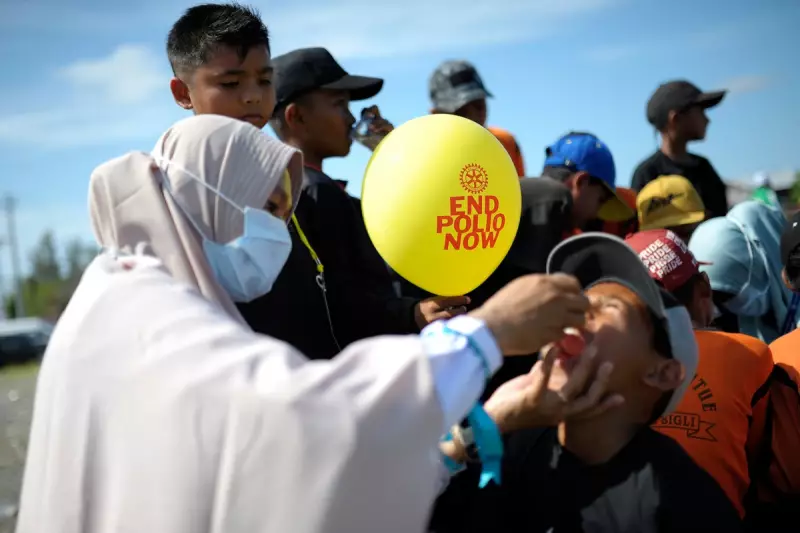
Victory Declared in Indonesia's Polio Battle
The World Health Organization has officially declared the end of Indonesia's poliovirus outbreak, marking a significant public health victory after nearly three years of intensive response efforts. Officials confirmed the milestone on Friday, 21st November 2025, bringing closure to a challenging chapter that began in 2022.
From Elimination to Outbreak: The Aceh Province Catalyst
Indonesia had previously celebrated being declared polio-free in 2014, but the highly contagious disease re-emerged eight years later in the conservative Aceh province. Health authorities identified a dangerous combination of factors behind the outbreak: consistently low routine immunization rates and unhealthy environmental conditions. Shockingly, only 50.9% of infants born in Aceh in 2021 received polio vaccination.
The immunization drive in Aceh faced particular challenges, with efforts hampered by widespread disinformation claiming the vaccine was incompatible with religious beliefs. Compounding the problem, the government had been prioritising COVID-19 vaccinations since they became available, further stretching healthcare resources.

Nationwide Response and Mass Immunisation Drive
Over the following two years, cases appeared across multiple provinces including Banten, West Java, Central Java, East Java, North Maluku, Central Papua, Highland Papua and South Papua. This spread prompted an unprecedented mass immunisation and public information campaign.
Health workers administered nearly 60 million additional doses of polio vaccine to children during the response. The last confirmed polio case was detected in South Papua province in June 2024. Since that date, no poliovirus has been found in children or environmental samples, leading WHO to formally declare the outbreak over.
Celebrating Success While Maintaining Vigilance
In a joint announcement, Indonesian Health Minister Budi Gunadi Sadikin credited the success to "the dedication of health workers and the commitment of parents and communities." WHO's Western Pacific Regional Director Saia Ma'u Piukala called the achievement "a critical step toward global eradication" while urging continued vigilance among all 38 countries and areas in the region.
Minister Sadikin vowed to keep Indonesia polio-free through strengthening routine immunisation, enhancing surveillance, cross-sectoral collaboration and community support. "Every child deserves protection," he stated. "We cannot be complacent, however. The risk of polio remains, especially with the gaps in immunisation coverage in several provinces in Indonesia."
Indonesia's comprehensive response included two rounds of nationwide immunisation using novel oral polio vaccine type 2 and improved routine coverage. The introduction of a hexavalent vaccine helped increase the second dose of inactivated polio vaccine from covering 1.9 million children (63%) in 2023 to 3.2 million children (73%) last year.
UNICEF Indonesia Representative Maniza Zaman emphasised the collective effort: "This shows what is possible when communities, health workers and partners unite. We must keep up the momentum, so every child receives the immunisation they need to grow up healthy and free from polio and other vaccine-preventable diseases."