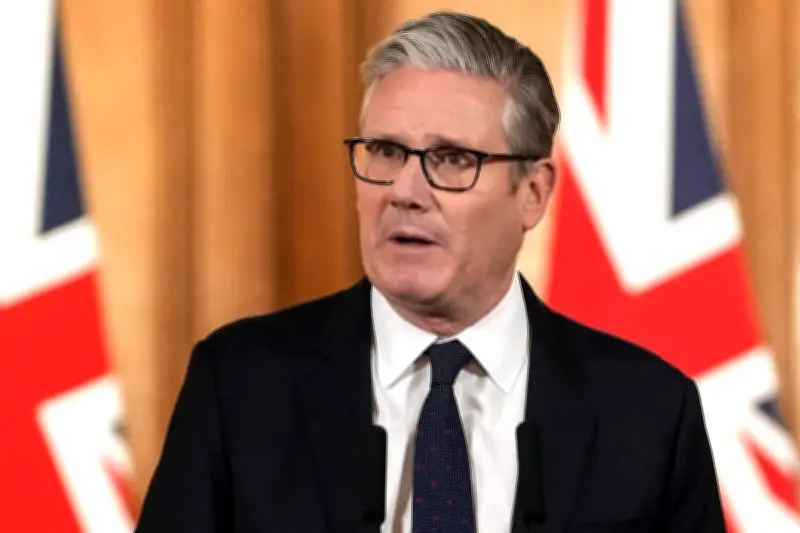
Scotland's Children's Commissioner has warned that Prime Minister Sir Keir Starmer's planned ban on social media for under-16s could drive young people to 'darker places on the internet.' Nicola Killean expressed disappointment with the UK Government's stance, arguing that the evidence does not currently support a blanket ban as an effective way to protect children online.
Concerns Over Effectiveness and Enforcement
Ms Killean stated that a children's rights impact assessment conducted by her office found that a social media ban for under-16s would not be 'proportionate, effective, or enforceable.' She highlighted that the announcement leaves many questions unanswered, including how the ban will be implemented and what it will entail.
'Today's announcement leaves more questions than answers. We know when a ban will happen, but not how or what it will include,' she said. 'The UK Government must urgently address children and young people directly.'

Risk of Driving Children to Unregulated Spaces
The Commissioner noted that evidence from Australia shows that the majority of children still access social media despite bans. She warned that children might stop reporting harmful content for fear of repercussions, pushing them to less regulated parts of the internet.
'There is a real risk now that children will be driven to darker places on the internet and stop talking to adults about what they might see,' Ms Killean added.
Balancing Risks and Benefits
While acknowledging that social media can expose children to risks such as harmful content, cyberbullying, and exploitation, Ms Killean also emphasised its benefits, including communication, self-expression, and access to support networks. She argued that a blanket ban could inadvertently harm vulnerable groups, such as disabled children, those in rural areas, or those with family overseas.
'The available evidence does not currently show a blanket ban would make children safer online, and it may inadvertently push children to less regulated or riskier parts of the internet,' she said.
Calls for Platform Accountability
Ms Killean stressed that the focus should be on making platforms safer for children rather than simply banning them. 'Enforcing a ban on children takes away the responsibility on platforms to make social media safer. We want safeguards and the regulation of platforms to be strengthened – and enforced,' she said.
She added that platforms should be required to remove addictive and exploitative features, ensuring they are suitable for children.
Support for the Ban
Despite the criticisms, some children's charities have welcomed the ban. Mary Glasgow, chief executive of Children First, described it as an 'indication of the desire to protect children in the face of a national childhood emergency.' She noted that tech companies must be forced to implement safety measures from the start, as children are likely to find ways around the ban.
'Bans on social media and smartphones in schools can begin to shift cultural norms, but they will not fix a system designed to maximise profit and ignore protection,' she said. 'Parents and caregivers need support to model a new approach to screens.'
The Prime Minister has insisted that the ban is about giving children their childhoods back, with restrictions expected to be passed by Christmas and in force by spring next year. Technology firms, rather than children, will be liable for enforcement.