

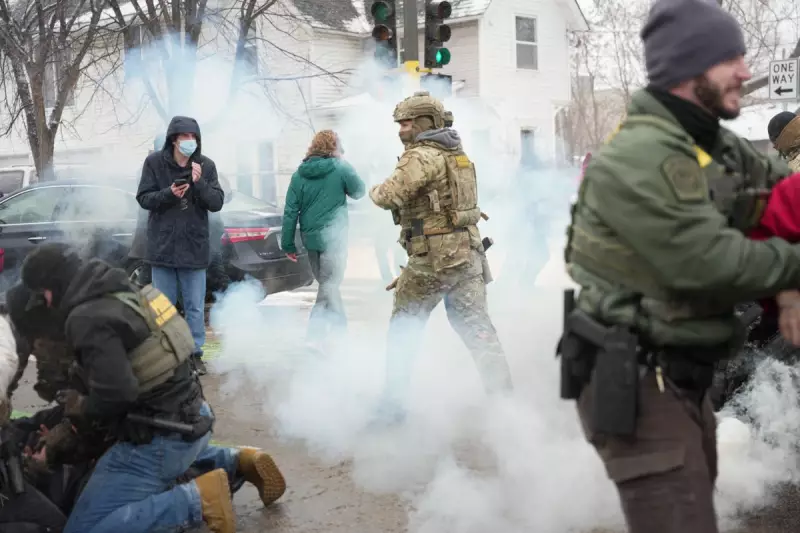
The United States Army has issued prepare-to-deploy orders to several dozen additional active-duty soldiers who could be sent to Minneapolis if required, according to a defence official speaking on Wednesday. This development comes amid ongoing protests in the city following the Trump administration's intensified immigration enforcement actions.
Military Police Brigade on Standby
The defence official, who requested anonymity to discuss sensitive operational plans, confirmed that members of an Army military police brigade currently stationed at Fort Bragg in North Carolina have received these preparatory deployment orders. The official emphasised that such standby instructions are issued regularly as part of normal military readiness procedures and do not necessarily indicate that troops will ultimately be deployed to the location.
If activated for deployment, these military personnel would likely provide support to civil authorities in Minneapolis, according to the defence official's statement. The troops would operate under established protocols for military assistance to civilian law enforcement agencies during periods of civil unrest or emergency situations.

Broader Military Preparations
This preparation extends beyond the military police brigade at Fort Bragg. Approximately 1,500 active-duty soldiers from the Army's 11th Airborne Division, which is based in Alaska, have also received similar standby deployment orders according to defence sources. This indicates a broader military readiness posture in response to the ongoing situation in Minneapolis and potential civil disturbances elsewhere.
Presidential Authority and Political Context
President Donald Trump has previously threatened to invoke the Insurrection Act, a rarely utilised 19th century law that would grant him authority to deploy active-duty military personnel as law enforcement within the United States. This threat followed protests that erupted in Minneapolis after a federal immigration officer killed resident Renee Good on January 7th.
President Trump appeared to temporarily walk back this threat when speaking to reporters a day later, stating there wasn't currently a reason to use the act "right now." However, he maintained the option remained available, telling reporters: "If I needed it, I'd use it. It's very powerful."
Local Opposition and Political Tensions
Minnesota Governor Tim Walz, a Democrat who has frequently been targeted by President Trump, has urged the president to refrain from sending additional troops to the state. In a statement issued on Tuesday, Governor Walz invited President Trump to visit Minnesota personally to "help restore calm and order and reaffirm that true public safety comes from shared purpose, trust, and respect."
When questioned about the latest military preparation orders, which were initially reported by MS Now, Pentagon officials stated they didn't have information to provide at this time regarding specific deployment preparations or operational planning.
Historical Precedents and Legal Challenges
During his second term, President Trump has pushed traditional boundaries regarding military deployment within American cities, often over objections from local officials. These deployments have typically occurred amid federal operations targeting illegal immigration and urban crime, creating tensions between federal and local authorities.
Last June, President Trump deployed federalized National Guard troops to Los Angeles after protesters took to the streets in response to a series of immigration arrests. Ultimately, approximately 4,000 Guard members and 700 active-duty Marines were sent to guard federal buildings and later to protect federal agents as they carried out immigration enforcement operations.
The administration has also mobilized National Guard troops in other locations including Chicago and Portland, Oregon, though these deployments have faced a series of legal challenges and setbacks. In December, President Trump stated he was dropping that particular push for military deployment in urban areas for the time being, though the option remains available under certain circumstances.

The current situation in Minneapolis continues to evolve, with military preparations occurring alongside ongoing protests and political negotiations between federal, state, and local authorities regarding the appropriate response to civil unrest and immigration enforcement operations.





