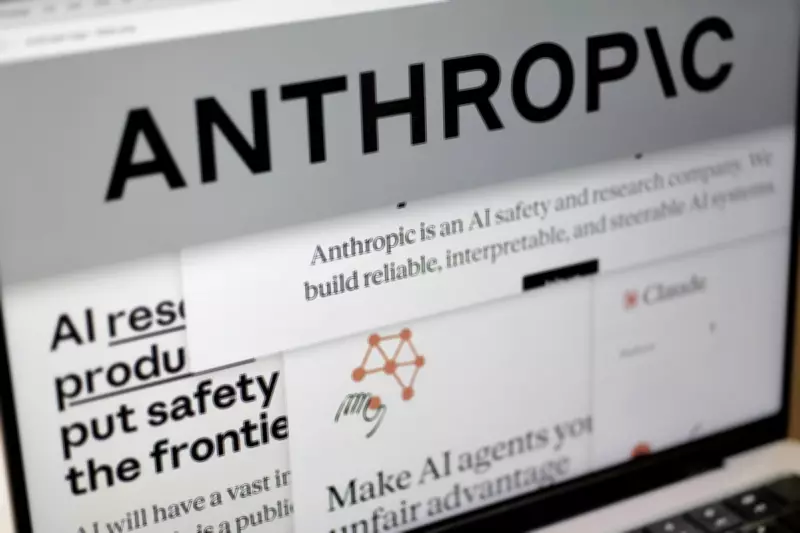
A panel of appellate judges appeared divided on Tuesday during oral arguments in a legal dispute between the Pentagon and artificial intelligence company Anthropic. The San Francisco-based firm alleges that Defense Secretary Pete Hegseth unlawfully and falsely labeled it a national security risk after it raised ethical and safety concerns about the use of AI in military operations.
Judges Express Divergent Views
Three judges from the U.S. Court of Appeals for the District of Columbia Circuit heard Anthropic's appeal but did not indicate when they would issue a ruling. Their questions and remarks, however, hinted at potential divisions on the bench.
Judge Karen LeCraft Henderson, a George H.W. Bush appointee, said she saw no evidence supporting the Pentagon's determination that Anthropic poses a supply-chain risk to national security. "To me, this is just a spectacular overreach by the Department," Henderson remarked.

In contrast, Judge Neomi Rao, nominated by Donald Trump, questioned whether the court had grounds to second-guess Hegseth's judgment. She noted that the secretary was making broader points about risk, stating, "They say, 'Well, based on what we know, we can't trust that the model may not have something embedded within it that is going to create a problem for military capabilities.'"
Judge Gregory Katsas, another Trump nominee, also heard the arguments.
Background of the Dispute
The Pentagon's conflict with Anthropic revolves around the use of AI in fully autonomous weapons and potential surveillance of Americans. After Anthropic raised ethical concerns, the Pentagon designated the company as a supply chain risk, and President Trump ordered all federal agencies to stop using its technology.
Anthropic filed lawsuits in Washington, D.C., and San Francisco, claiming the Pentagon is illegally retaliating by stigmatizing it with a designation meant to protect against foreign adversaries. The company maintains that it does not seek to force the government to contract with it but argues that Hegseth's designation has caused irreparable harm.
Earlier this month, the D.C. Circuit rejected Anthropic's request for an order blocking the Pentagon's actions pending appeal. However, a federal judge in San Francisco ruled in Anthropic's favor last month, blocking the Pentagon from labeling the company as a supply-chain risk.
Arguments Presented
Anthropic attorney Kelly Dunbar argued that Hegseth's designation "defied congressionally mandated procedures, exceeded statutory limits and violated the Constitution." She added, "For the first time ever, the secretary turned a powerful national security authority against an American company, and he did so to gain leverage in a contract dispute."
Dunbar also emphasized that Anthropic cannot manipulate its AI tool Claude once deployed in classified Pentagon military networks.
Justice Department attorney Sharon Swingle countered that Anthropic clearly has the ability to interfere with the Pentagon's use of its AI model "for critical military operations." She warned, "It's undisputed that the failure of the model in active military operations could have catastrophic national-security consequences and put service members' lives at risk."