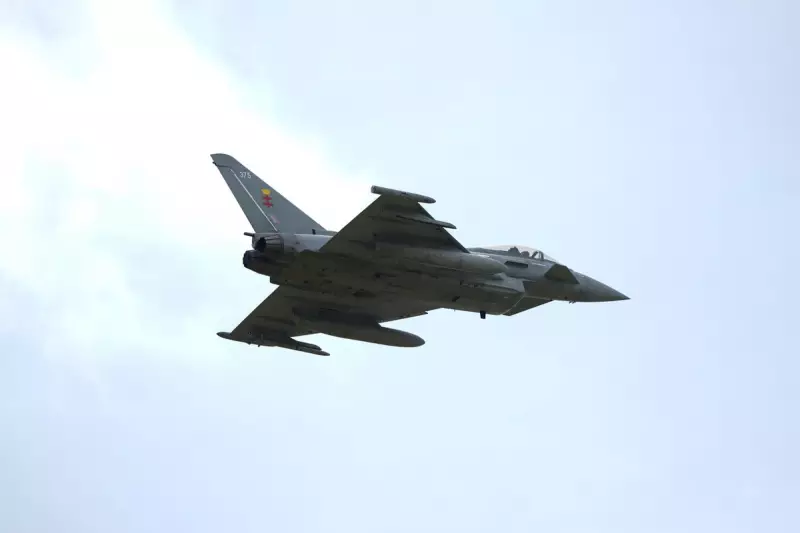
In a significant move to bolster national and allied security, Defence Secretary John Healey has confirmed a substantial £453 million investment to upgrade the Royal Air Force's Typhoon fighter jets. This initiative will equip the aircraft with state-of-the-art radar systems, marking a pivotal enhancement in the UK's air defence capabilities.
Advanced Radar Systems for Enhanced Detection
The upgrade involves the installation of 40 European Common Radar System (ECRS) Mk2 radars on the Typhoon jets. These cutting-edge systems are designed to significantly improve the RAF's ability to detect, identify, and track multiple targets simultaneously. This technological advancement is expected to provide a critical edge in complex aerial environments, ensuring faster and more accurate responses to potential threats.
Securing Jobs and Supporting Industry
The contract for this major project involves key defence industry players, including BAE Systems, Leonardo UK, and Parker Meggitt. It is projected to secure up to 1,300 skilled jobs across various regions in the UK. Notably, this includes approximately 300 positions in Edinburgh and 120 in Lancashire, underscoring the government's commitment to using defence as an engine for growth and a source of high-quality employment opportunities.

Responding to NATO Pressures and Global Threats
Healey emphasised that this investment is crucial not only for UK security but also for strengthening NATO's collective air defence. The upgrade comes in response to increasing global threats, such as heightened Russian drone activity and broader pressures on the NATO alliance. By enhancing the Typhoon jets' capabilities, the UK aims to play a more robust role in maintaining regional stability and deterring aggression.
Building on Previous Defence Commitments
This announcement follows a recent £205 million contract for Typhoon engineering support, highlighting the government's ongoing focus on modernising the RAF's fleet. Together, these investments reinforce the strategic importance of defence in national policy, positioning it as a key driver of technological innovation and economic resilience.
Overall, the £453 million radar upgrade represents a forward-looking step in ensuring the UK's preparedness for future challenges, while simultaneously supporting domestic industry and job creation in critical sectors.