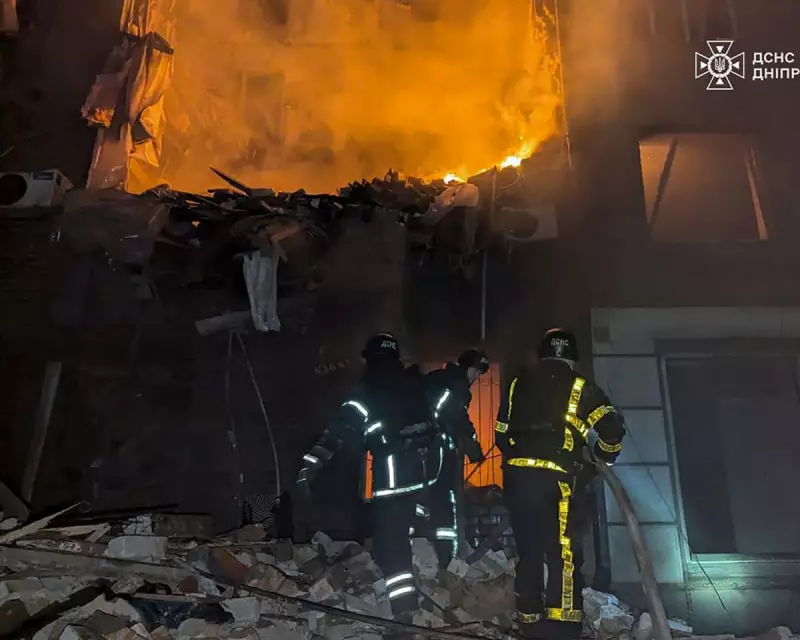
A devastating Russian missile strike has hit a residential building in the central Ukrainian city of Kryvyi Rih, the hometown of President Volodymyr Zelenskyy. Ukraine's State Emergency Service confirmed that at least 26 people lost their lives in the attack, with six children among the dead.
Kremlin Warns Against European Peacekeeping Force
The attack comes amid heightened tensions over Western support for Kyiv. The Kremlin has issued a stark warning against plans discussed by European leaders to deploy a multinational stabilisation force to Ukraine after the war ends. Russia's foreign ministry spokesperson, Maria Zakharova, stated on Thursday that any such NATO units would be considered "legitimate military targets" for Russian forces.
Zakharova denounced the proposed plan, which was discussed this week by British and French leaders with President Zelenskyy in Paris, as "dangerous" and "destructive". She accused Kyiv's allies of forming an "axis of war". This threat echoes previous statements made by President Vladimir Putin.

German Chancellor Friedrich Merz added a note of caution, suggesting a ceasefire remains "quite far" away given Russia's current position. He emphasised that any long-term security agreement for Ukraine would be impossible without Moscow's consent.
Warnings of Escalating Air War and Infrastructure Attacks
Ukrainian authorities are bracing for further violence. The US embassy in Kyiv and President Zelenskyy himself warned of a "potentially significant air attack" that could occur imminently. Zelenskyy urged citizens to pay close attention to air raid sirens and seek shelter when alerted.
This warning proved prescient, as Russian drones struck targets in the capital, Kyiv, early on Friday. The attacks triggered fires in several districts, including an apartment building and a shopping centre, injuring at least four people according to local officials.
The assault on energy infrastructure continues to be a key Russian tactic. Overnight drone attacks plunged two south-eastern Ukrainian regions into near-total blackout. In the industrial Dnipropetrovsk region, nearly 500,000 households were still without power on Thursday afternoon. Deputy Prime Minister Oleksiy Kuleba reported that more than 1.7 million households across Ukraine faced water supply problems due to the strikes.
In a significant countermove, Ukrainian forces targeted energy installations in Russia's western Belgorod region. Internet monitoring group NetBlocks reported a major disruption to connectivity there, suggesting it was "one of the most effective infrastructure strikes by Ukraine since the start of the war".
Political Repercussions and the Cost of War
The war's impact continues to ripple through European politics and economics. New data reveals that the Kremlin earned an estimated €7.2bn from exporting liquefied natural gas to the EU last year, leading to accusations that European governments are inadvertently fuelling Putin's war machine. While Brussels has pledged a ban on Russian LNG by 2027, imports from Siberia's Yamal peninsula continue to flow.
In the UK, Reform UK leader Nigel Farage has faced criticism after stating he would vote against any government plans to deploy British troops to Ukraine, even in a post-war peacekeeping role. Cabinet minister Pat McFadden accused Farage of "parroting Kremlin lines" and casting doubt on his commitment to national security.
Prime Minister Keir Starmer addressed the issue in the House of Commons, assuring MPs that any deployment of UK troops on peacekeeping duties in Ukraine would be subject to a parliamentary debate and vote, with details on troop numbers provided at that time.
As rescue operations continue in Kryvyi Rih, where 29 apartment buildings were damaged and water pumping stations affected, the human cost of the 1,416-day conflict is once again tragically clear. The international community faces complex questions about securing a future peace and deterring further aggression.