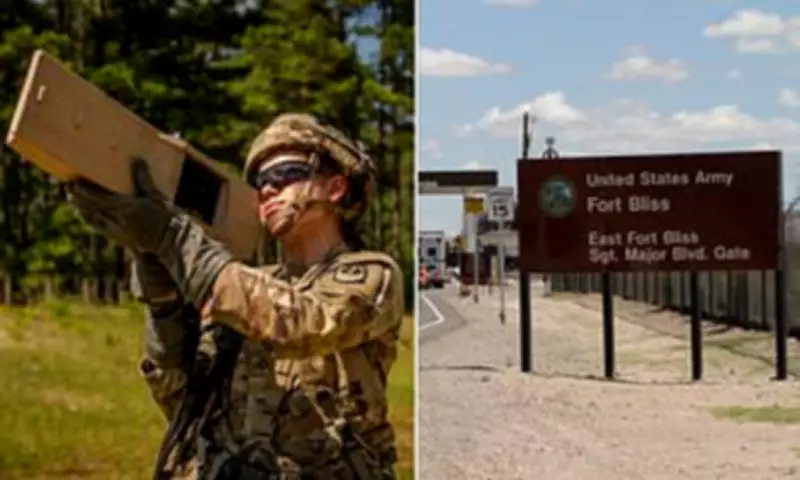
In a startling incident that has ignited political fury, the US military accidentally used a laser to shoot down a Customs and Border Protection (CBP) drone in Texas. The event occurred near Fort Bliss, approximately 50 miles northwest of El Paso, as part of enforcement efforts linked to former President Donald Trump's border crackdown policies. This marks the second time in just two weeks that a laser has been fired in the area, though the earlier discharge did not strike a target.
Official Statements and Agency Coordination
The Pentagon, Customs and Border Protection, and the Federal Aviation Administration (FAA) jointly released a statement clarifying the situation. They emphasized that, at President Trump's direction, these agencies are collaborating unprecedentedly to counter drone threats from Mexican cartels and foreign terrorist organizations along the US-Mexico border. The Pentagon stated it employed counter-unmanned aircraft system authorities to neutralize what appeared to be a threatening unmanned aerial system within military airspace.
Importantly, no commercial flights were in the vicinity during the incident, and the action took place far from populated areas. The agencies pledged to enhance cooperation and communication to prevent similar occurrences in the future.

Congressional Outrage and Criticism
Congressional Democrats, led by Representative Rick Larsen and other top members of the House Transportation and Infrastructure Committee, expressed profound shock and anger upon learning of the latest laser firing. In a joint statement, they declared, "Our heads are exploding over the news," and lambasted the Trump administration for sidestepping a bipartisan bill aimed at training drone operators and improving coordination among the Pentagon, FAA, and Department of Homeland Security.
The lawmakers attributed the incident to governmental incompetence, highlighting a pattern of dysfunction where agencies fail to coordinate effectively. This criticism echoes concerns raised after a prior laser deployment by CBP near Fort Bliss two weeks earlier, which prompted the FAA to temporarily shut down air traffic at El Paso airport and surrounding areas, causing flight cancellations in the city of nearly 700,000 people.
Airspace Closures and Safety Measures
In response to the recent drone shootdown, the FAA expanded flight restrictions around Fort Hancock to include a greater radius, ensuring safety while not impacting commercial flights due to the remote location. The restrictions are set to last until June 24, with exceptions for authorized air ambulance or search and rescue flights coordinated through the Joint Task Force-Southern Border.
Earlier this month, the FAA had initially halted traffic for 10 days at El Paso airport but reversed the order after about eight hours. Sources familiar with the matter revealed that an anti-drone laser was deployed by CBP without prior coordination with the FAA, leading to the airspace closure to safeguard commercial aviation.
Investigations and Historical Context
Government agencies briefed congressional staff on the El Paso incident earlier this week and are expected to update lawmakers as soon as next week. Transportation Secretary Sean Duffy indicated plans to brief Congress, asserting that the FAA's decision to close airspace was not a mistake and denying that communication issues were to blame.
This incident underscores longstanding coordination challenges between the FAA and Pentagon, reminiscent of the 2023 midair collision near Washington, DC, that killed 67 people. The National Transportation Safety Board investigation into that tragedy revealed that the FAA and Army failed to share safety data and address risks associated with close calls around Reagan National Airport.
As tensions simmer, the lack of clear protocols for laser deployment remains a critical concern, with both the Pentagon and CBP reportedly believing they could use the technology without FAA approval. The ongoing fallout highlights the urgent need for improved interagency collaboration to prevent future mishaps and ensure border security operations do not compromise public safety.