US Military Laser Downs Border Patrol Drone in Second Texas Incident
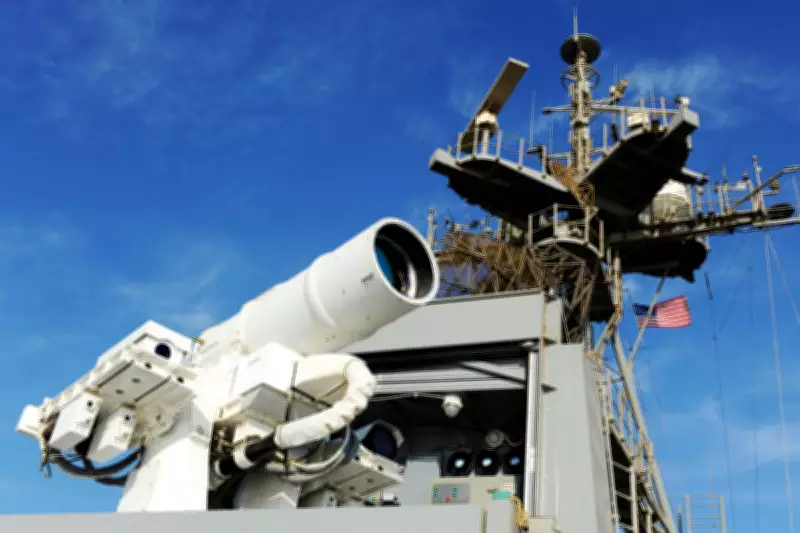
A United States military laser system shot down a drone near the US-Mexico border on Thursday, only for authorities to discover the aircraft belonged to Customs and Border Protection (CBP). This case of mistaken identity has triggered swift airspace closures and renewed political criticism, marking the second such laser deployment in the area within two weeks.
Airspace Closure and Official Response
The incident led the Federal Aviation Administration (FAA) to close additional airspace around Fort Hancock, approximately 50 miles southeast of El Paso. Military protocols mandate formal notification to the FAA for any counter-drone action within US airspace. Unlike a previous incident, this closure was localised and did not impact commercial flights.
In a joint statement issued late Thursday, the FAA, CBP, and the Pentagon acknowledged that the military had "employed counter-unmanned aircraft system authorities to mitigate a seemingly threatening unmanned aerial system operating within military airspace." They clarified the event occurred far from populated areas and commercial flight paths, as part of broader efforts to bolster border protections. The statement added, "At President Trump’s direction, the Department of War, FAA, and Customs and Border Patrol are working together in an unprecedented fashion to mitigate drone threats by Mexican cartels and foreign terrorist organizations at the U.S.-Mexico Border."

Political Backlash and Calls for Investigation
Three leading Democrats on the House Transportation and Infrastructure and Homeland Security committees, including Washington Representative Rick Larsen, expressed astonishment upon official notification. In a joint statement, the lawmakers declared, "Our heads are exploding over the news." They criticised the Trump administration for "sidestepping" a bipartisan bill aimed at training drone operators and enhancing communication between the Pentagon, FAA, and the Department of Homeland Security, which oversees CBP. "Now, we’re seeing the result of its incompetence," they added.
Illinois Democratic Senator Tammy Duckworth, the ranking member on the Senate’s Aviation Subcommittee, has called for an independent investigation into the latest incident. "The Trump administration’s incompetence continues to cause chaos in our skies," Duckworth asserted. Concerns about inter-agency coordination have been previously highlighted by an investigation into a mid-air collision near Washington, D.C., last year between an airliner and an Army helicopter, which claimed 67 lives. The National Transportation Safety Board found that the FAA and the Army had failed to share safety data regarding numerous close calls around Reagan National Airport.
Previous Incident and Broader Drone Threats
Two weeks prior, CBP deployed an anti-drone laser near Fort Bliss, resulting in the FAA shutting down air traffic at El Paso airport and the surrounding area for several hours, causing numerous flight cancellations. Sources familiar with that event indicated CBP had deployed the laser without coordinating with the FAA, which then closed the airspace to ensure commercial air safety. Transportation Secretary Sean Duffy stated at an unrelated news conference that the FAA’s decision to close El Paso airspace was not a mistake and that he did not believe communication issues were to blame.
The broader threat posed by drones continues to escalate. Along the US-Mexico border, cartels routinely use drones to transport drugs and surveil Border Patrol officers. Officials informed Congress last summer that more than 27,000 drones were detected within 1,600 feet of the southern border in the latter half of 2024. Homeland Security estimates there are over 1.7 million registered drones operating in the United States, with an increasing number of near misses around airports.
Anti-Drone Systems and Legislative Measures
Anti-drone systems employ various methods, including radio signals to jam drones, high-powered microwaves, or laser beams like those used in Texas, which can disable the machines. Other systems involve small drones designed to ram threatening aircraft, while bullet-based systems are more common in military battlefields than for domestic use.

Two months ago, Congress granted more law enforcement agencies, including some state and local departments, the authority to take down rogue drones, provided they are properly trained. Previously, this power was limited to a select few federal agencies. The US government has allocated over $250 million to help states prepare for drone responses ahead of upcoming World Cup matches and America’s 250th birthday celebrations, with another $250 million in grants expected later this year to strengthen national drone defences.