It was not the kind of letter any of us would want to receive a fortnight into our engagement. In 1887, 19-year-old Betty Lytton was expecting to embark on a normal marriage à deux with her handsome fiancé Gerald Balfour.
The Unconventional Proposal
Tall, slim, with aquiline features and dark hair flopping over his brow, Gerald was a senior politician and Conservative MP whose older brother Arthur would some years later become Prime Minister. So it was a bit of a shock when Betty received a letter from Frances Balfour, her soon-to-be sister-in-law, nine years her senior, who was married to Gerald's younger architect brother Eustace.
Frances was infatuated with Gerald, and had been for the past five years of her unhappy marriage. It was a reckless, passionate but probably platonic relationship, during which they bombarded each other with letters and nicknamed each other 'Catkin' and 'Bear'. Frances informed Betty that she and Gerald had been 'in closest friendship' for years, that his loss would be 'a wound' to her, and that the four of them should 'live as one' in the same street (Addison Road, Kensington), with each other's latchkeys and the freedom to go in and out of each other's houses whenever they liked.

The Love Square
We've heard of love triangles. This was to be a love square – or so Frances planned. She had no intention whatsoever of letting go of her emotional hold over Gerald. Betty, who was the kind of person who just wants everyone to be happy, went along with the plan. She didn't have much of a choice up against the fiery force field that was Frances. It was a case of 'what Frances wants, Frances gets'. Betty agreed that the four would live together 'united in the only thing which gives glory to life: love'. So she and Gerald moved in to 67 Addison Road, a stone's throw from Eustace and Frances and their first two children at number 32. Each household had six live-in servants. They nicknamed the set-up 'The Colony'.
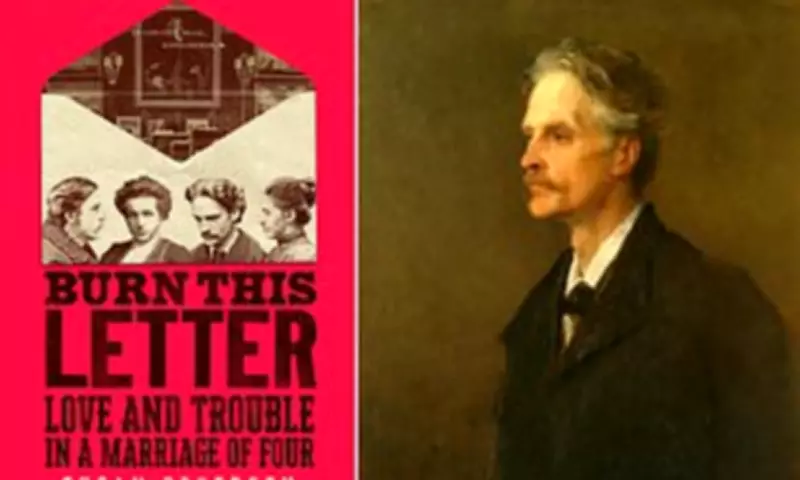
In this fascinating and evocative book, Susan Pedersen tells the story of those four married late-Victorians who set out to live in each other's pockets. In some ways, the set-up was disastrously flawed from the start. As Pedersen writes, 'Gerald could not shrive himself of Betty to love Frances. Frances could not love Eustace, or let Gerald go'. And warm-hearted Betty 'did everything she could to make it work'. She was so keen to please Frances that she kept reassuring her how much she loved the arrangement. 'Gerald has not been more the centre of my life than you have . . . But for you, he would not be half so happy with me.' Frances 'clung to the shadow of the old life' – the life in which she'd managed to entrap bachelor Gerald in a romantic friendship. When she felt she was losing her hold over him in The Colony, she had 'scenes'. She was constantly quarrelling with Eustace, who took to the bottle – and you can hardly blame him.
Unexpected Successes
Yet in other ways, it worked. During the 11 years of The Colony's existence, the rate of baby births was impressive. Gerald and Betty had four girls; Frances and Eustace had three more children to add to their first two. 'Cohabitation's erotic intensity gave fertility a sharp push,' as Pederson puts it. Imagining each other in bed together (or not) a few doors down seemed to inspire both couples' sex lives. An added complication was that if Gerald and Betty had a son, he would take precedence over Eustace and Frances's eldest son Frank and would inherit the family estate.
Frances's children far preferred sunny 'Aunt Betty' to their own mother, who found children boring. Frances's most vile characteristics came to the fore when the family went up to East Lothian every summer to stay at Arthur's house, Whittingehame. Arthur's older, unmarried sister Alice ran the household, and Frances couldn't stand being in subjection to her. Betty was so exhausted by Frances's moodiness that she took breakfast in her own room for days at a time rather than have to encounter her in the dining room. After several summers blackened by Frances's behaviour, Arthur informed her that if she could not live cordially with Alice, she would only be allowed to visit as an occasional guest.

Political and Personal Turmoil
Simmering under the surface was Frances's rage that women did not have the vote. In spite of her patent dislike of women, she was a zealous feminist – 'because she wanted what men had'. She took a bus to Parliament every day and sat up all night watching debates from behind the grille in the Ladies' Gallery. After a spell in Ireland where Gerald was Chief Secretary, Gerald and Betty decided to move from London to Woking in 1901. They had a beautiful house, Fishers Hill, designed for them by Edwin Lutyens – a more sought-after architect than poor old Eustace, who was a functioning alcoholic by now. Frances grew increasingly jealous of Gerald and Betty's domestic happiness. She referred to Woking as 'the dustbin of London' and to their house as 'a convict prison'.
In 1902, Gerald and Betty did have a longed-for son and heir. Family legend has it that when Frances set eyes on the baby, she spat into the cradle. Eustace died of drink in 1911, leaving huge debts. So you'd think that in the competition for happiest marriage, Gerald and Betty had won. But it was not that simple. Gerald would go on to betray his devoted wife.
Another Betrayal
On joining the Society for Psychical Research, he met, in 1913, a medium called Winifred Coombe Tennant, who went by the name of 'Mrs Willett'. It was 'a coup de foudre for them both', Pedersen writes. They were convinced that 'The Plan' for their love affair was 'dictated from the other side', in automatic writing. Betty naively invited Winifred to stay at Fishers Hill and, as Pedersen inelegantly puts it, 'they somehow found a place to get down to it'. This happened in the very month when Betty told Gerald she was pregnant with their youngest child, Kathleen. Winifred also had a baby by Gerald, and Betty invited them to live together as a blended family. But when Winifred's eldest son was killed in action in 1917, Winifred was crazed with grief, and the love affair ended.
Enduring Bonds
In a strange way, what survived longest was the bond between Frances and Betty. As they grew older, they wrote daily letters to each other. Fierce allies as suffragists marching for the women's cause, as well as rivals in their domestic lives, for 40 years they were each other's 'first responder'.