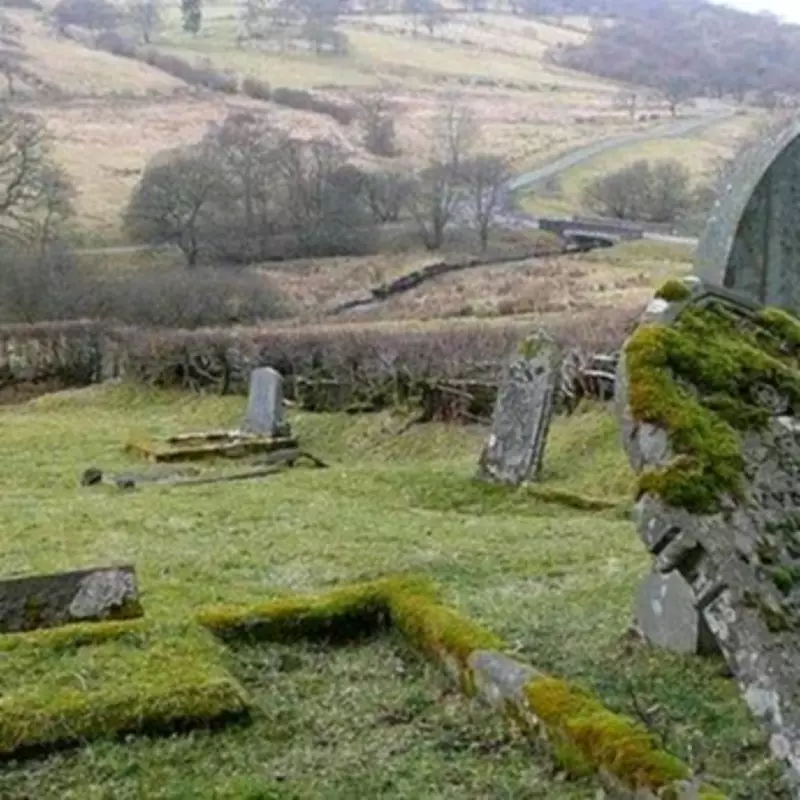
In the rolling hills of mid-Wales lies a haunting testament to wartime sacrifice—the abandoned settlement of Mynydd Epynt. Once a thriving community of over 200 residents, dozens of farms, a pub, and a cemetery, it was rendered silent within months after the outbreak of World War Two. Today, only weathered gravestones and a solitary pub stand as reminders of the families who called this place home for generations.
The Sudden Evacuation Order
In September 1939, an Army officer arrived to inspect this isolated region. By Christmas, every farm received a devastating notification: occupants had until April 1940 to leave their ancestral homes. The Ministry of Defence had designated 30,000 acres as a training facility, citing urgent needs for the war effort. Residents were told their sacrifice was vital and they would be compensated, but for many, no amount of money could ease the heartbreak.
A Community's Desperate Plea
For a brief moment in 1940, the predominantly Welsh-speaking community believed they had convinced the MoD to reconsider. However, as Hitler's Nazis swept across Europe, London rejected their appeals. The 54 farming families were ordered to find new homes elsewhere, with few nearby options. Many were forced to relocate far from the region, severing ties to land their ancestors had worked for centuries.

Most residents clung to the hope that this upheaval would be temporary—that they would return once the war ended. Thomas Morgan, one displaced farmer, made daily trips back to light a fire in his hearth, protecting the stonework until his family's expected return. His routine ended abruptly when two soldiers approached him with crushing news: "We've blown up the farmhouse. You won't need to come here anymore."
The Final Exodus
In June 1940, the school and chapel closed their doors. The Army began dismantling hedges, and on July 1st, heavy artillery bombardment commenced. Elwyn Davies, aged 10 at the time, recalled his grandmother's forced relocation to Carmarthenshire: "It was a very sombre time. Just a week after she left, they flattened her house. They flattened everything."
Photographer Iowerth Paete, sent to document the event, observed horses pulling carts laden with possessions along the road departing the village. He witnessed an elderly woman crying as she sat in a chair outside the home she was being forced to abandon.
Enduring Traces of a Lost World
Today, the MoD still owns the 30,000 acres, now called the Sennybridge Training Area, used for live firing exercises by British troops. Almost all original buildings have been destroyed, but The Drovers Arms pub remains standing alongside headstones in the graveyard. These are practically the sole traces of the families who lived there 80 years ago.
Bethan Price, a descendant of one of Epynt's families, revealed her great-grandmother left a key in her front door lock, never relinquishing hope of returning. Others acknowledged the finality more starkly—one woman demanded her front door be removed when she left.
A Forgotten Chapter in Welsh History
Current MP Ben Lake, whose grandmother Beryl Lake was the last baby born at Epynt, told NFU Cymru: "The takeover of the Epynt 80 years ago is a significant but often overlooked chapter in the history of Wales. An entire community was displaced, and families had to vacate farms that had been farmed by their ancestors for generations."
Despite the anger felt at the time, expressing dissent was viewed as weakening the war effort against Hitler. Consequently, the forced evacuation never gained the historical recognition of events like the flooding of Capel Celyn in Tryweryn Valley in 1965. Eight decades on, Epynt's memory has faded—much like the engravings on its weathered gravestones.
Visiting Epynt Today
People can explore the Epynt Way via walking trails where "sheep roam freely on artillery ranges and red kites soar above troops on exercises." The Epynt Way visitor centre, located in a traditional farmhouse, advises: "If you see any military debris, don't worry, you are safe but please don't pick things up. You may see soldiers training but you are more likely to see red kites, hares and other wildlife."
The sound of the wind is now punctuated by booming mortars—a stark contrast to the once-bustling community that vanished to serve a nation at war.