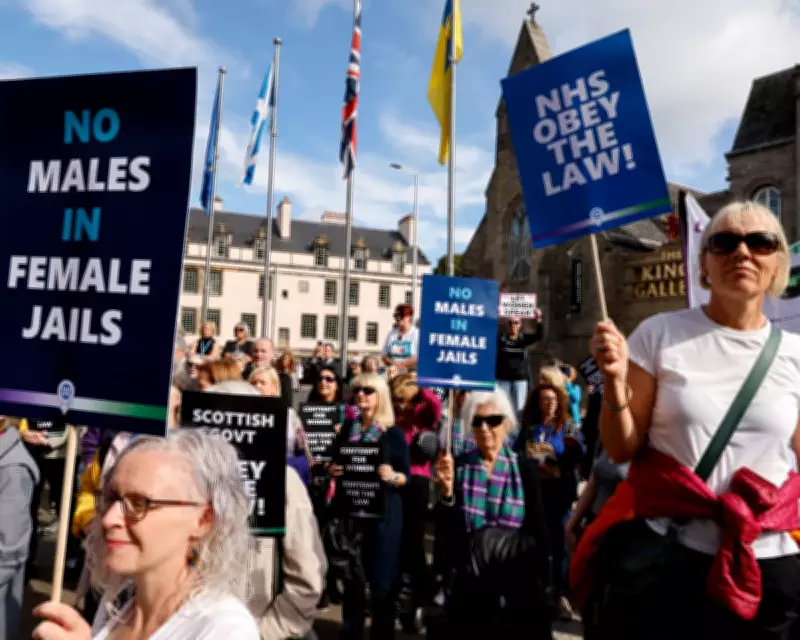
Scottish Government Defends Trans Prisoner Policy in Court Challenge
The campaign group For Women Scotland has initiated legal proceedings against the Scottish National Party government over its policy regarding the housing of transgender prisoners. The group is contesting guidance that advocates for individual risk assessments to determine prison placement, arguing this contradicts a Supreme Court ruling on women-only spaces.
Government's Stance on Identity and Rehabilitation
Representing the Scottish government, Gerry Moynihan KC asserted that imposing a blanket rule to house transgender women in men's prisons, especially when they pose no risk to others, constitutes a fundamental denial of their identity. He emphasized that such a policy would undermine rehabilitation efforts and potentially violate obligations under the European Convention on Human Rights.
Moynihan argued that the Supreme Court's decision, which defined a woman in equalities law as referring to biological sex, should not be applied universally. He stated, "Where a transgender prisoner does not pose an article 8 problem, does not threaten the rights of others – are we to have an absolute rule that says that they must be accommodated in a prison of their sex?"

He highlighted the mental health risks, including suicide, associated with housing transgender individuals in facilities that do not align with their lived gender. "The end is to treat people in a way that is best for them in relation to their mental health and rehabilitation," Moynihan concluded.
For Women Scotland's Legal Challenge
For Women Scotland, which previously secured a landmark ruling on the definition of women in equalities law, is now challenging the Scottish government's guidance. The group contends that the policy is inconsistent with the Supreme Court's decision and fails to protect women-only spaces.
The directors of For Women Scotland, Marion Calder, Susan Smith, and Trina Budge, were present outside the court during the hearings, underscoring their commitment to the case.
Intervention by Equality and Human Rights Commission
The Equality and Human Rights Commission intervened in the case, urging the Scottish government to update what it described as outdated guidance. Representing the EHRC, Janys Scott KC noted a "temporary hiatus" in national guidance and called for revisions to align with the Supreme Court ruling.
The UK government is currently reviewing new guidance proposed by the EHRC on how public bodies and businesses should implement the court's decision.
Broader Context and Public Sector Concerns
The judicial review concludes amid increasing scrutiny of single-sex provisions in Scotland's public sector. Karen Titchener, the newly appointed patient safety commissioner, recently raised concerns at Holyrood's health committee about female patients feeling unsafe in mixed-sex wards, particularly in mental health settings.
Titchener questioned, "Why aren't we doing single-sex wards, particularly in mental health? We are talking about a vulnerable group." This highlights the ongoing debate over balancing transgender rights with the safety and comfort of other vulnerable populations.
The case underscores the complex interplay between legal definitions, human rights, and practical policy implementation in Scotland's correctional and healthcare systems.