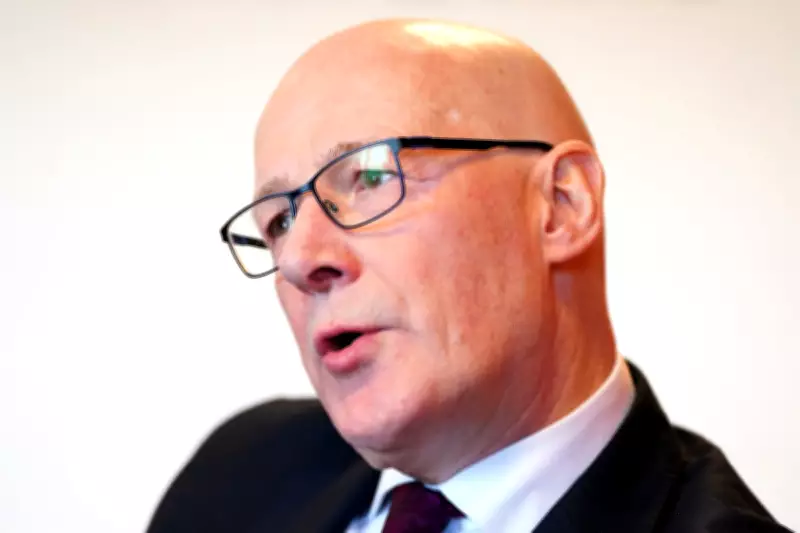
First Minister John Swinney has boldly declared that Scottish independence is "within reach," following a recent poll projection that places his Scottish National Party (SNP) on the cusp of a majority in the upcoming Holyrood election. The survey, conducted by More in Common this week, forecasts the SNP securing 64 seats after the May vote, leaving them merely one seat short of an outright majority.
Poll Projections Signal Strong SNP Performance
The More in Common poll indicates a significant shift in the political landscape, with the SNP well ahead of other parties. Reform and Labour are projected to battle for second place, while the Conservatives risk falling to joint fourth alongside the Liberal Democrats. This surge comes as Mr Swinney has consistently set the threshold for another independence referendum at the SNP winning a majority of seats, a stance the UK Government has firmly rejected, refusing even to discuss granting such a vote.
Westminster Chaos Fuels Independence Momentum
In his remarks, Mr Swinney pointed to the "stream of chaos and scandal" at Westminster, including the recent controversies involving Lord Peter Mandelson, as evidence that the "Westminster status quo is rapidly unravelling." He argued that Scots are increasingly disillusioned with the UK's political system, describing it as "broken beyond repair" and trapped in a cycle of economic turmoil and corruption scandals.

"People in Scotland, watching the news unfold night after night, know that Britain is broken beyond repair – it cannot and it will not be fixed – it is locked in a cycle that only knows chaos, lurching from economic mess one week to corruption scandal the next," the First Minister stated. He emphasised that this perception is driving momentum behind independence, offering Scots a chance to escape what he termed a "broken Westminster system" and build a new country.
SNP's Domestic Achievements Contrasted with Westminster Failures
Mr Swinney highlighted the SNP's domestic policies, such as opening the first GP walk-in centre and freezing rail fares, as examples of effective governance in Scotland. However, he contrasted this with the perceived failures at Westminster, asserting that "Westminster doesn't work for Scotland." This dichotomy, he suggested, is becoming ever-present in the minds of Scottish voters, framing the May election as a pivotal choice between remaining tied to a flawed UK system or pursuing independence for a fresh start.
"The key question in May is now clear – we can either stay stuck to this broken Westminster system, or we can build a future beyond broken, Brexit Britain," Mr Swinney declared. "We can choose a new Scotland through the fresh start of independence."
Controversy Surrounds Lord Advocate Amid Poll Boost
The First Minister's comments conclude a week where he has been compelled to defend his top law officer, Lord Advocate Dorothy Bain KC. Opposition MSPs accused her of "corruption" after she updated Mr Swinney on embezzlement charges against former SNP chief executive Peter Murrell weeks before they became public. This controversy adds a layer of complexity to the SNP's campaign, even as the poll suggests strong public support.
Overall, the poll results and Mr Swinney's rhetoric underscore a renewed push for Scottish independence, with the upcoming Holyrood election poised to be a critical battleground. The First Minister's assertion that independence is "within reach" reflects a strategic optimism, leveraging Westminster's perceived dysfunction to galvanise voters towards the SNP's vision of a separate Scotland.