Border Patrol Officials Reject Claims of Military Laser Targeting Balloons
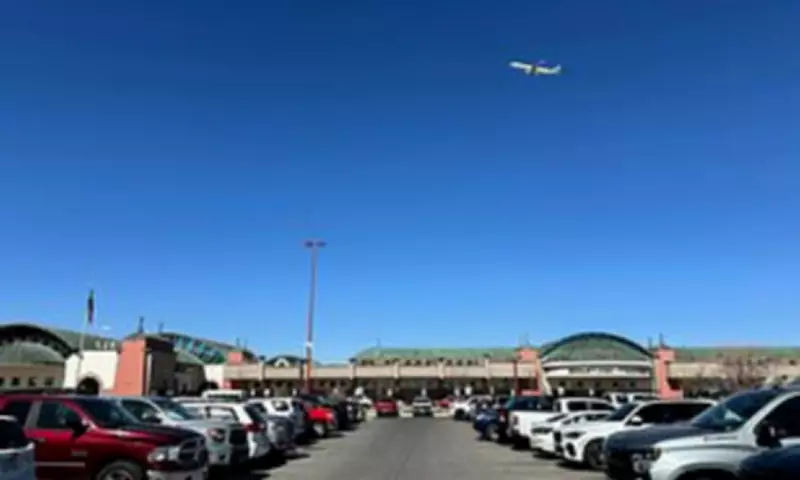
Following a night of widespread panic and operational chaos, Border Patrol authorities are strongly refuting allegations that a military-grade laser system was deployed to shoot down party balloons over El Paso, Texas. The Federal Aviation Administration's abrupt decision to close the airspace on Tuesday evening, which extended into neighbouring New Mexico, has ignited a fierce controversy and prompted demands for transparency.
Official Denials and Anonymous Testimony
"That's ridiculous," one Border Patrol official, speaking anonymously to the Daily Mail, declared. "No one would confuse balloons for a cartel drone." This statement directly challenges reports from several major media outlets, including CNN and the New York Times, which cited unverified claims that Border Patrol utilised a high-powered laser, borrowed from the military, to neutralise what was initially believed to be a Mexican cartel drone. According to these reports, the target was later identified as party balloons.
The drone technology in question is reportedly a relatively new system that has not been authorised for operation in proximity to aircraft. This incident forced the FAA to impose an initial ten-day shutdown of El Paso's airspace. Notably, the FAA Administrator executed this closure without prior notification to the White House, the Pentagon, Homeland Security officials, or local authorities. The ban was lifted hours later, with the agency citing the military's refusal to provide information on the laser's operational schedule.

Agency Silence and Operational Context
Officially, the US Border Patrol has declined to confirm whether its personnel were involved in deploying the laser, which is designed to destroy drones using intense heat. When questioned by the Daily Mail, an agency spokesman redirected inquiries to the White House. The department also refused to disclose the laser's specific deployment location or the nature of the target.
Border Patrol agents familiar with the region dismissed the balloon narrative as fundamentally flawed. They emphasised that incursions by Mexican cartel drones into US airspace around El Paso are a "regular occurrence." While drone activity spans the entire border, the area west of El Paso near Santa Teresa, New Mexico—a known smuggling corridor—is a particular hotspot. This sparsely populated desert region, described as a no-man's land, is frequently monitored by agents.
Cartel Drone Tactics and Capabilities
Agents report that cartels employ drones to track Border Patrol movements, enabling criminal organisations to direct drug shipments or migrant groups to waiting smugglers on the US side. These drones have largely replaced human guides, reducing the risk of arrest for cartel operatives. "If the group of migrants are caught, the smugglers are often caught and arrested with them," one agent explained. "Now cartels are using drones so they don't risk losing an employee."
Contrary to consumer models, these drones are typically military-grade and highly sophisticated, with agents noting they often feature a 100-foot wingspan and are visible to the naked eye. "They can fly miles into the US but the person controlling them is in Mexico," an agent detailed, adding that mistaking such a device for "shiny balloons" seems implausible.
Local Outrage and Economic Impact
An unnamed El Paso elected official echoed skepticism, accusing federal authorities of withholding information. "I don't believe anything they're telling us. We're being kept in the dark," the official stated, criticising the disproportionate impact on the border community. "They would never have closed the airspace over Dallas or even Fort Worth."

The brief closure disrupted medical flights and inflicted economic costs on the local economy. The official warned that a prolonged ten-day ban would have devastated El Paso financially. In response, Texas officials, including Congresswoman Veronica Escobar, are demanding Congressional hearings. A letter from the Congressional delegation condemned the incident, stating: "Events like this are inexcusable and cause lasting degradation of trust among communities with their local and national leaders."
As the investigation continues, the conflicting accounts between official reports, media claims, and frontline agent testimonies highlight deepening tensions over border security protocols and transparency in federal decision-making.