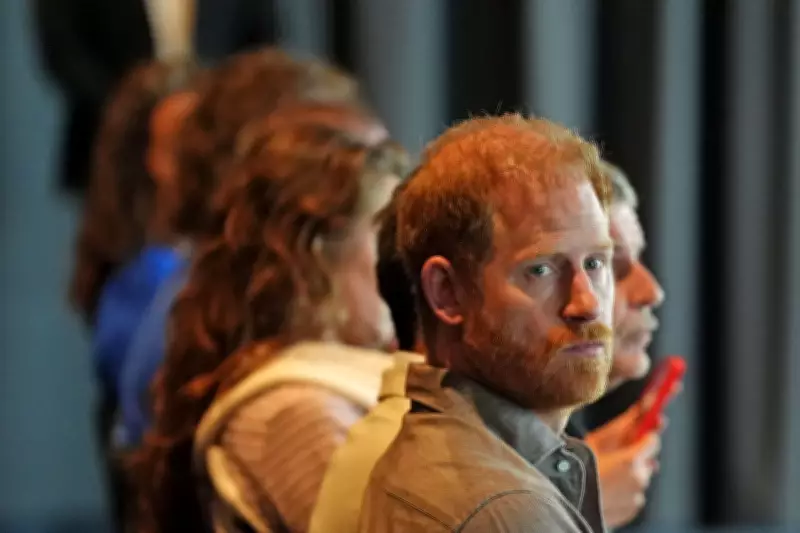
The Duke of Sussex was warmly greeted by Indigenous veterans upon his arrival at the Australian War Memorial in Canberra on Wednesday afternoon. Prince Harry attended a solemn Last Post Ceremony at the national memorial, participating in an event that honours individual service personnel through reflective storytelling and the traditional sounding of the last post.
Journey to Canberra and Ceremonial Welcome
Harry travelled from Melbourne to Canberra aboard a commercial Qantas flight, where he sat in the front row, much to the delight and surprise of the cabin crew. His presence added a notable dimension to the daily ceremony, which has been held each evening since 2013 as a tribute to Australia's military history.
Historic Inclusion of Frontier Wars
In a significant development, the Australian War Memorial has reinterpreted its legal scope to include the Australian Frontier Wars for the first time. These conflicts, which occurred between Indigenous Australians and predominantly British settlers, will be featured in a new gallery scheduled to open in 2028.

The Frontier Wars began just months after the First Fleet landed in January 1788 and continued into the early twentieth century, following the federation of the Australian colonies in 1901. Previously, the memorial had excluded these conflicts, arguing they fell outside its charter as they did not involve formal Australian military forces.
Criticism and Revised Commemoration
This stance faced considerable criticism from historians, who contended that the Frontier Wars should be commemorated due to the large numbers of Indigenous Australians involved and the participation of paramilitary or government-backed colonial forces. In response, the memorial's outgoing chair, Brendan Nelson, announced in September 2022 that efforts would be made towards a broader and deeper depiction of the violence against Indigenous peoples.
Role and Significance of the Memorial
The Australian War Memorial, opened in 1941, serves as the nation's principal memorial to those who have served and died in war and on operational service. It functions as a shrine, museum, and archive, dedicated to preserving Australia's extensive military history.
The memorial's galleries are primarily devoted to the world wars, with over 1.4 million Australians serving in the armed forces during the First and Second World Wars. More than 60,000 Australians lost their lives in the First World War, including many in the Gallipoli campaign aimed at seizing control of the Dardanelles from the Ottoman Empire.
During the Second World War, approximately one million Australians served, representing a massive mobilisation from a relatively small population. All personnel of the Australian Defence Force swear an oath or make an affirmation of allegiance to the King in his role as the Australian monarch, pledging to serve Australia and resist its enemies.
Broader Implications for Remembrance
The inclusion of the Frontier Wars marks a pivotal shift in how Australia commemorates its past, acknowledging the complex and often painful history of Indigenous-settler relations. This move aligns with broader national efforts towards reconciliation and a more inclusive historical narrative.
The Duke of Sussex's visit underscores the ongoing importance of such ceremonies in fostering unity and respect for all who have contributed to the nation's story, from traditional military conflicts to the frontier struggles that shaped modern Australia.