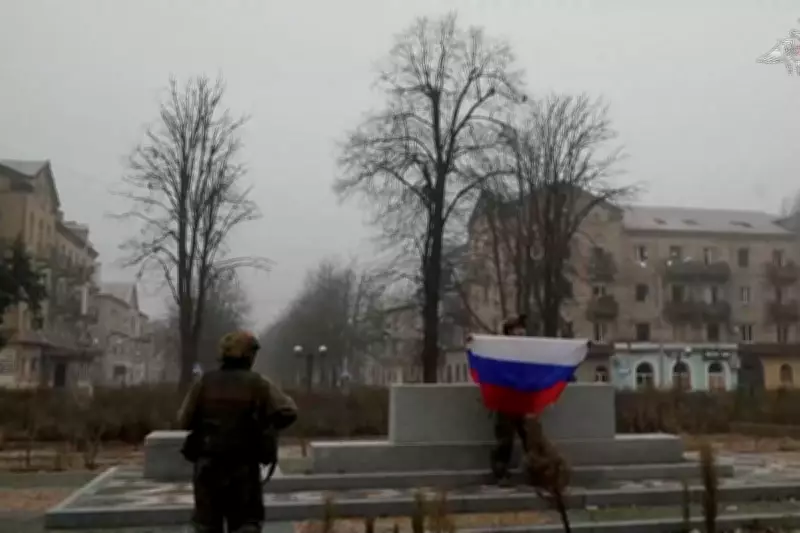
Four South African men, who were allegedly tricked into fighting alongside Russian forces in Ukraine's Donbas region, have safely returned to their homeland after being stranded there. The South African Broadcasting Corporation (SABC) reported their arrival, highlighting a distressing situation that has drawn international attention.
Police Intervention at Airport
Upon their Wednesday arrival at Johannesburg's O.R. Tambo International Airport, the men were met by South African police. They are part of a larger group of 17 individuals who sent urgent distress calls to the South African government back in November, pleading for assistance to escape the conflict zone.
Presidential Diplomacy in Action
The plight of these trapped men prompted South African President Cyril Ramaphosa to engage in high-level discussions with Russian President Vladimir Putin earlier this month. Ramaphosa's office later confirmed that both leaders had "pledged their support to the process of returning South Africans fighting alongside Russian forces in Ukraine."

Ramaphosa's spokesperson provided a cautious update to Reuters, stating, "I'm not able to confirm that except to say that the process to secure the return of the men is ongoing as discussed by both President Ramaphosa and President Putin." This diplomatic effort underscores the complexity of the situation.
Legal and Political Implications
Under South African law, it is strictly illegal for citizens to provide military assistance to foreign governments or participate in foreign armies without official authorisation from South Africa. This case raises significant legal questions about the recruitment and involvement of South Africans in overseas conflicts.
South Africa has sought to maintain a non-aligned stance on the war in Ukraine, while simultaneously nurturing warm relations with Moscow as a fellow member of the BRICS group of emerging economies. This delicate balancing act is tested by incidents such as these, which involve citizens caught in the crossfire of international tensions.
Broader Global Context
The issue extends beyond South Africa, with other nations reporting similar cases of their citizens being recruited under false pretences. Countries such as India, Nepal, and Sri Lanka have all stated that scores of their nationals were deceived into joining Russia's war effort in Ukraine.
In a related development, Kenya's foreign ministry announced last week that it had successfully rescued 27 Kenyans who were stranded in Russia after being illegally enlisted to fight in Ukraine. Kenyan Foreign Minister Musalia Mudavadi revealed plans to visit Russia to engage directly with the government in an effort to prevent Kenyans from becoming "recruits for war."
The Donbas region, where much of the fighting has occurred, has been heavily contested since Russia's invasion of Ukraine in February 2022. It remains a volatile area, controlled largely by Russian forces, making the extraction of foreign fighters a challenging and dangerous endeavour.
As of now, neither a police spokesperson nor South Africa's foreign ministry has offered further comment on the situation. The Russian embassy in Pretoria also did not immediately respond to requests for comment, leaving many questions unanswered about the recruitment practices and the ongoing efforts to repatriate affected individuals.