President Donald Trump is reportedly repositioning United States naval vessels and arming them with what he describes as "the best ammunition" in preparation for potential renewed military strikes against Iran, should critical ceasefire negotiations collapse this weekend.
High-Stakes Diplomacy in Islamabad
Vice President JD Vance is set to spearhead the American delegation, joining special envoy Steve Witkoff and Trump's son-in-law, Jared Kushner, for peace talks aimed at ending hostilities between Washington and Tehran. The discussions are scheduled to take place in Pakistan's capital, Islamabad, where the US team will meet with Iranian Foreign Minister Abbas Araghchi and parliamentary speaker Mohammad Bagher Ghalibaf.
"We're Loading Up the Ships"
In a stark warning delivered to The New York Post on Friday, Trump outlined his contingency plans. "We have a reset going. We're loading up the ships with the best ammunition, the best weapons ever made — even better than what we did previously, and we blew them apart," the president declared. He emphasized the upgraded arsenal, stating it was "at a higher level than we used to do a complete decimation."

Trump indicated that a decision on the path forward would crystallize within approximately twenty-four hours. "We're going to find out in about 24 hours. We're going to know soon," he told the outlet, directly linking the outcome of the Islamabad talks to potential military action.
Divergent Rhetoric from the Negotiating Team
While Trump adopted a bellicose posture, Vice President Vance projected a more diplomatic, though firm, stance before his departure. Expressing optimism, Vance stated he was "looking forward to negotiation" and believed "it's going to be positive." However, he issued a clear caution to Tehran: "If they're going to try to play us, then they're going to find the negotiating team is not that receptive."
Trump's skepticism about Iranian intentions was palpable. "You're dealing against people that we don't know whether or not they tell the truth," he remarked, referencing past discrepancies between private assurances on nuclear disarmament and public statements about uranium enrichment. "So we'll find out," he added.
Naval Movements and Regional Tensions
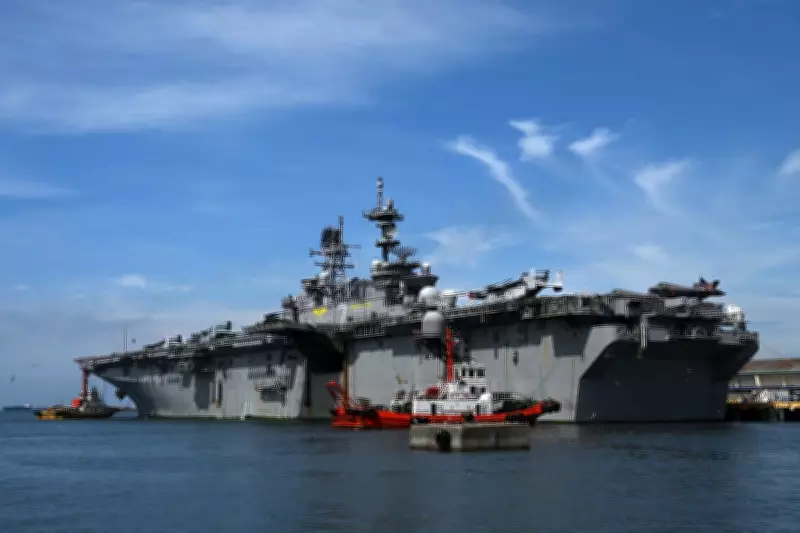
The military preparations are not merely rhetorical. The USS Tripoli (LHA-7), an amphibious assault ship, has been deployed to the Arabian Sea as part of Operation Epic Fury, underscoring the tangible US military presence in the region.
Simultaneously, tensions are fueled by Iran's continued activities in the Strait of Hormuz, a critical global oil transit route. Trump condemned Iran's reported practice of tolling ships passing through the strait as "dishonorable" in light of the ceasefire discussions. "Iran is doing a very poor job, dishonorable some would say, of allowing Oil to go through the Strait of Hormuz," he said on Thursday, demanding an immediate end to any fees.
Echoing the president's demand, White House Press Secretary Karoline Leavitt told reporters that Trump insists the strait be opened "immediately, without limitation."
Trump's Unfiltered Warnings
On his Truth Social platform, Trump was even more direct, dismissing Iran's leverage. "The Iranians don't seem to realize they have no cards, other than a short-term extortion of the World by using International Waterways," he posted on Friday. In a striking comment, he added, "The only reason they are alive today is to negotiate!"
As the diplomatic clock ticks down, the world watches a precarious balancing act: a high-level US delegation pursuing peace in Islamabad, while the commander-in-chief simultaneously prepares the mechanisms of war, promising that if a deal isn't reached, "we will be using [the weapons] very effectively." The outcome of this weekend's talks will determine whether the loaded ships remain on standby or are called into action.