

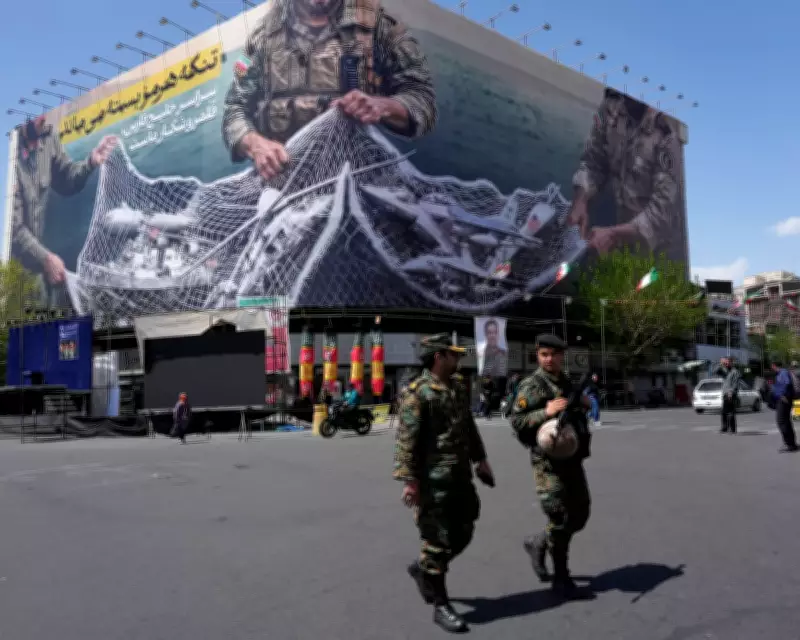
Former US President Donald Trump has issued a stark warning, stating that the United States might resume dropping bombs on Iran if a comprehensive deal to end the conflict is not agreed upon by Wednesday. This declaration comes as a two-week ceasefire between the two nations is set to expire, with ongoing indirect talks aiming to extend the fragile truce.
Trump's Threat on Air Force One
Speaking to reporters aboard Air Force One, Trump was quoted by Reuters as saying, "Maybe I won't extend it, but the blockade [on Iranian ports] is going to remain. So you have a blockade, and unfortunately we have to start dropping bombs again." His comments highlight the high stakes involved in the negotiations, which have been fraught with tension and uncertainty.
Ceasefire Deadline Looms
The current US-Iran ceasefire, which has been in place for two weeks, is due to expire on Wednesday. Both countries have been engaged in indirect talks, mediated through third parties, in an effort to secure a longer-term agreement. However, recent negotiations in Islamabad ended without a breakthrough, casting doubt on the prospects for a deal.

Despite the setbacks, the White House expressed optimism earlier in the week, with officials stating they felt "good about the prospects of a deal". This positive outlook contrasts sharply with Trump's latest remarks, which suggest a potential return to military action if diplomatic efforts fail.
Implications for Regional Stability
The threat of renewed bombings raises significant concerns about regional stability and the humanitarian impact. A resumption of hostilities could escalate tensions in the Middle East, affecting global oil markets and international relations. The blockade on Iranian ports, mentioned by Trump, adds another layer of economic pressure, potentially crippling Iran's trade and economy.
As the deadline approaches, all eyes are on the negotiation tables. The outcome will not only determine the immediate future of US-Iran relations but also set a precedent for conflict resolution in the region. Stakeholders are urging both sides to prioritize diplomacy to avoid further violence and instability.






