UK and France Lead Multinational Effort to Secure Vital Shipping Route
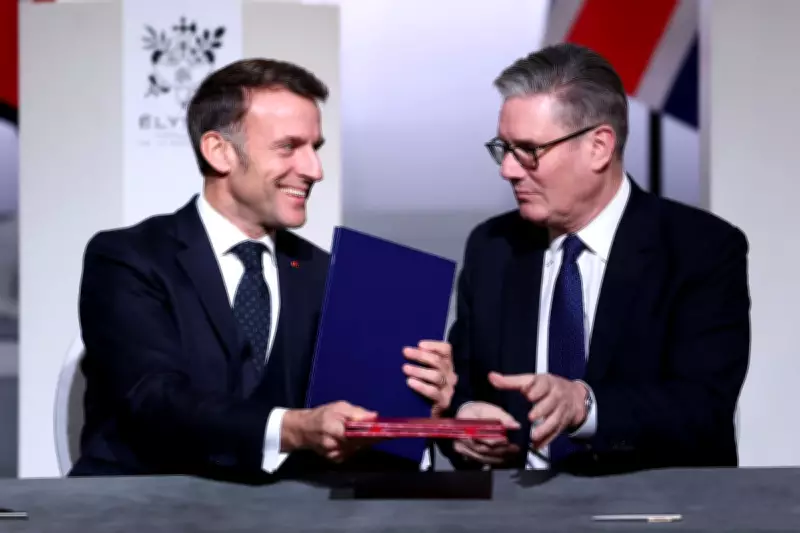
International leaders will convene in Paris this Friday for a critical summit co-hosted by Prime Minister Sir Keir Starmer and French President Emmanuel Macron. The high-level gathering aims to develop a coordinated, independent multinational strategy to ensure the Strait of Hormuz remains open to international shipping following the conclusion of the Middle East conflict.
Defensive Mission Planning Takes Center Stage
A Downing Street spokesperson confirmed the summit will advance work toward a comprehensive plan to safeguard international shipping once hostilities cease. Sir Keir informed Parliament on Monday that the UK-French initiative encompasses both military planning to provide assurance to shipping and extensive diplomatic efforts.
President Macron has previously characterized the participating nations' work as a "strictly defensive mission, separate from the warring parties to the conflict" that is intended for deployment "as soon as circumstances permit." He emphasized the summit would bring together countries prepared to contribute to what he described as a "peaceful multinational mission."

Westminster Establishes New Crisis Committee
In parallel developments, Westminster has established a new Cabinet committee specifically to address the fallout from the Iran conflict. The Middle East Response Committee held its inaugural meeting on Tuesday, focusing particularly on the situation in the Strait of Hormuz—the crucial shipping corridor responsible for transporting substantial portions of global oil and gas supplies.
The Prime Minister created this committee to manage both domestic and international impacts of the war, which has already driven up energy prices, caused significant stock market volatility, and exposed deepening divisions between the United States and its traditional European allies. Number 10 insiders have drawn comparisons between this new panel and committees established under previous Conservative administrations to handle Brexit preparations and the COVID-19 pandemic.
A government source indicated the "new central structure" would concentrate on "medium-term scenario planning to respond to developments in the region over the coming weeks and months." Alongside the ministerial committee, whose full membership remains undisclosed, senior officials will convene under the chairmanship of Cabinet Secretary Dame Antonia Romeo.
This organizational development represents an acknowledgment that the regional situation will continue affecting the United Kingdom for the foreseeable future, though meetings of the emergency Cobra committee will still be convened to address immediate crises as they arise.
Economic Implications and Market Reactions
The first committee meeting's focus on the Strait of Hormuz follows former US President Donald Trump's announcement of a blockade targeting Iranian ports. Simultaneously, oil prices retreated below 100 US dollars per barrel during Tuesday morning trading amid renewed hopes that US-Iran negotiations might resume and that an agreement could be reached concerning the crucial shipping route.
Brent crude declined approximately 1% to 98.3 dollars per barrel after experiencing significant increases on Monday. Stock markets showed modest gains, with London's FTSE 100 Index advancing 0.2% to 10598.1, while Germany's Dax and France's Cac 40 both rose approximately 1% following solid overnight performances in US and Asian markets.
Political Responses and International Coordination
Chancellor Rachel Reeves emphasized that British families and businesses are bearing substantial costs due to instability caused by Trump's actions in the Middle East. She told the Mirror: "This is a war that we did not start. It was a war that we did not want. I feel very frustrated and angry that the US went into this war without a clear exit plan, without a clear idea of what they were trying to achieve."

Reeves made these remarks ahead of International Monetary Fund spring meetings in Washington DC, where she plans to advocate for coordinated international action to address the global economic shock resulting from the conflict. The IMF is scheduled to publish its world economic outlook later, with growth and inflation forecasts worldwide likely to be significantly affected by ongoing hostilities.
Former President Trump defended his Gulf actions, stating: "We can't let a country blackmail or extort the world because that's what they're doing." Iran has implemented selective closures of the strait since the US-Israeli bombing campaign commenced, permitting only limited tanker passage with explicit Iranian authorization. Trump's blockade aims to restrict Iranian revenue from these vessels.
Defense Readiness Concerns Emerge
Conservative leader Kemi Badenoch urged Sir Keir to prioritize defense readiness ahead of the Paris meeting. When questioned by the Press Association about the Prime Minister's necessary focus before the summit, Badenoch responded: "The Prime Minister's priority needs to be our defence readiness. We can't help anyone if we haven't got ships that are fit to sail. I was really worried when I saw HMS Dragon taking two weeks to get out of Portsmouth."
The Paris summit represents a crucial diplomatic effort to establish security frameworks for one of the world's most strategically important shipping channels, with implications extending far beyond regional stability to global energy security and economic stability.