Ukrainians Celebrate Orbán's Defeat as Potential Turning Point
Like many Ukrainians, Oleh Kupchak was overjoyed when Péter Magyar secured victory in Hungary's recent election, conclusively ending Viktor Orbán's sixteen-year dominance. "We were euphoric. Everyone monitored the results closely. There were celebratory toasts," remarked Kupchak, who has visited Budapest on multiple occasions. He added, "We did not hold affection for Orbán."
Across Ukraine, Orbán's decisive loss was met with a wave of humour and memes. Some comparisons likened him to the Star Wars character Jabba the Hutt, while others shared imagery depicting Orbán fleeing from a drone. Additional memes portrayed him seated on a bench in Russia alongside Ukraine's pro-Kremlin former president Viktor Yanukovych and the exiled Syrian leader Bashar al-Assad.
A Strategic Defeat for Putin's European Ambitions
The widespread jubilation at Orbán and his Fidesz party's removal was hardly unexpected. Hungary's outgoing prime minister – the Kremlin's most significant and disruptive ally within the European Union – conducted a vehemently anti-Ukrainian campaign. He accused Kyiv of scheming to sabotage critical energy infrastructure and of threatening him and his family with physical harm.

Oleksandr Merezhko, head of the foreign affairs committee in Ukraine's parliament, described feeling "cautiously optimistic." He stated, "A unique window of opportunity is now opening for Ukrainian-Hungarian relations." Merezhko interpreted the election outcome as "on the whole a win for Ukraine," representing "a strategic defeat for Putin."
"Putin had aspired to form an anti-Ukrainian coalition in Europe led by Orbán, potentially including Slovakia and the Czech Republic. That plan has now failed. Without Orbán in power, such a coalition cannot materialise," Merezhko explained.
Magyar's Expected Policy Shifts and Lingering Challenges
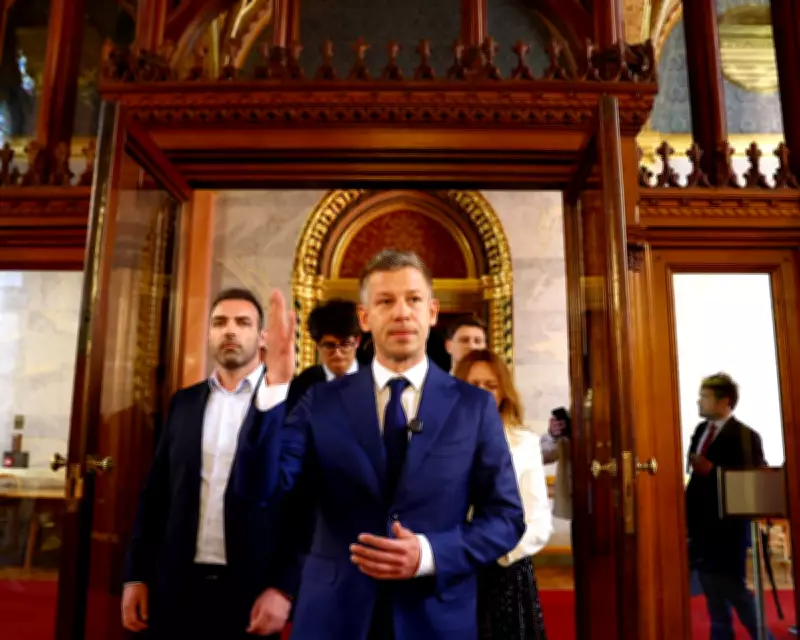
Péter Magyar is anticipated to rescind Orbán's veto on €90 billion in EU aid destined for Ukraine once his government is formally inaugurated early next month. Kyiv urgently requires these funds. Hungary is also expected to cease its opposition to new sanctions against Russia. With Orbán departed, Brussels will likely release EU funds allocated to Hungary, which were suspended due to democratic backsliding concerns.
Merezhko characterised Hungary's new leader as more "constructively minded" than his pro-Russian predecessor and "not anti-European." However, he cautioned that all bilateral issues cannot be resolved "automatically and quickly." "Magyar must now demonstrate to Europe that his policies will not merely continue Orbán's legacy. The issue of Ukraine is pivotal here," Merezhko emphasised.
Potential disputes persist, notably regarding Ukraine's EU accession. Magyar has stated he would not oppose Kyiv joining the bloc but rejects fast-track membership, suggesting the matter should be decided via referendum. Another contentious issue is the status of Ukraine's ethnic Hungarian minority in the Zakarpattia region, a long-standing source of tension that Kyiv alleges was cynically exploited by Orbán.
Cautious Optimism Tempered by Realistic Expectations
Ukrainian President Volodymyr Zelenskyy extended congratulations to Magyar and his Tisza party, noting, "It is important when a constructive approach prevails." He affirmed Ukraine's readiness to develop "cooperation with Hungary" and to engage with its new government.
Unlike the previous administration's stance, Magyar has acknowledged Ukraine as a victim of Russia's invasion and opposes forcing territorial concessions. In July 2024, he visited Kyiv shortly after Moscow bombed the Okhmatdyt children's hospital, paying tribute to fallen Ukrainian soldiers and delivering humanitarian aid.
Nevertheless, Ukrainian commentators advise against viewing Magyar as an unequivocal ally. "Magyar is not a pro-Ukrainian politician. He is pro-Hungarian," wrote Serhiy Sydorenko, editor of European Pravda. He suggested Zelenskyy might reluctantly complete repairs to the Druzhba pipeline to resume limited Russian oil exports to Hungary as a goodwill gesture.

Analysts note that Hungarian society, after sixteen years of Orbán's propaganda, has become accustomed to anti-Ukrainian narratives, and shifting these perceptions will require time. "We cannot anticipate a very liberal stance from the reformist government," said Marianna Prysiazhniuk, a political analyst with the Democratic Initiatives Foundation in Kyiv.
Prysiazhniuk believes Zelenskyy should act "very delicately" towards Budapest, considering its "internal context." "We should not expect Magyar to proclaim, 'Glory to Ukraine.' The priority is for Hungary to evolve into a reliable European partner," she concluded. The two leaders are likely to hold discussions next month in Romania during a meeting of the "Bucharest Nine," NATO's formerly communist East European member states.
Meanwhile, Kupchak reflected on his journeys from Lviv to Hungary via the Chop border crossing, through the picturesque Carpathian foothills. "In my view, Hungarians retain a somewhat imperial mentality, reminiscent of Russians—a legacy of the Austro-Hungarian Empire. We hope this changes under Magyar's leadership," he expressed.